On June 17, the U.S. Federal Reserve held its benchmark rate at 3.5–3.75%, with members of the Federal Open Market Committee backing the decision unanimously. But the updated expectations from Fed officials reshaped the market picture: instead of a path toward rate cuts, the central bank is now leaving the door open to further tightening before the end of 2026.
This was the first meeting led by Kevin Warsh as Fed chair, who took over from Jerome Powell. His debut immediately signaled changes not only in monetary policy but also in how the central bank communicates with the public.
The Fed's Outlook Going Forward
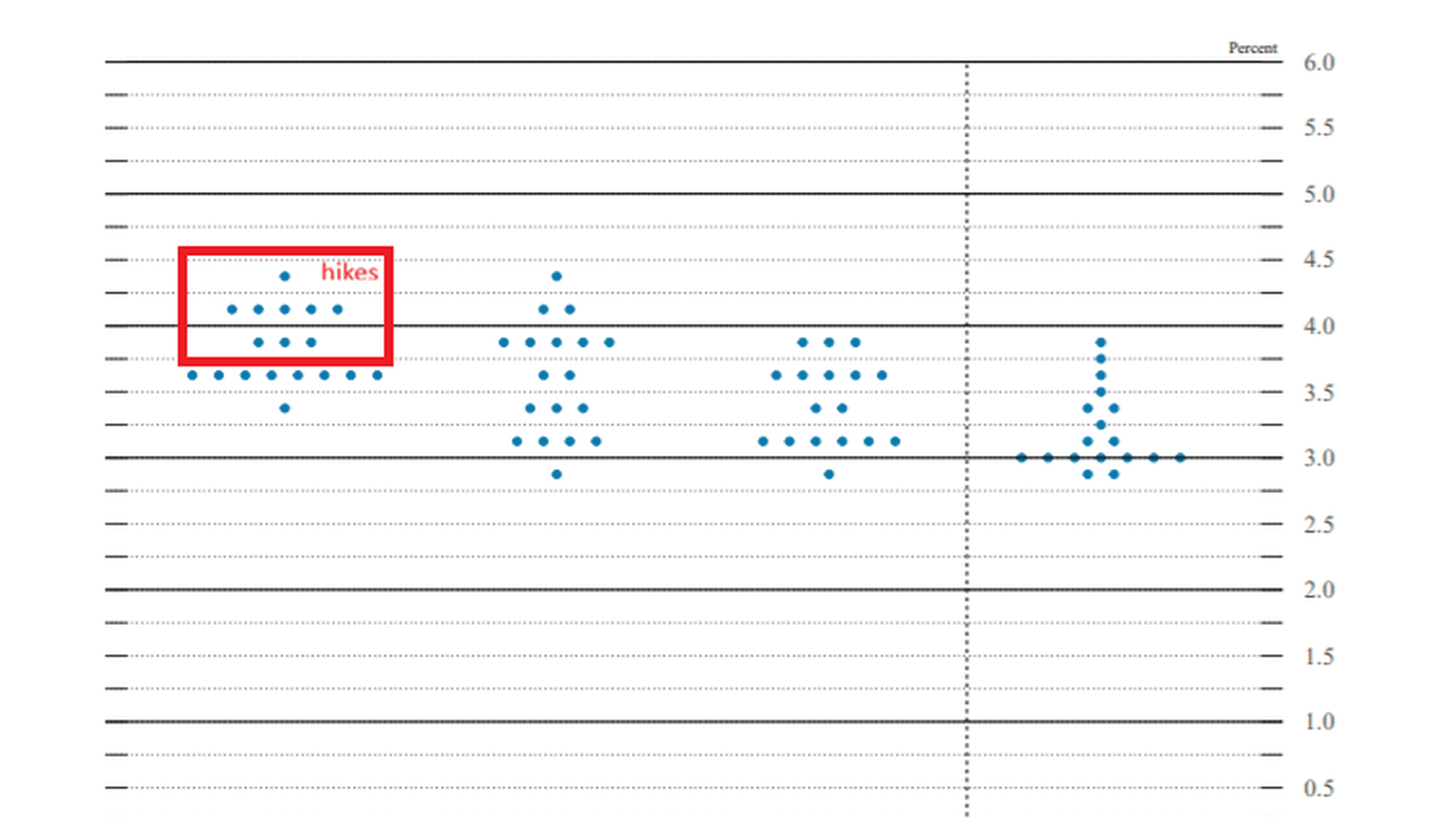
The main signal for markets came from the updated dot plot — the chart showing individual Fed officials' projections for the future path of rates.
Based on the new estimates, nine of the 18 officials expect of the regulator at least one rate hike before year-end, and six of them see room for several steps upward. Only one meeting participant penciled in a drop in borrowing costs.
For financial market participants, this means rethinking their expectations: the June decision to hold rates no longer looks like a pause before easing.
Warsh himself didn't submit his own dot plot projection, making him the only meeting participant not to publish an individual estimate. During his first press conference, he also dodged direct questions about the central bank's upcoming decisions several times, declining to comment on where rate policy heads next.
Warsh had previously criticized the Fed's practice of signaling the direction of rates to markets in advance, arguing that the central bank reveals too much information.
The Fed Committee Updated Its Read on the Economy
The statement released after the meeting was noticeably shortened and substantially reworked compared to the previous version.
The Fed noted that the U.S. economy continues to grow at a steady pace, despite rising uncertainty tied to the conflict in the Middle East. The labor market, by the Fed's assessment, remains resilient, while inflation is still running above the 2% target.
The statement specifically points out that part of the inflationary pressure stems from supply disruptions, including in the energy sector.
The Fed Remains Independent From the White House
Warsh's appointment had earlier raised concerns among critics, who suggested the new Fed chair might cut rates under political pressure from Donald Trump. Judging by the first meeting, that scenario isn't playing out so far.
Trump himself criticized the decision to leave rates unchanged but publicly backed the new chairman.
“The Federal Reserve now has the right man, and the White House will follow his lead on future decisions,” the president said.
This post is for informational purposes only and does not constitute advertising or investment advice. Please do your own research before making any decisions.