

On September 15, 2026, the US Senate failed to advance the Digital Asset Market Clarity Act, the most anticipated crypto law in years. Advancing the bill required 60 votes; the Senate's official count was 49 in favor and 50 against. Four Republicans joined every Democrat in voting no. One of them deliberately switched his vote to preserve the option of bringing the bill back for another vote.
- markets
- regulation
- news
- 16 Sep 26
The CLARITY Act Failure: Why Democrats Blocked the US's Main Crypto Law
After a year of negotiations and hundreds of millions of dollars in lobbying, the Senate didn't even let the bill move forward to consideration. We break down the market's reaction and the scenarios still open for the CLARITY Act.
0
nft.eu
- rating +20
- subscribers 90
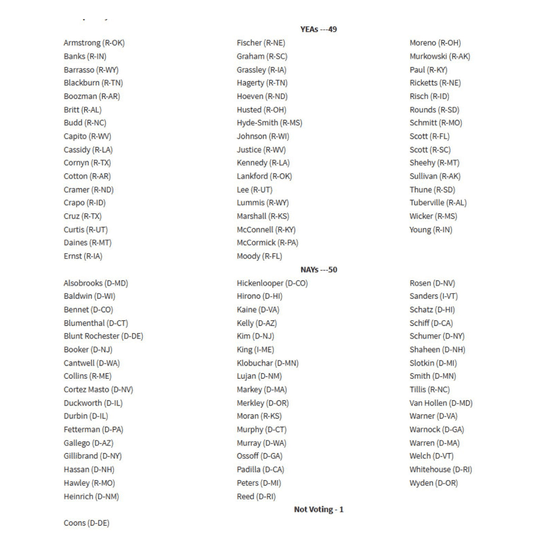
In effect, this closes the legislative window for crypto market structure in the current Congress: there's almost no working time left before the November midterms, and once they're over, both chambers will go into recess.
Context: What the Bill Actually Does
The bill, running more than 600 pages, passed the House of Representatives in July 2025 with 294 votes. In the Senate, it was assembled from versions drafted by the Banking and Agriculture committees.
Its core idea is to split regulatory jurisdiction at the federal level for the first time: the CFTC would get exclusive authority over spot trading in digital commodities, while the SEC would retain control over tokens that resemble securities. On top of that, the bill sets rules for exchanges and brokers, offers limited legal immunity to developers and miners, imposes AML/KYC requirements, restricts rewards on payment stablecoins, and introduces ethics rules for federal officials — including a ban on issuing or sponsoring digital assets through January 2029.
In the final Senate version, Republicans added 126 changes sought by Democrats, including giving state attorneys general the right to sue over violations of the ethics rules.
The crypto industry spent hundreds of millions of dollars lobbying for the CLARITY Act, and President Donald Trump personally pressured the Senate to pass it. Trump received more than $1.4B from the family's crypto ventures: nearly $800M came from World Liberty Financial through sales of WLFI tokens and company stakes, while roughly another $635M came from sales of the TRUMP memecoin.
That personal stake held by the White House became a central sticking point that cost the bill Democratic votes and, with them, its path through the Senate.
Ethics vs. Compromise
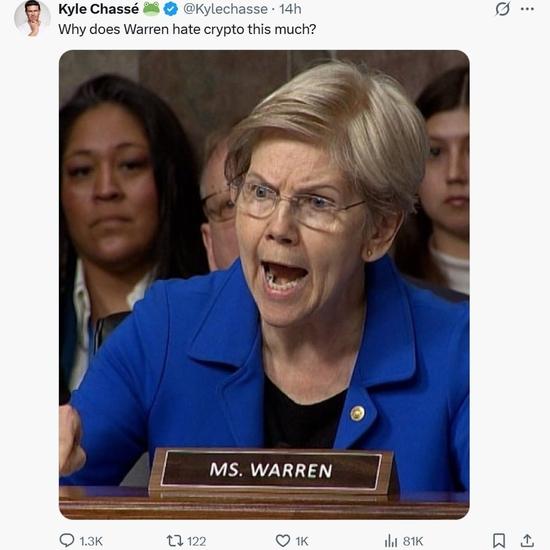
Democrats, led by Elizabeth Warren, called the final ethics provisions "a weak fig leaf": they don't require officials to divest their crypto holdings, and enforcement is left to the Trump administration's own Justice Department.
"The CLARITY Act won't stop him from making his next $1.4B in crypto income," Warren said.
Senator Ruben Gallego argued that "Trump is just trying to buy himself time to commit a crime."
Raphael Warnock stressed that Republicans "don't want to fix the massive ethics problems."
Republicans and the bill's supporters see it differently. Cynthia Lummis, the chief architect of the Senate version, urged her colleagues to vote yes.
"Don't let this be the day we handed our future to someone else because we were too afraid to finish what we started. Let's not just step into the 21st-century economy and the digital age — let's lead it. Let's set its rules," she urged.
Tim Scott called the status quo the worst possible outcome for consumers and for US leadership.
Market Reaction

Once the vote results came in, bitcoin dropped more than 5% and traded below $74,000. Spot bitcoin ETFs saw outflows of about $450M, the largest since June.
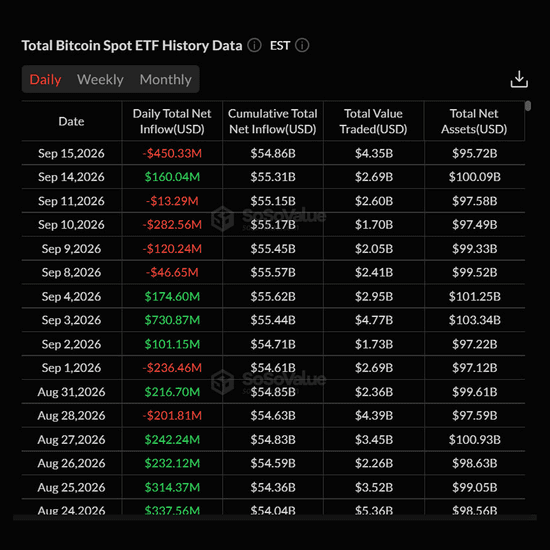
Long liquidations topped $570M. Coinbase shares fell 10%, and Circle's dropped 11%.
Ripple CEO Brad Garlinghouse stressed that his team, and nearly the entire industry, had given everything they had to get the CLARITY Act across the finish line.
"This is a blow. We weren't fighting for Ripple — we were fighting for the industry, for consumers, and for America's role in crypto. In the end, it wasn't good policy that won, it was anti-crypto Democratic politics. Now the SEC and CFTC will have to fill the gap," he wrote.
Coinbase CEO Brian Armstrong called the outcome disappointing but shifted the focus away from Congress and onto the regulators.
"We can't keep waiting on Congress. The SEC and CFTC already have the authority to write the rules, and clarity for the crypto market is coming one way or another. Crypto can't be undone," he said.
Some voices stayed optimistic, pointing out that institutional entry into crypto — banks, asset managers — is already underway and isn't going to stop completely.
What's Next for the Crypto Market
The legislative window for 2026 is essentially closed. Even if Thomas Tillis, the Republican who switched his vote to keep the door open for a second attempt, tries to bring the CLARITY Act back to the floor, there's almost no working time left before the November 3 midterm elections.
After the election, things could get harder for the industry. If Democrats retake the Senate majority, the Banking Committee could be chaired by Elizabeth Warren, the bill's leading opponent.
Ahead of the vote, SEC Chair Paul Atkins promised that "with or without the CLARITY Act, we will deliver on our commitments and keep moving forward with Project Crypto" — the agency's package of rules covering token issuance, crypto custody, and how transfer agents operate.
CFTC Chair Michael Selig warned back in the summer that if Congress didn't pass the law, regulators would end up "writing all the rules" themselves. Former CFTC Chair Chris Giancarlo confirmed that both agency heads intend to act within their existing authority.
That said, most experts agree that only an act of Congress can deliver lasting rules. A future administration could roll back SEC and CFTC regulations, and courts could challenge them. In two years, a sharp reversal reminiscent of the Gary Gensler era could happen again. Meanwhile, the EU is already operating under MiCA, and the UK is easing its own crypto rules — leaving the US at risk of losing ground in the race to build onshore crypto infrastructure.
Editor's Take
Technically, the bill is still alive, but politically, it's frozen until at least 2027. What happens in the coming months won't be decided by Congress alone, but also by how quickly the SEC and CFTC can move — and whether they manage to lock in their rules before the political cycle turns again.
Right now, plenty of people are bracing for a catastrophic market crash, but that may be premature — the news was already largely priced in. The setback may simply provide a convenient excuse for a pullback, and a deep, lasting drop may not materialize, or could end up milder than expected.
The bill's failure shouldn't trigger panic. Trump remains pro-crypto, and another version of the bill, or a revised one, is still possible. It's entirely plausible that yesterday's setback turns out to be the last leg down — and that from here, the market focuses on organic growth.
This post is for informational purposes only and does not constitute advertising or investment advice. Please do your own research before making any decisions.
0
Comments
0
Write a comment.