Artificial intelligence has become one of the most disruptive technologies in modern marketing. In just a few short years, it went from being a useful assistant to being a core business tool in almost every industry. Recent reports suggest that around 91% of marketing teams now use AI daily, while almost 20% are trusting AI agents to run entire campaigns from start to finish. That’s almost one in five organizations relying on AI to do everything, from planning and launching the campaign to monitoring and optimizing it accordingly. All without human involvement.
It all moves very quickly and efficiently, but many are wondering - does it actually work as expected? Can you actually fire your entire marketing team and let a network of software tools take over? More importantly, can you do it without sacrificing the quality that human work provides?
What AI Does Best (The Robots Win Here)
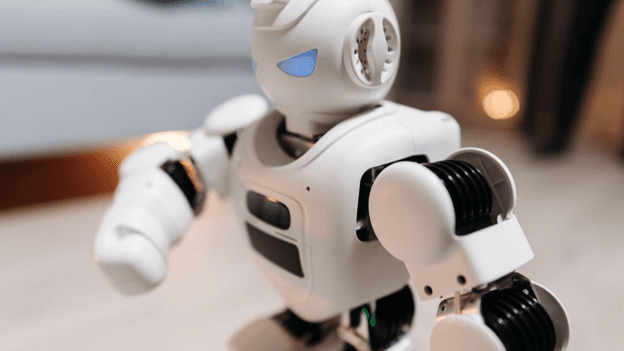
Source: Pixabay
So far, artificial intelligence has become extremely competent in some areas, especially when it comes to the speed of getting the job done. When it comes to speed, it wins over human workers, even experts, every time.
Modern marketing platforms are capable of connecting data from numerous sources, such as Google Ads, Shopify, Meta, various email platforms and analytics tools, private customer databases, and countless other sources. It does it all at the same time, and it processes all the data it has access to in seconds. That is the type of work that entire teams of humans would need hours, days, or even weeks of research to accomplish.
This is an important point, because marketing decisions need to be based on actual (and up-to-date) information. So, instead of spending hours collecting data, marketing teams can use AI to collect it and highlight what is relevant quickly, allowing the team to only work on accurately interpreting it.
AI is strong when it comes to spotting trends and noticing changes, as well as at producing content. Most people have used generative AI (GenAI) at least once, and they know that giving a simple description is enough to generate a photo, an article, or even videos. The same can be applied to marketing, and AI platforms can generate dozens of ad variations, including email campaigns, social media posts, image concepts, headlines that grab attention, and more.
Additionally, AI can modify the ads to target specific groups of people. For example, an ad for a fitness product would be marketed differently to professional athletes than to a casual gym user, a busy parent, or a retired person trying to stay in shape. With human teams, coming up with different versions of the same ad would take numerous meetings and planning sessions, copywriting, and the like, while AI can produce results in minutes.
Of course, speed and capability are great, but this doesn’t automatically mean that every AI-generated idea is brilliant. A lot of content that AI produces requires additional human work and editing. For example, AI might generate an ad that describes a product and its features accurately, but at the same time, it might completely miss out on the emotional reason why customers buy it. People often buy expensive things that they don’t need, or pay a lot of money on a brand when another, lesser-known brand offers the same item at a much cheaper price.
In many parts of the world, people buy a certain brand as a status symbol, not because it necessarily offers better features. A human marketer understands this, and can refine the message and adjust the tone for a specific group, rather than trying to make the product attractive to everyone based on what it is and what it does.
But, the ability to create large numbers of mostly usable drafts is still a huge help that speeds things up massively.
Finally, it is worth noting that, unlike humans, AI doesn’t have working hours. It doesn’t need rest or a break, and it can work around the clock, not just during office hours. A well-organized AI network can keep track of everything constantly, monitoring click rates, conversion rates, customer acquisition costs, returns on ad spend, and more. That also means that it will spot almost immediately if the ads start underperforming, and modify the spending accordingly.
Similarly, if a campaign produces stronger results, AI will spot that too, and dedicate more budget to it. As such, it works as a tireless analyst that doesn’t need a break, a day off, or countless hours of meetings and planning to give results almost immediately.
Where Humans Still Win (The Things AI Can’t Copy)
Source: Pixabay
For all its strengths, AI cannot completely replace human workers, as it has certain fundamental limitations. The biggest of them is the fact that it does not actually understand the business that it works for.
While it can perform tasks such as identifying patterns, predicting outcomes based on historical information, and even solving problems and recommending outcomes based on statistics, it does all that without actually understanding why a company exists. It doesn’t understand its goals and where leadership wants it to be in five years, or how a decision made today can fit into a broader strategy.
AI performs tasks and looks for the shortest path from A to B, which is something that can work in the short term quite well. However, during periods of change, its model often falls apart because of the mentioned limitations. AI cannot account for shifts in customer preferences or the evolution of the market. It makes a plan for the situation as it is right now, and it intends to keep it as a permanent strategy. However, this often falls apart when a competitor launches a new product and steals the market’s attention.
Humans combine data with experience, intuition, and context, while AI only has historical content to combine with current raw data. In other words, it is not good at handling situations that it has no prior information about.
That is a problem in sectors like marketing, which also require a surprising amount of work that has nothing to do with algorithms. It needs someone to speak to the customers, get feedback, and coordinate projects across multiple departments. Marketing also requires budget negotiations with finance teams, maintaining relationships with external partners, solving disagreements between teams, deciding on priorities when budget is limited, changing focus when a project falls behind schedule, and much more.
Software cannot step in and resolve situations that it was not trained to understand and resolve. It cannot motivate employees, raise and maintain morale, or build trust. It lacks the capability to do these things and understand the nuance of each of the mentioned problems.
Then, there’s brand management, which presents another challenge. Specifically, AI can create content, but it doesn’t understand reputation or culture, or how the brand is perceived by the public. It understands how to write a joke, but it doesn’t know when it is appropriate to use one and when doing so might be perceived negatively.
This is why human review of AI content remains essential for maintaining reputation and brand quality. Especially since AI can still produce inaccurate information, hallucinate, provide misleading or openly false claims, and potentially cause problems for the company. In short, in order for the company to be as successful as possible but still stay in the safe zone when using AI would be to treat it as a powerful assistant, rather than a replacement for human judgment and experience
Why Publishing Pure AI Content Is a Dangerous SEO Strategy
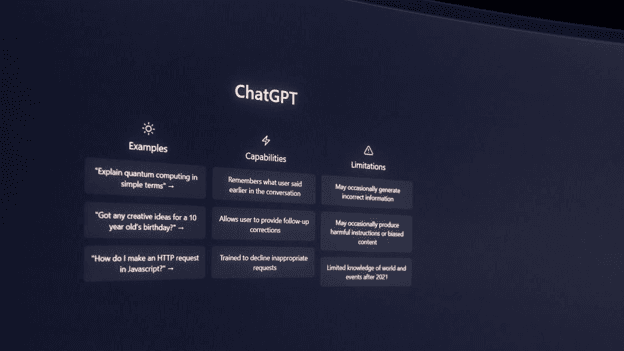
Source: ChatGPT
Companies creating and applying SEO strategies often get a wrong idea when it comes to what passes for good with Google. Many believe that Google will reward websites that publish the most amount of content. In reality, Google has a complex ranking system that was designed to evaluate the content that goes out. It looks into quality and how useful it is, as well as how original it is, not just how much of it there is.
It is also worth noting that Google doesn’t automatically punish sites that use AI to create content. AI as an assistant speeds things up, and it can be a useful tool. The problem is when websites only use AI to publish large amounts of unedited, repetitive materials.
AI cannot produce content and concepts out of nothing. It needs to be trained on data, and that data is its entire knowledge base. That means that AI can only publish content that already exists, and as such, it offers fairly little value to the reader, since that same knowledge can be found elsewhere.
Google, on the other hand, values fresh perspectives and something that a human mind creates on its own, not reworded content that has already been out for years.
That is why modern ranking systems were built specifically to tackle this issue by identifying patterns recognizable in low-quality, repetitive content. They recognize weak, generic explanations and repetition, the lack of details, shallow coverage of topics, and the like.
What happens to content quality and brand identity when humans are cut out of the loop?
When humans are removed from the content creation process, the content itself tends to become repetitive and generic. AI lacks judgment, and so the content it creates can often become disconnected from the business and the message it is trying to send. Over time, this can have a negative impact on the brand identity, making it weaker and inconsistent. Not to mention that AI is also tone-deaf and doesn’t understand when it is appropriate to use certain kinds of content and when it can damage the brand’s image.
The Real Future Is AI-Assisted Marketing, Not AI-Only Marketing
With everything said, the question still remains - will AI replace digital marketing agencies’ human workers and teams?
Using AI in content creation and marketing can be beneficial. Its speed and capabilities can massively reduce workload and cut costs, not to mention that it can increase execution across nearly every part of marketing. However, that doesn’t mean that it can confidently replace humans.
Businesses that tried to replace human judgment, experience, and insight have seen the model break down fairly quickly. This means that, at the very least, companies need to keep human oversight, or else the entire strategy will disappear. Maybe not immediately, but over time, the brand consistency will get weaker.
While AI is more than capable of quickly executing tasks, it cannot define what success actually means for a business, or adapt meaningfully on its own when marketing starts to shift. As a result, the most practical way to go about AI integration is to adopt the hybrid model where AI would handle the work, while humans dictate direction and provide judgment.