AI development is currently on a hot streak. Just when we try to work our hands around the current most powerful model…BAMM!..a new model gets released by either the same company or its competitors, or some Chinese company that's not even into LLMs but quant trading.
The competition right now is massive. More than a billion people worldwide are now AI users, and head honchos like OpenAI, Anthropic, and Google are fighting each other to get a big fat bite of the userbase chunk, which is ever-feeding the “best AI” bubble.
Even my brother mocks me cause I prefer Gemini, whereas his school friends and numerous online have collectively positioned Claude as the king AI maker.
So the question right now is not which is the best overall, but the best AI for different things in terms of top leaderboard benchmark metrics.
The Core Architecture Behind LLMs
Right now, there’s an influx of models/LLMs with each having their dedicated hoards of lackeys so to say, the basic architecture can still be generalised into four or five categories.
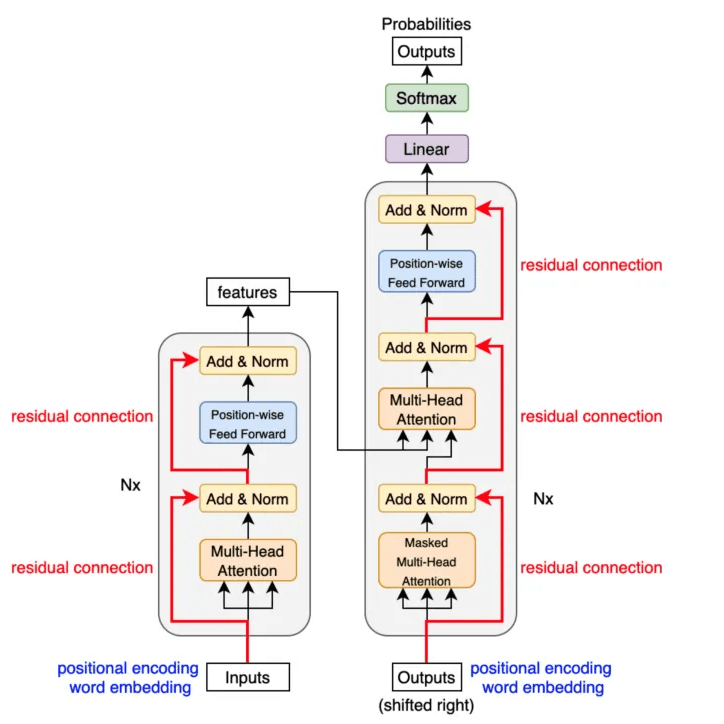
Transformer Decoder Models
These are most of the models that you know right now: GPT, Claude, Llama, Qwen, Kimi, and so on. Essentially, these are transformers that are decoder-only. And these are preferred cause they scale well, can be trained better, and they perform with very strong reasoning regardless of whatever the task might be.
You can chat, code, use specific tools, and also create agents for specific focus tasks. Another plus point is that these can incorporate RAG retrieval pipelines and use external data and memory elements to generate evidence-backed outputs.
The weakness of Transformer decoders, though, is long context attention cost, which in simple terms means the longer the conversation, the more the probability that the model will forget the reasoning trail.
Mixture of Experts Models
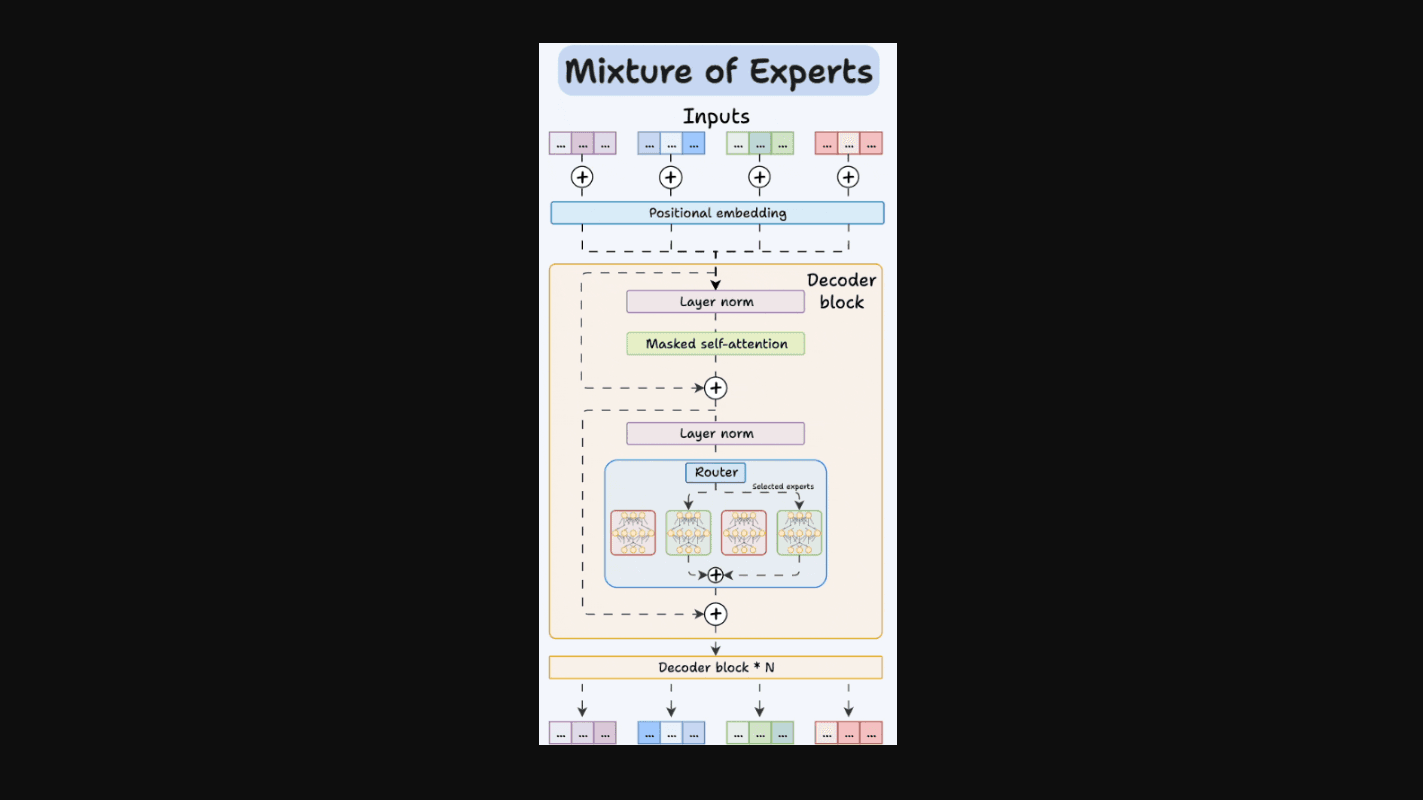
Mixture of experts (MoE) is best for scalability. Explained simply, instead of using the full model's power, these use a specific expert block or small models for token-specific to the query or prompt given to it. This increases the model's overall capacity while lowering the inference cost.
But for these models, balancing the load and training the specific experts and routing them together becomes hassle-worthy.
Mamba-Like/State-Space Models
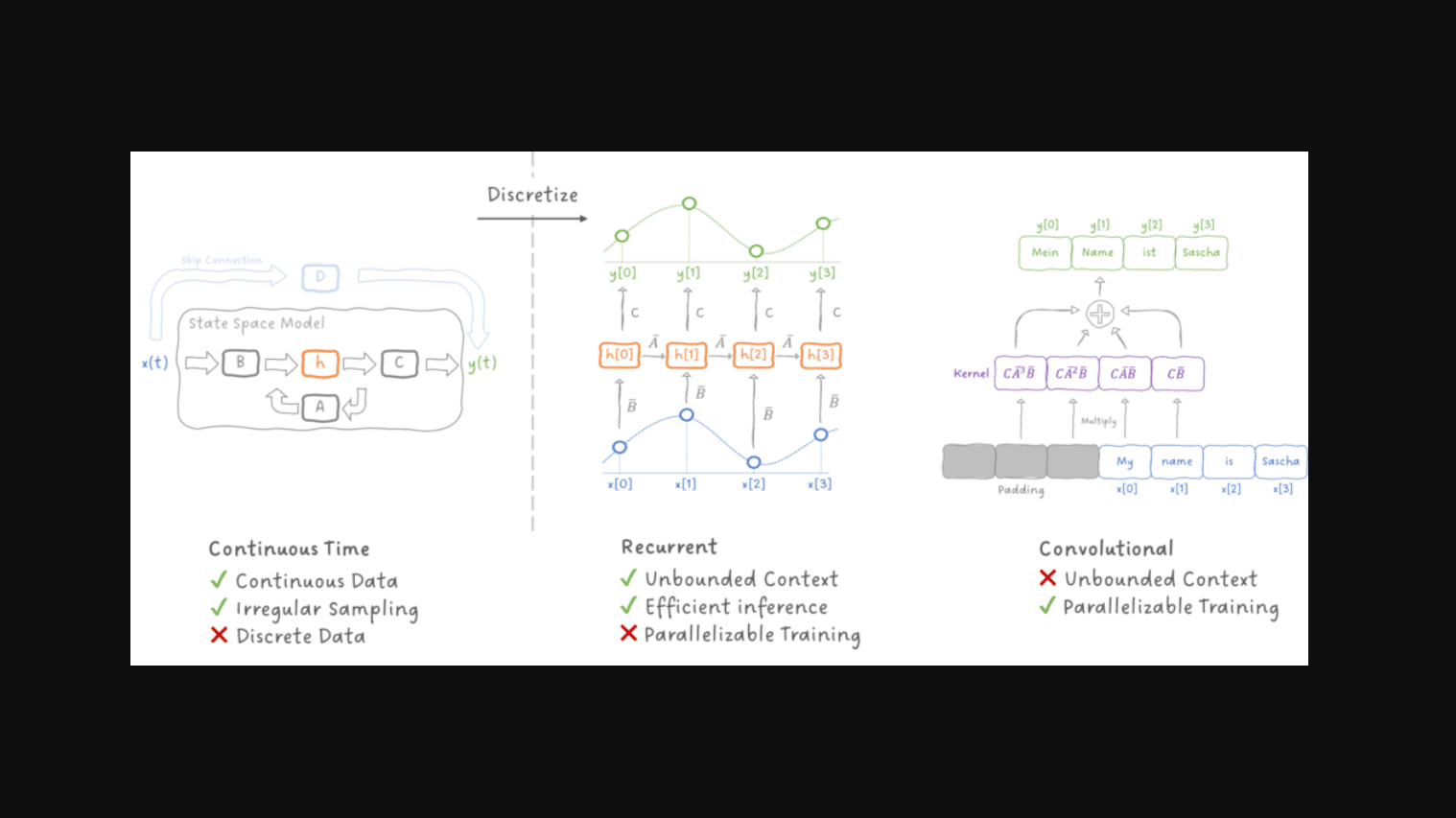
Currently, research is ongoing regarding the possibility of long-sequence reasoning, and this is where SSM models come as transformer alternative choices.
These models allow almost linear scaling via sequence length while omitting 4x attention costs. In simple words, they can be more efficient in terms of inference and pose good usage for long contexts.
Although, to be very frank, the industry’s currently being dominated by transformers due to userbase preference and how they mature.
Hybrid Models
Basically, mixing all the above three categories of architectures to get the best of each, be it regarding latency, memory, cost, or reasoning.
But to be very honest, combining SSM layers, MOE blocks, retrieval, and long-context efficiency is a hell of a task, and as of now, everything’s in research itself. Nothing is wide-scale use-worthy.
Multimodal LLM Architectures
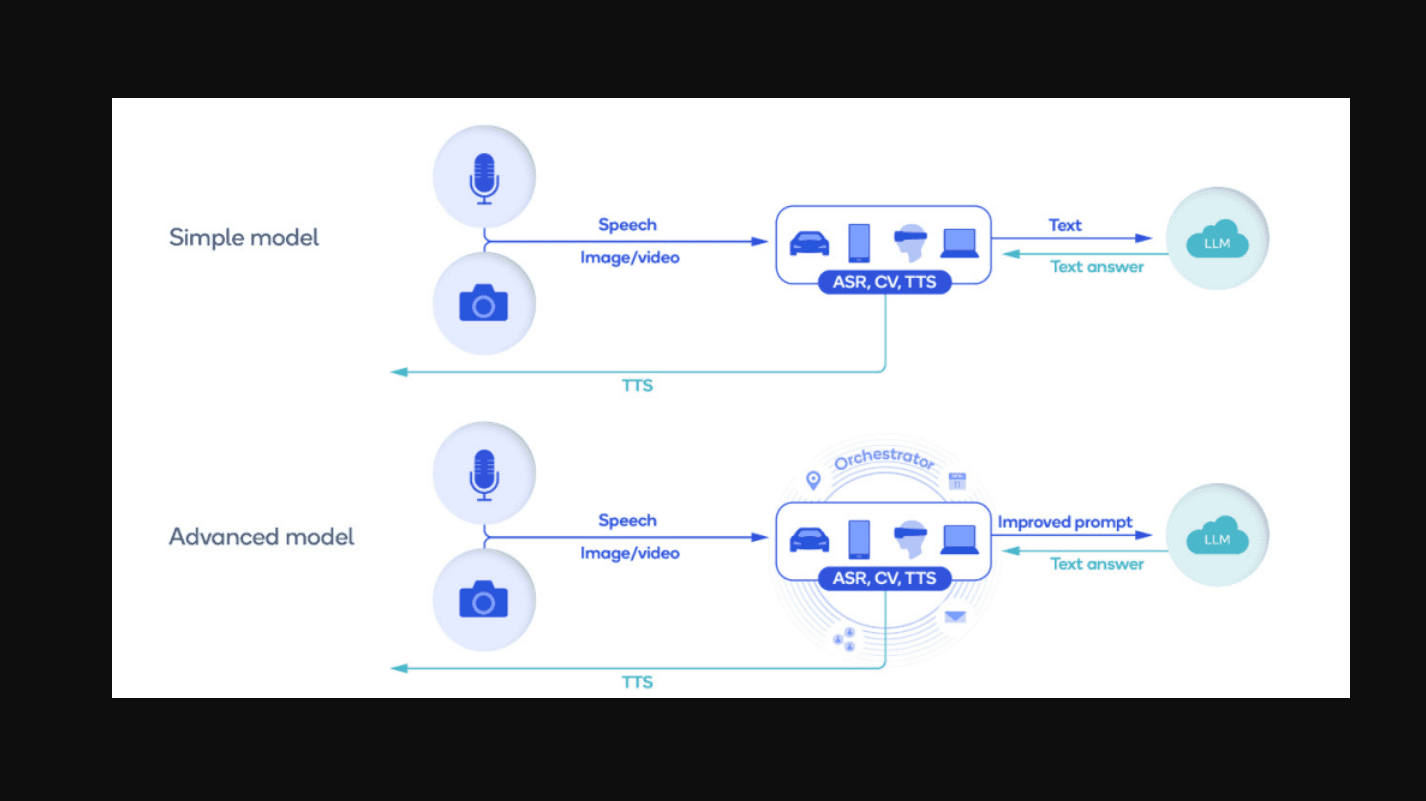
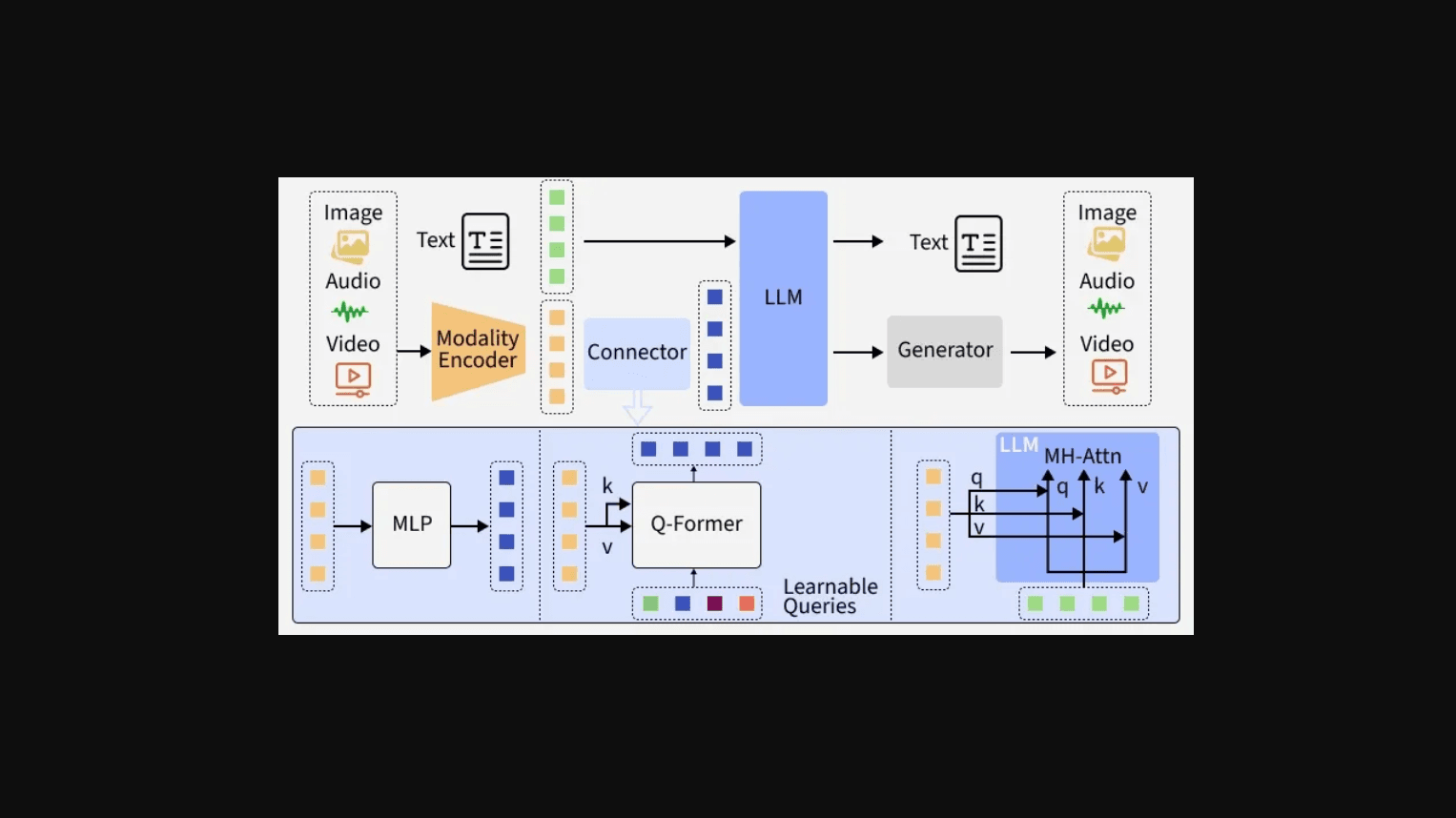
Incorporating vision/audio encoders with language model decoders, modern-day LLMs are extending their capabilities beyond mere image, audio, video, and document understanding.
GPT 5.5, Gemini 3.1 or Claude Opus 4.7 or any of the top open-source models that you can name in the lot, are popular cause of their multimodal capabilities. Regardless, inferences can be very expensive. One of the main reasons why the crowd’s bewildered about Claude's token costs.
The Top Five Leading LLMs (Tried & Tested)
For the rankings, I’ve tried to stay as unbiased as I possibly could and have incorporated both the closed-source and open-source LLMs from the lot. The below 5 are my top picks:
1. OpenAI's GPT-5.5/5.5 Pro
Anything but “open,” OpenAI was the first company of its kind to introduce the power of AI to the world. Since the time when they launched GPT-2, they’ve been shipping models faster than people change careers in their lifetime.
5.5’s coding capabilities have massively improved from the 5.4 version as indicated by the Terminal-Bench 2.0 and Expert-SWE scores rising to 82.7% and 73.1%, respectively.
Apart from that, the model’s now capable of tool-specific tasks which can be seen according to the improvements in the GDPval, 84.9%, OSWold score, 78.7%, and Tau2-bench Telecom score, 98%.
With a 1 million context window, 5.5’s great for multi-step tasks and needs less handholding than its earlier versions. The 5.5 Pro model, available only to the premium subscriptions, is meant for tasks needing the highest accuracy.
2. Anthropic’s Claude Opus 4.7
Anthropic has been a mammoth in recent times in the field of LLM specifically, owing to its state-of-the-art model, Claude Opus. The latest 4.7 version is arguably one of the best models, if not the best, for quality writing, coding, long-form analysis, and anything that needs reasoning without the fluff.
I myself have tried Opus 4.7 versus GPT-5.5, and let me tell you, 3.5/5 times, I feel Opus generates outputs closer to what I ideally want. More of a personal anecdote, but I feel you don’t have to babysit the model to generate the exact output as much as you have to do for the GPT family. Somewhat, I feel the same for the Gemini models as well.
As for benchmark scores, SWE-bench Pro and bench Verified scores of 4.7 have climbed to 64.3% and 87.6% respectively. Also, reasoning tasks have also witnessed improvement, which is denoted by the OSWorld-verified score of 78.0%, the finance agent score of 64.4%, and CharXiv visual reasoning rising to an insane 82.1% without using any external tools.
3. Google’s Gemini 3.1 Pro
Talking about multimodal LLMs, the Gemini family has had one of the best runs.
Right now, the Gemini 3.1 Pro model, as per me, has the best potential. It has Google at its backbone, NanoBanana's image generator stack, along with the greater promise of the world's largest tech company's dataset. Cause let's be honest, internet means Google.
As per its benchmarks, the 3.1 Pro model has achieved a 77.1% score in ARC-AGI-2, along with 44.4% capability in Humanity’s Last Exam without any tool assist. Other than that, BrowserComp touched 85.9% score, MCP Atlas touched 69.2%, and SWE-Bench Pro achieved 54.2%. This simply means that it also excels in agentic and coding functions.
4. Moonshot AI’s Kimi K2.6
The above three models were essentially closed source, but open source is trailing closely behind, which is why, personally, I’d put Kimi K2.6 from this Chinese company Moonshot AI, in the fourth position.
It's focused on long-horizon execution and can perform tasks using agent swarms. The model is also a multimodal one, meaning it supports text, image, videos, and also has separate agents for both non-thinking and thinking tasks.
One major drawback is its 256K context window, but overall, any kind of assistance you need regarding skill workflow drafting, website or app building, slide making, and such, Kimi K is a great option to go for.
5. Zhipu AI's GLM-4.7
For the fifth and last model in the list, I was a bit confused between Zhipu AI's GLM series (another Chinese company) and DeepSeek v4 (guess what, China again!).
Both of them are open-source. I’ve personally used DeepSeek and was impressed by its capabilities, but right now the internet is going crazy about GLM 4.7's agentic engineering capabilities.
People on YouTube are using the latest 4.7 version for coding multilingually and doing lots of terminal-based stuff. Front-end devs are using it for UI generation and for creating marketing flows.
With a 200K context window, GLM, similar to Kimi K2.6, is a hybrid model inclusive of thinking/non-thinking modes, which is why a user can choose between deep reasoning or faster response as and when needed.
Ahhh... It’s So Confusing: Which Model to Use, and When?
With so many models in the lineup right now, I agree, deciding on one for a task becomes confusing. Also, dumb humans that we are, naturally, we’re biased towards the tool that we habitually use, even if there’s a better LLM out there that can generate better results.
No worries, take this from someone who’s been using AI models since before COVID hit. For the below specific tasks, these few models should work just fine for whatever you’re trying to do.
LLMs Can Do 95%. But the Final Touch Should Always Be “Human”
No matter how good an LLM is or how near-perfect the final output it generates, it's as close as you're going to get. It’s “you,” the element X, that bridges that last ~5% gap.
Until Altman or Musk successfully creates AGI or achieves singularity, we have to keep on instructing, editing, directing, and reiterating to generate outputs that are truly ours, and at a level above the zillions of daily slop.
That’d be it. Happy AI-ing.