AI Solopreneurship in 2026: How to Build Your Own Leverage Stack and Work Like a Team
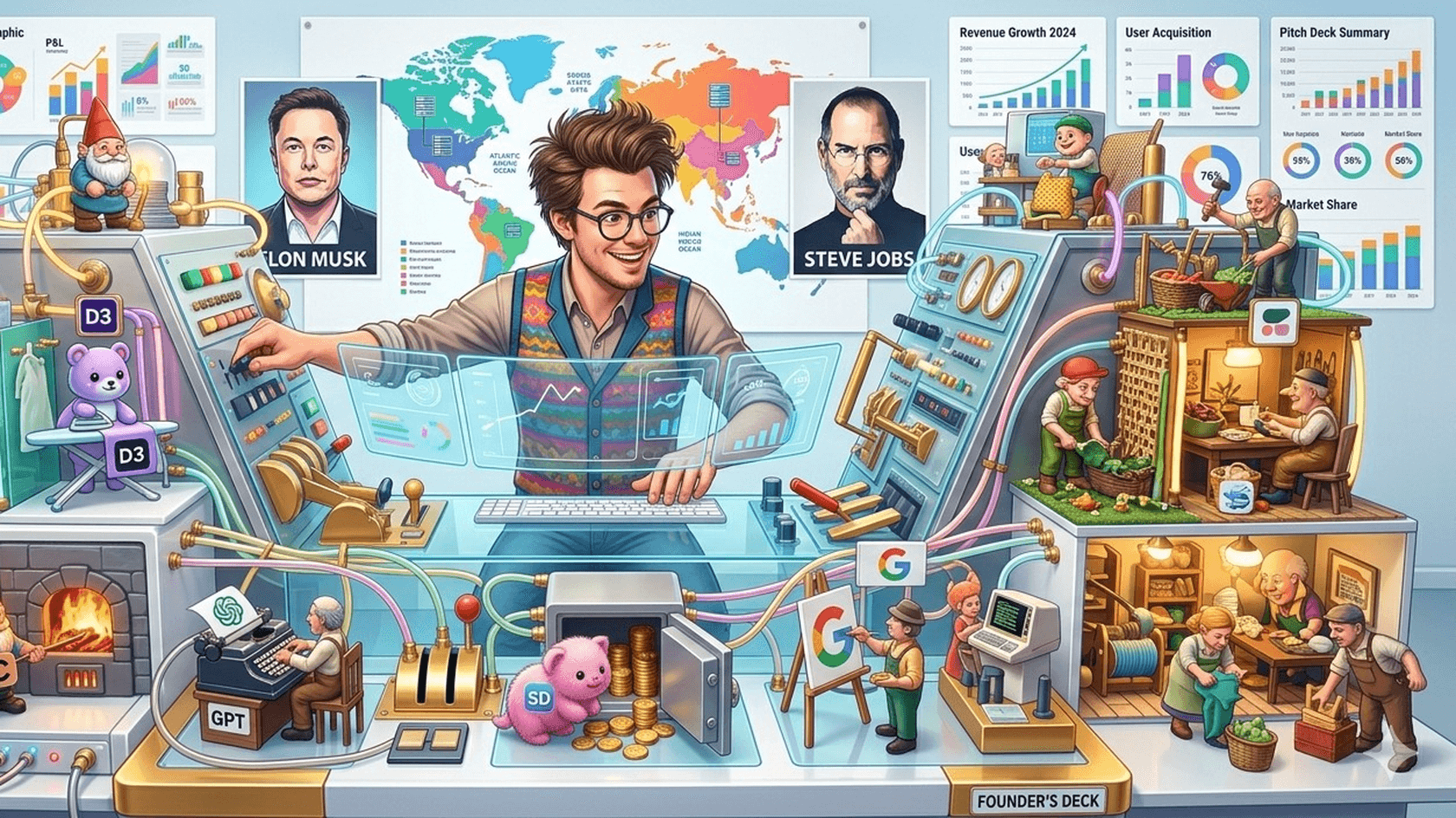
AI solopreneurship is on the rise, allowing a single person to run a business on their own, and even transform it into scalable operations, rather than depending on a small team of employees. This shift is possible thanks to automation enabled by AI tools for solo entrepreneurs.
AI can help you manage strategy, create content, manage operations, and even act as a customer support system, thanks to the combination of automation and intelligence.
A report by Carta highlighted that a growing share of startups have solo founders. From 2019 to H1 2025, the share of new startups with a solo founder has gone up from 23.7% to 36.3%. This suggests that there is a preference for the new type of model where the founder does everything with the help of modern technology. It is a leaner model known for its speed and flexibility, and it is definitely easier than hiring large teams early, when most businesses don’t have the money to pay their employees.
AI Productivity Stack
Source: Pixabay
One of the core AI business ideas for solo entrepreneurs 2026 is to build your business on a three-layer productivity stack. While simple, the stack can drastically reduce manual work and improve speed, as it was made to enable maximum efficiency.
The first of the three layers is Capture and Automation, which is where information comes into the system, while repetitive tasks are handled automatically - for example, automatically tagging and replying to new customer emails. Things like calendar booking, invoice reminders, email sorting, lead forms, and alike are monotonous, repetitive tasks that can be given to AI agents. Simply capture inputs once, and let the AI take over while you deal with other matters.
That leads to the second layer, which is Augmentation. That is where AI helps to improve your output, meaning that it takes a more active role than just moving data around. Think turning rough notes into a polished blog post. Large Language Models (LLMs), writing assistants, data summarizers, and similar service tools are used here, as they can help the entrepreneur with drafting content or analyzing data like customer feedback.
If you run into any problems, tools in this layer can help you analyze it and solve it, and they can usually significantly speed up the process, allowing you to achieve more in a day than you would completely on your own.
Lastly, the third layer is Decision and Prioritization, which is by far the most important part of the stack. This is where decisions are made regarding what deserves attention next. AI tools can help with this, too, as they can rank leads or identify which tasks are highly valuable to the process and the business, such as highlighting which leads are most likely to convert. In short, they can help you decide what to focus on based on priorities.
Stacked together, the three layers act as a strong system where the Capture layer reduces friction, the Augmentation layer boosts your business’ output, while the Prioritization layer keeps you focused on what’s important for growth and development.
Core Tool Categories for Solo Leverage
Now that you understand the basic principle behind the AI stack, it is worth noting that the stack itself depends on three core tool categories. Each of these plays its own role in increasing the output without requiring additional employees, meaning that you still get to keep running the business solo.
The first of the core tool categories is the Strategic Brain. This refers to Large Language Models (LLMs) systems designed to understand and generate human-like text, and it is a layer used for thinking work. That means creating proposals and taking care of research, summarizing long documents, refining messages, and more. These tools can allow solopreneurs to rapidly develop plans and move from basic concepts to plans ready to be executed much faster.
Then, the second category is the Digital Workers, which includes AI agents tasked with doing repetitive work. Most of this work is done in the background, and it involves things like resolving tickets and requests, sending automated follow-up emails, customer onboarding, research agents, and alike. In short, while the strategic brain helps the solopreneur think, the digital workforce helps them work by taking on all the repetitive tasks required to keep the business going.
The third category is the Financial Engine, which, as the name suggests, deals with money. That includes tools that handle bookkeeping, processing payments, invoices, tax records, and all other things related to revenue, expenses, and alike.
Together, these three categories create a strong system that helps you think, execute, and keep track of finances, acting as a large team consisting of nothing but tools.
How does AI reduce the cost of operation for solo founders?
AI reduces operating costs for solo founders by automating repetitive work, including customer support, admin tasks, bookkeeping, and more. This removes the need to hire dedicated team members early, or even to outsource work to freelancers. The founder can distribute the workload among AI agents and essentially lead the company and do everything on their own, with the help of tools.
Build the Workflow
Source: Pixbaya
So, how does implementing an AI solopreneur system actually look like?
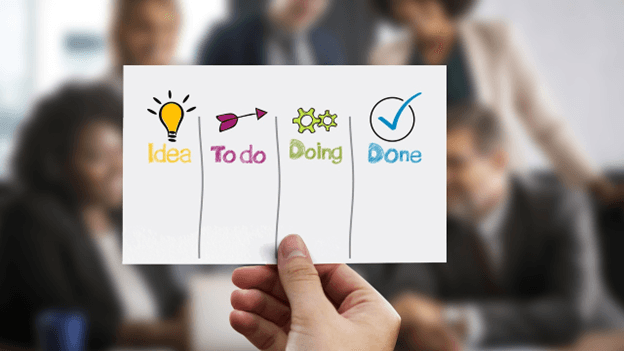
Ideally, you should avoid trying to automate everything at once, as it is too much to keep track of, and it can be rather overwhelming. Plan your 30-day rollout in three simple phases, but keep in mind how much time you actually have and your risk comfort, since this pace works best for full-time focus, not side hustles.
The first segment will cover the first 10 days, and during this time, the focus should be on core setup and one primary tool, which should be an LLM or central workspace. During this first period, you should focus on defining use cases, rather than stacking features, in order to get comfortable with using AI for thinking and writing tasks.
Once that becomes a part of your routine, the next 10 days can be used to enter automation and integration. That means introducing tools for handling emails, schedules, creating simple workflows, and alike. Essentially, your goal during this period is to connect everything and start building it into a small but functional system. Expansion will come later; for the moment, you should focus on actually building a system that works.
Finally, the last 10 days should focus on optimization and refinement. This is where you can see what works and what doesn’t, which aspects of the business/system require more work, or are redundant and need to be removed. One pitfall during this period that many solopreneurs fail to avoid is adding too many subscriptions too quickly, causing a subscription sprawl, avoid this by only committing to tools that serve a clear single use case or can realistically pay for themselves within 90 days.
Essentially, every new tool comes with integration issues, maintenance requirements, and cognitive load, which means going with too many at once can once again overwhelm you. Ideally, you want to move slowly and methodically, mastering one tool at a time and ensuring that nothing you use is unnecessary. Make sure that each tool has a purpose and a real impact - in other words, determine that it is needed and what it does.
Using AI as a Content Multiplier for Lead Generation
One of the most practical uses of AI in solopreneurship is a content multiplier, where you don’t treat every post and article as a separate task. A content multiplier means taking one strong idea and turning it into multiple pieces of content across multiple channels or platforms.
Instead of creating each post or article as a separate task, you can start with one strong asset, like a blog post, video script, newsletter, or something similar. Then, use AI to adapt this idea into other formats.
For example, a blog post can be shortened into a LinkedIn post, or even more into a thread for X, or a newsletter segment, or even converted into short-form video captions. The important part is that the core message remains the same while the format changes.
This is where multimodal content becomes useful, as the original asset can see the conversion of text to audio, audio to transcript, and transcript to short clips. You can even turn clips themselves into images to enrich your posts. This reduces workload and increases both productivity and posting consistency, both of which improve your visibility.
AI-Powered Customer Support and Retention Systems
Source: Pixabay
For solopreneurs, AI-powered customer support is by far one of the most important applications of artificial intelligence. By using intelligent widgets and chat systems, a business can handle the majority of tickets from customers automatically. Through the use of intelligent widgets and chat systems, a business can handle roughly 60-80% of tickets from customers without needing human assistance. The systems can easily handle repetitive requests such as order status, refund policies, account access issues, various questions regarding onboarding or products, and the general FAQ.
Of course, for more complex issues, human involvement is required, but such more serious tasks are much less common than some of the general questions or small problems that customers usually have. Plus, by letting the AI handle customer support, the customer gets the answer instantly and around the clock, which increases satisfaction. At the same time, the solopreneur is, once again, free to work on other aspects while the AI handles customer support.
With that said, fully autonomous support is often not the best model for the long term. Instead, a hybrid system, also known as the human-in-the-loop approval system, is a better solution. This is a system where AI handles simple tickets while more complex ones are sent to a human agent.
Conclusion
AI solopreneurship is a new model enabled by the emergence of artificial intelligence that is all about transforming a hobby or a side hustle into a proper business system that allows one person to run a business that would otherwise require a small team.
To do this efficiently, the solopreneur needs to combine a structured productivity stack with specific tool selection, streamlined workflows, content multiplication, and AI-assisted customer support. If done right, the founder can continue to lead and run the entire business solo, without hiring anyone else.
Once the business evolves and expands over time, turning it into a larger enterprise with employees can be considered. However, at first, when you have no money to pay employees with, this is a solid way to get started.
The next phase of solopreneurship will likely be defined less by individual effort, and more by how effectively these systems are created and combined.