
On October 29, Wagyu, a crypto exchange where users could swap other cryptocurrencies for Monero (XMR), confirmed a data leak. The WhiteArmor group demanded $5M from the service to keep the data private. After Wagyu refused, the group published the data online.
- security
- news
- 29 Oct 26
When an Exchange Knows Too Much: The Monero Leak
The alleged Wagyu leak includes 38,628 swap records and 10,139 IP addresses.
0
nft.eu
- rating +20
- subscribers 90
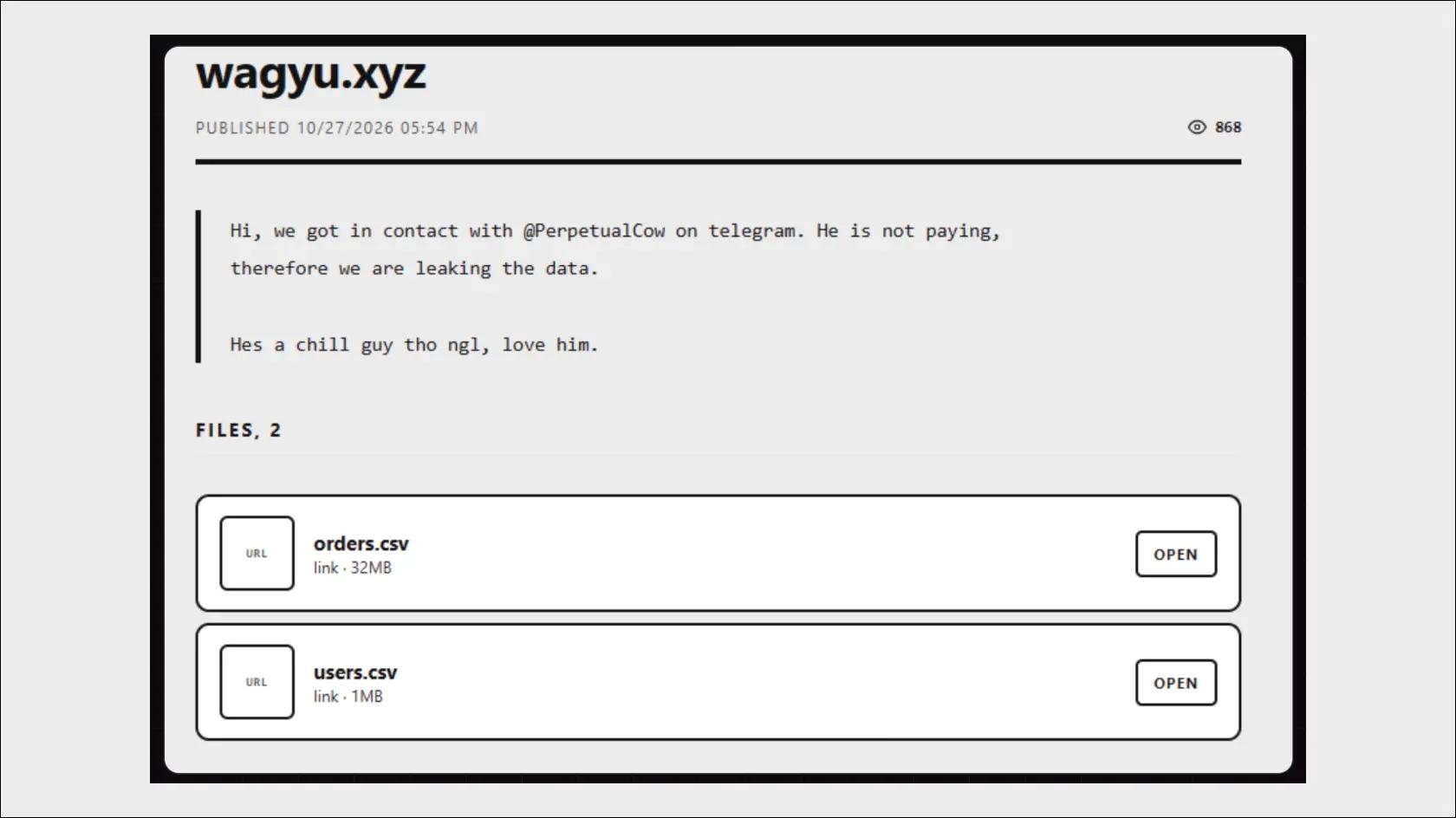
Monero’s cryptography wasn’t broken, or at least there’s no sign of a weakness in it here. The problem lies elsewhere: in principle, the exchange could store data (incoming transactions, XMR receiving addresses, and user IP addresses) that can tie a user to a transaction. Here’s the paradox: people buy Monero for privacy, yet exchanges like this are potential traps for data collection.
What Researchers Found in the Leaked Data
According to cybersecurity researchers at Hudson Rock, the published data contained 38,628 swap records from July 18 to October 26, 2026, along with 10,139 IP addresses.
Things get more interesting when you look inside the records. In 4,580 completed swaps, the researchers found all three linked together: the incoming transaction, the XMR receiving address, and the client’s IP. Another 8,137 records contained Monero receiving addresses.
How an Exchange Can Link a User to a Wallet
Monero hides recipients, the links between senders, and amounts using stealth addresses, ring signatures, and RingCT. So you can’t look up a wallet’s full history on the public blockchain.
When you swap BTC for XMR, the service has to accept bitcoin and send Monero to the address you specify. To complete the swap, it matches the incoming transaction with the payout address. If it also saves the client’s IP and the order time, it ends up with a direct link between a public transfer and an XMR address.
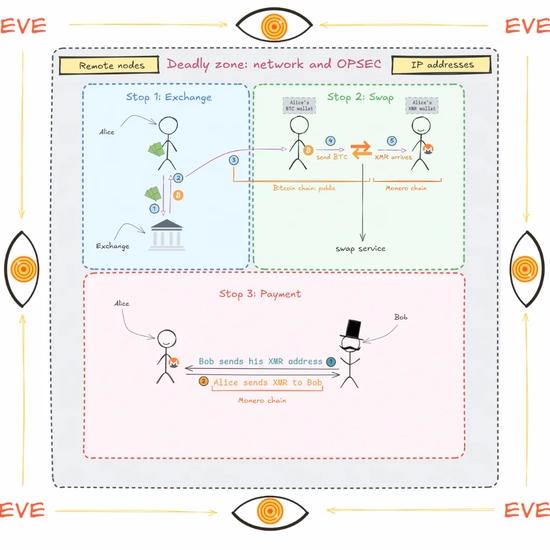
This doesn’t automatically reveal a person’s identity or any later transfers within Monero. But once you add data from other sources, the connection is easier to rebuild.
Editor-in-Chief’s Take
On the Monero subreddit, users are discussing this case in terms of financial surveillance. The logic goes like this: if an exchange stores a public deposit → XMR address → IP chain, then a government, or anyone else who gets access to such databases, doesn’t have to break the protocol itself. They can get the information straight from the exchanges.
Back in June, users accused XMR1 market participants on Hyperliquid of concentrating liquidity and putting artificial pressure on the XMR price, which opened the door to manipulation. So there are complaints about this exchange too, though they concern hidden fees and unfair conditions.
The scariest part is that deleted data apparently never went away. The alleged leak turned up more than 4,000 records, and most of them still contained deposit transaction hashes. That raises an uncomfortable question: how many no-KYC services like this keep information their users think has been deleted?
Conclusion. A privacy coin can fail to deliver privacy, and the reason isn’t its cryptography. It’s the ordinary interfaces it has to work with when people buy and sell the asset. Monero let users hide from financial surveillance, but the exchange they tried to do it through collected data on every user, as if to rebuild that surveillance.

Read Also:
This post is for informational purposes only and does not constitute advertising or investment advice. Please do your own research before making any decisions.
0
Comments
0
Write a comment.