In 2026, traditional funds, fintechs, and businesses have gone a step ahead and begun launching their own stablecoins. If you are wondering why companies create their own stablecoins, Nassim Eddequiouaq, co-founder and CEO at Bastion, breaks it down to control, security, and optimisation. He says,
“You can only go so far by partnering with an existing issuer. By issuing their own stablecoins, companies can enhance fraud management, improve user experience, and unlock new economic opportunities.”
Stablecoins are a $320 billion market today, and could grow to $3.7 trillion, as per Citi’s Digital Dollars report. While the tech behind these pegged tokens is certainly a USP, for non-crypto-native firms, it represents an opportunity to build new financial and payment infrastructure. The GENIUS Act in the US and MiCA in the EU have provided regulatory clarity, while white-label infrastructure providers have enabled businesses to launch their own proprietary pegged coins with a few lines of code.
This article studies the specific stablecoin mechanics serving value to traditional firms and fintechs, and the impact of this development on the broader crypto market in 2026 and beyond.
Why Own Stablecoins?
Bastion CEO says proprietary stablecoins help businesses control their economics through reserve yields and mint/burn fees, and customise functionality with programmable features such as fraud reversal and transaction control.
However, the biggest driver of this shift has been the gaps and friction in traditional finance. Cross-border payments have banking hour restrictions. If a company operating in the US needs to fund a payout in Mexico, it should predict weekend volume and fund in advance on Friday.
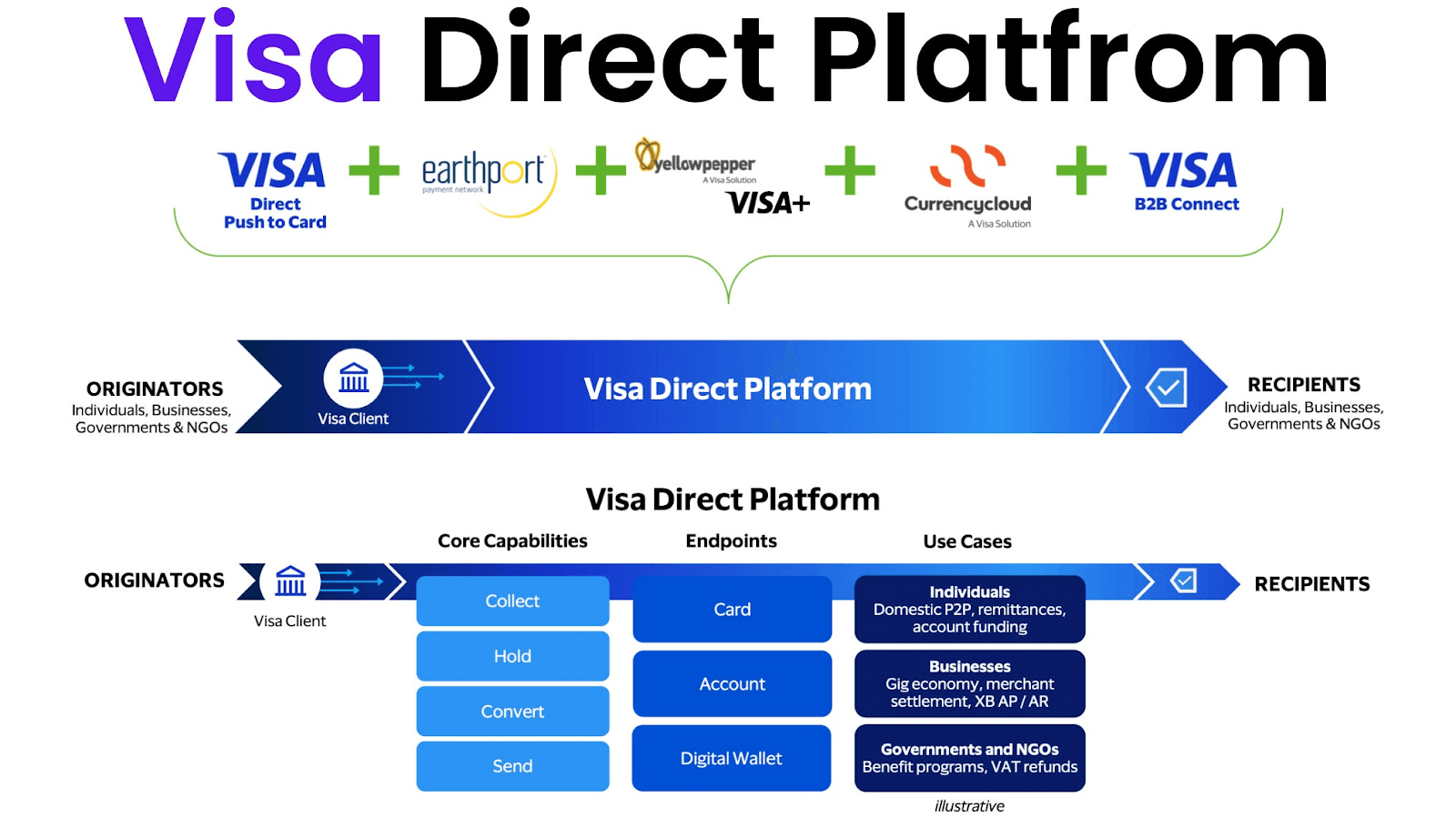
Stablecoins allow continuous funding capability. A recent example here could be the Visa Direct initiative, in which the payments platform would integrate stablecoins as a funding mechanism across 11 billion endpoints (cards, accounts, and wallets).
“When we saw stablecoins emerge, we saw them as just this better settlement layer and funding mechanism where if you could let a client be able to fund Visa Direct seven days a week, 24-7, that is a much more flexible solution without having to predict and plan ahead.”
A few examples of fintechs and banks having their own stables include:
JPMorgan: JPM Coin is a permissioned stablecoin for wholesale internal transfers;
Fiserv: FIUSD is integrated into Fiserv’s banking/payments menu for thousands of financial institutions;
PayPal: PYUSD has a $3.6 billion market cap. Fiserv and PayPal announced interoperability between FIUSD and PYUSD;
BNY Mellon now acts as custodian for major tokenised funds;
Aon is settling insurance payments in the USDC
Société Générale–Forge (EU) has launched its own EUR-backed EMT under MiCA, positioning itself as Europe's regulated stablecoin leader;
Ripple’s RLUSD stablecoin is active in DeFi and cross-chain bridging;
Mastercard acquired BVNK, a major stablecoin payments infrastructure firm, in March/April 2026;
Mastercard + MoonPay partnership is bringing stablecoins to 150 million merchants;
Deel and Flywire are using stablecoins for cross-border payroll.
Source: X
Traditional wire transfers take 1 to 5 days and cost 2% to 7% per transaction. Stablecoins settle in seconds at near-zero fees, 24/7, without intermediary banks. Companies with global supply chains, FX conversion needs, and large remittance flows gain immediate working capital and cost advantages.
With supply projected to hit $1 trillion, stablecoin reserve yields alone could generate $40 to 45 billion annually for issuers from short-term US Treasuries backing their float. Issuers capture the net interest margin, a powerful profit incentive on top of any transaction-fee revenue.
Smart contracts allow these tokens to automate complex payment workflows, including milestone-based supplier payments, instant payroll, programmable escrow, and atomic settlement in DeFi.
Banks issuing their own stablecoins is partly defensive. By launching their own versions, banks retain the customer relationship, settlement flow, and the data that comes with it.
Mechanics of Value: Collateral and Backing Models
Let’s see which peg models are dominant among the fintechs and businesses going the ‘crypto-native’ route:
Fiat-Backed vs. Synthetic and Yield-Bearing Models
Fiat-backed stablecoins are fully off-chain, collateralised stablecoins backed in a 1:1 ratio by high-quality liquid assets held in custody, segregated from the issuer's own funds. The GENIUS Act mandates this structure for all US-regulated issuers.
Reserve assets that are eligible under the GENIUS Act OCC proposal include:
US coins and currency / Federal Reserve balances;
Demand deposits at insured depository institutionsl
Short-dated US Treasury bills of 93 days or lessl
Qualifying state/government money market fundsl
Reverse repos backed by Treasuriesl
Tokenised representations of the above, which meet the specified criterial
Crypto assets, equities, or stablecoins themselves aren’t permitted.
These tokens are required to provide monthly public attestations of reserve composition certified by executives and annual independent audits. Issuers with less than $50 billion in outstanding debt must submit full, audited financial statements.
Synthetic-Hedged or yield-bearing stablecoins work on a simple mechanism. Let’s take Ethena’s USDe as an example. When users deposit ETH or BTC as collateral, Ethena simultaneously opens an equal short position on perpetual futures markets.
The long collateral + short futures = delta-neutral position
This means price moves cancel out and the peg holds regardless of market direction. Yield comes from two sources here. First, staking rewards on deposited ETH, and second, funding rates paid by long traders to short traders in bullish markets.
USDe had an APY of 3.59% in February 2026. The 30-day average yield was 4.78%. During the peak bull market, Athena has delivered 20-30% APY. Ethena shifts more backing to liquid stablecoins to manage risks, such as counterparty risk on centralised exchanges, negative funding rates during bear markets, and smart contract vulnerabilities.
Model
Collateral
Yield?
Key Risk
Example
Fiat-backed
USD / T-bills (off-chain)
No (GENIUS ban)
Reserve opacity, bank failure
USDC, USDT, FIUSD
Synthetic / delta-neutral
Crypto + short perps
Yes (3–30%+ APY)
Funding rate flip, CEX risk
Ethena USDe
Regulations Governing the New Breed of Stablecoins
A positive regulatory outlook is a major reason why fintechs and banks, which were earlier sceptical of digital assets, are embracing stablecoins. While there have been many positive developments, the GENIUS Act and MiCA in the EU are the most prominent ones.
US: The GENIUS Act
The Guiding and Establishing National Innovation for US Stablecoins Act, or the GENIUS Act, was signed on 18th July 2025. It is the US's first comprehensive federal law on stablecoins. It was passed by the Senate with 68–30 votes and by the House with 308–122 votes, with bipartisan support.
All stablecoins should have a 1:1 reserve backing required at all times. There’s no fractional reserve permitted;
Eligible reserves include US cash, Fed balances, T-bills with a 93-day maximum, qualifying MMFs, reverse repos, and tokenised versions thereof;
All stablecoin issuers must carry out monthly public attestations and annual independent audits. Issuers with less than $50 billion in outstanding must file full audited financials;
Compliant payment stablecoins are explicitly not securities and are exempt from SEC/CFTC oversight. This resolves years of legal ambiguity;
Issuers are classified as financial institutions under the Bank Secrecy Act and must fulfil AML/KYC requirements;
Issuers with less than $10 billion must transition to federal oversight (OCC for non-banks, Federal Reserve for bank subsidiaries) within 360 days or stop new issuance;
The GENIUS Act prohibits yield/interest payments to stablecoin holders. The OCC's proposed rule reinforces this;
Foreign issuers must register with the OCC and hold US-based reserves sufficient to meet US customer liquidity demands.
The GENIUS Act will take effect no later than 18 January 2027, or 120 days after final regulations are published, whichever is earlier.
The OCC published a 376-page proposed rule implementing the GENIUS Act. It covers licensing, reserves, redemptions, capital, and operational standards. The key debate that still needs to be addressed is whether to bar a single issuer from operating multiple 'brands' of stablecoin. FDIC has also finalised a parallel rule requiring 1:1 reserves and 2-day redemptions for FDIC-supervised bank issuers (comments due 18 May 2026).
EU: MiCA (Markets in Crypto-Assets Regulation)
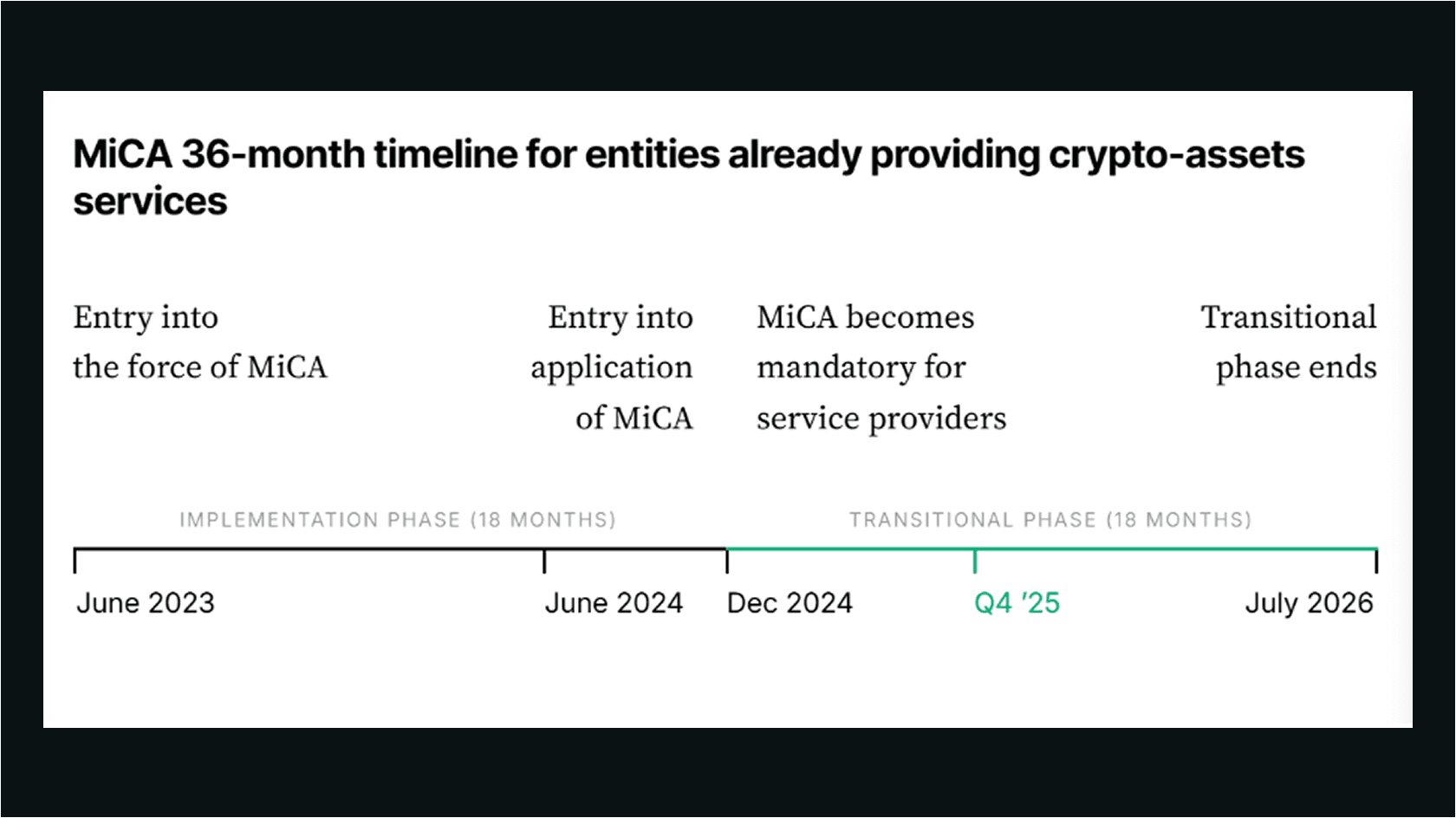
MiCA is the world's most comprehensive crypto regulatory framework. It is fully operative across all 27 EU member states from December 2024. The final transitional period ends 1 July 2026, after which all crypto-asset service providers must hold MiCA authorisation.
MiCA 36-month timeline. Source: Adam Smith
MiCA describes two stablecoin categories:
Electronic Money Tokens (EMTs) are pegged to a single fiat currency, e.g., EUR. It must be issued by an authorised credit institution or e-money institution. The stablecoin should have 1:1 backing and must be redeemable at par. EMTs will be supervised by national authorities.
Asset-Referenced Tokens (ARTs) are pegged to a basket of assets, commodities, or multiple currencies. An EU-based issuer can issue an ART token and must obtain pre-approval of the whitepaper. ARTs have higher capital requirements, i.e., 3% of the average reserve for significant ARTs.
No ART issuers have been authorised yet as of early 2026. The demand is low, and the requirements are stringent. Algorithmic stablecoins are explicitly excluded from MiCA, and stablecoins without proper reserves do not qualify as EMTs or ARTs.
Where Companies are getting their CASP licences. Source: ESMA Registry
As of February 2026, over 57 CASPs are fully authorised under MiCA, with Germany leading with 18 licences and the Netherlands following with 14. Notable authorised EMT issuers include Circle (USDC/EURC) and Société Générale–Forge. USDT remains non-compliant, leading major EU exchanges to delist by March 2025.
All these developments are impacting the crypto market and TradFi in general in various ways:
Fragmentation of Liquidity
As hundreds of corporate stablecoins enter circulation, liquidity fragments across competing tokens, chains, and ecosystems. USDT and USDC currently hold 93% of the market cap, but new entrants like FIUSD, RLUSD, USAT, USD1, USDf, and USDG are eroding that share.
The risk emerges as reduced depth at any single venue, higher slippage for large trades, and interoperability challenges across cross-chain bridges. Ethereum and Tron together account for ~90% of total stablecoin supply, but Layer 2s and newer chains are expanding rapidly from a smaller base.
RWA Tokenisation Acceleration
Stablecoins are the primary settlement currency for the tokenised real-world asset (RWA) market. The RWA market hit $29 billion in April 2026 with a projected range of $400 billion by 2030. BlackRock BUIDL's expansion to Solana, Franklin Templeton's tokenised MMF, and Ondo's USDY are examples of TradFi instruments moving onto blockchain settlement rails powered entirely by stablecoin infrastructure.
Pressure on Bank Deposits
Standard Chartered warned in October 2025 that stablecoin adoption could drain over $1 trillion from bank accounts in emerging markets. Experts have warned that stablecoins can challenge governments' control over domestic currencies, particularly in emerging markets. Here, USD stablecoins serve as a digital dollar alternative, which can, in turn, increase the dollarisation threat to the wider world.
From Crypto Tool to Financial Infrastructure
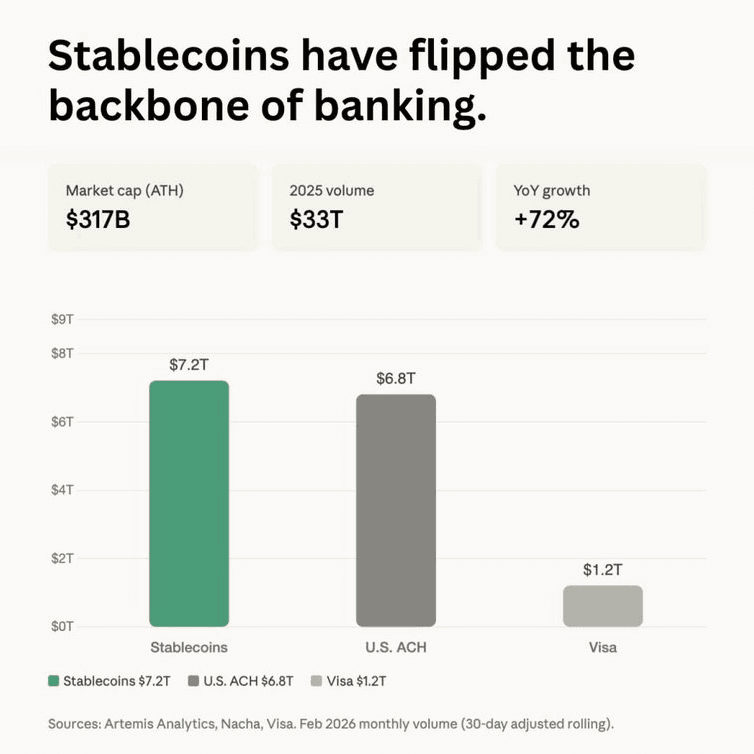
In February 2026, stablecoins reached an average monthly volume of $7.2 trillion, surpassing Visa and US ACH.
Source: Artemis Analytics
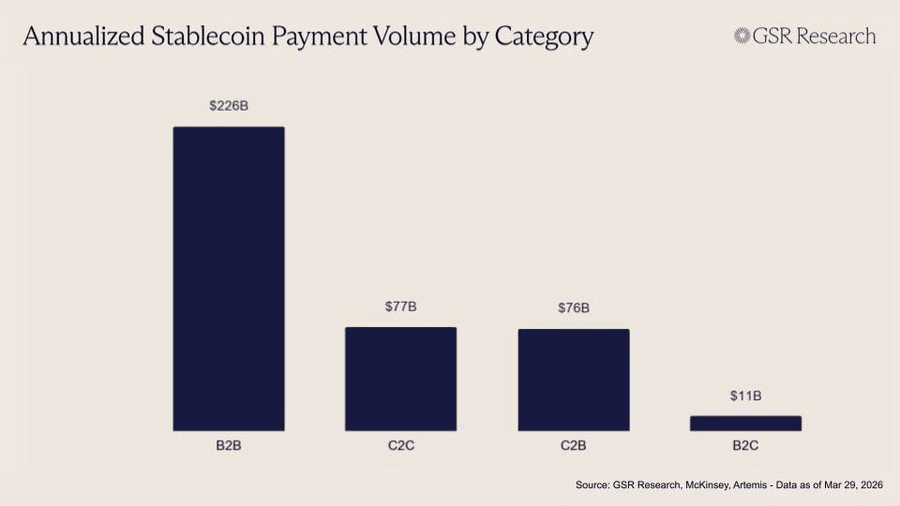
But transaction count is driven overwhelmingly by large institutional movements from treasury rebalancing, exchange flows, and cross-chain liquidity management. Retail payments still account for a small fraction of total stablecoin volume. Stablecoins are steadily moving towards becoming the core financial infrastructure for the TradFi banks and institutions.
Stablecoins Will Be Coordinating in Setting Up the New Financial Order
As of 2026, 134 countries are exploring CBDCs, and 11 have already launched their own. The TradFi unease with crypto and stablecoins has given way to a new structural shift. Central bankers now increasingly prefer a wholesale CBDC model that settles only between financial institutions. Earlier, they were forcing retail CBDCs to compete directly with consumers' wallets.
The emerging model will have private, regulated stablecoins handling retail and cross-border payments, while wholesale CBDCs serve as the inter-institutional settlement backbone. Banks issuing tokenised deposits could outgun stablecoins domestically, i.e., they can pay interest, carry deposit guarantees, and have state backing. But stablecoins retain an edge in cross-border payments, where banking compliance complexity remains a structural disadvantage.