Must've heard the saying, right? If you wanna make God laugh, then tell him your plans. This is the actual reality of 2026, the pro-AI era.
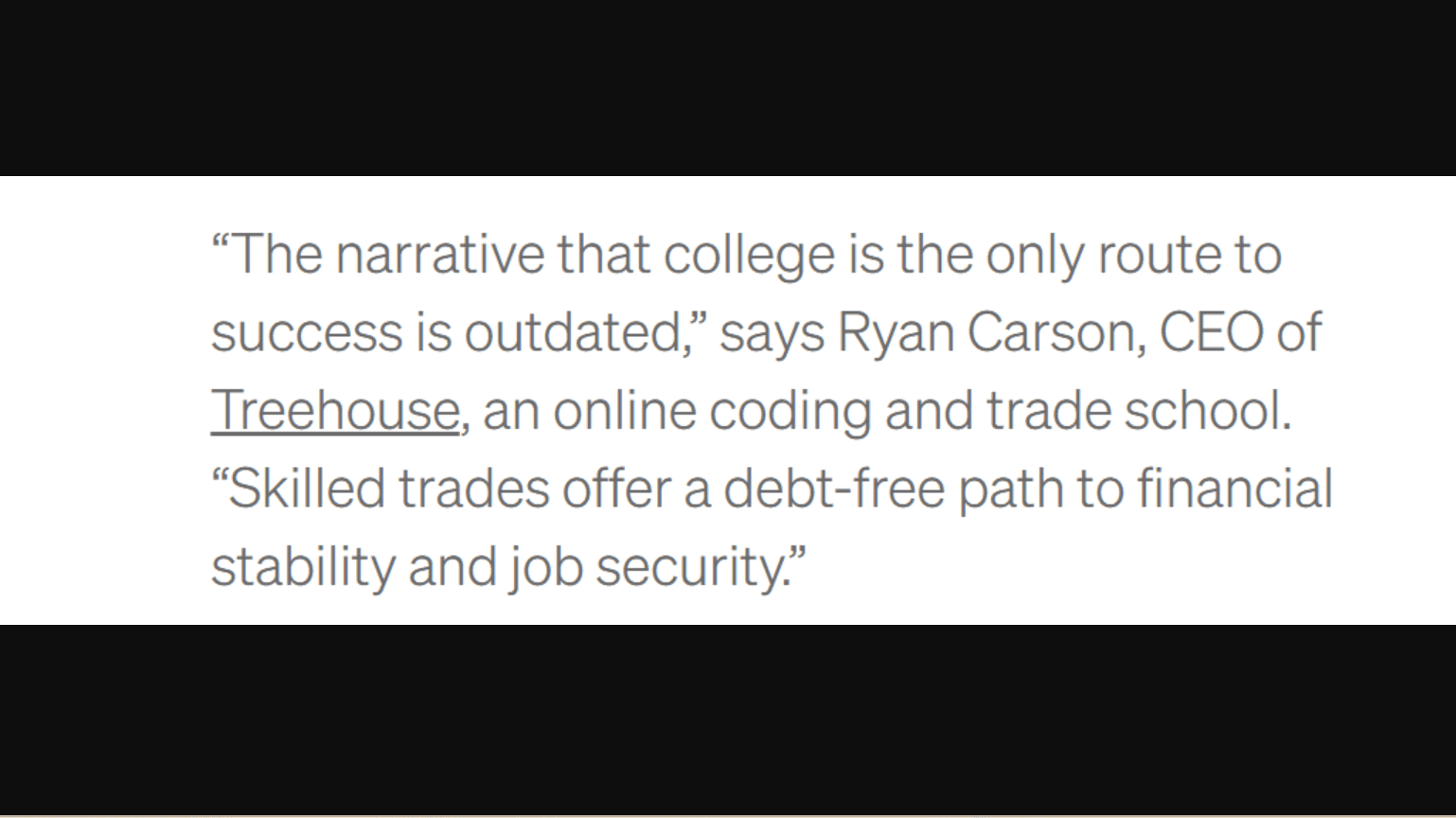
And this is exactly what NVIDIA's CEO Jensen Huang was talking about when he said that the next generation of millionaires won’t be data scientists, developers, or even brain surgeons. They'd be carpenters, landscapers, electricians, and plumbers.
Wonder how?
Simple, it's Darwinism, survival of the fittest.
But how much proof is there for this claim? Or will AI replace plumbers? Let's find out, and while we're at it, let's also find out how to thrive or adapt in this paradoxical period of blue-collar boom.
The rise of the “manpower” requirement to serve the machines
As per the Bureau of Labour Statistics in the U.S., in the next eight years, Y-o-Y, there'd be a lack of around 81,000 electricians, considering the degree of unfilled jobs all over the country. A different McKinsey study put out that by 2030, America would need around 1,30,000 electricians and around 2,40,000 laborers.
Still not getting why this rapid upsurge of manual talent?
It's cause massive AI data centres are being built everywhere. They need power, infrastructure, resources, and upkeep to function optimally. And who's going to serve them? It's this blue-collar workforce.
Also Read: AI in Daily Life: How Artificial Intelligence Is Changing Everyday Routines
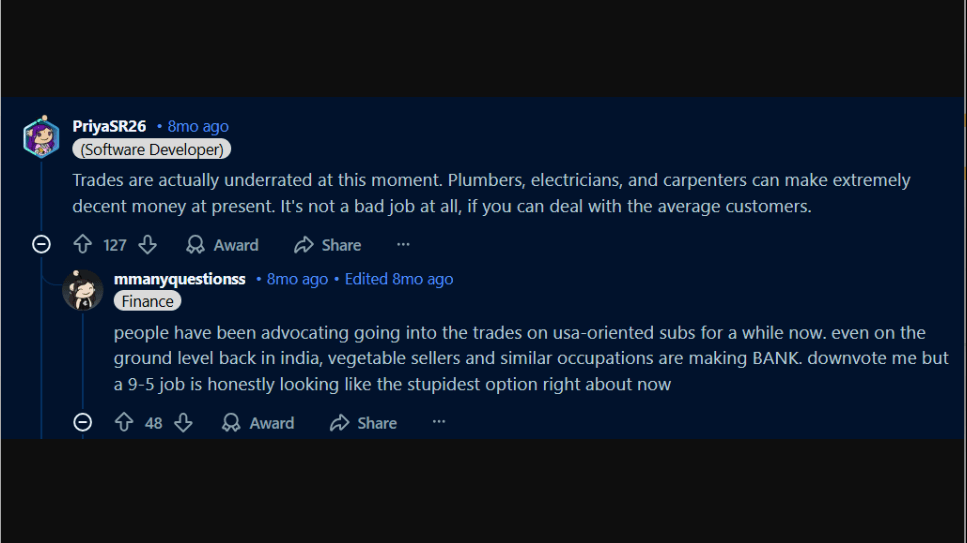
But it's not only the cause of the AI race’s demand. There are actually legitimate causes why plumbers and electricians are commercially clearing $100,000 to $150,000 annually.
1. Shortage of skilled hands during high demand
Master workers and tradesmen are ageing and retiring, but apparently, the new age wants to be techies, not manual workers. And it's also partly cause of the societal push to get degrees as the only means to secure a high-paying job.
But then there's no stopping urbanisation, is it? High-rise buildings, hospitals, plants, and residential establishments are needed more so than ever before.
2. Manual work has gotten more complex
Have you ever actually seen a commercial technician work on HVAC chillers, three-phase electricity outlets, or high-pressure pipes? These need extremely specialised hands and, of course, years of experience.
Plus, with rising demands, downtime tolerance decreases, simply meaning a manufacturing plant or any commercial unit that serves mankind can't stay down for hours like they used to before.
Therefore, the founders, CEOs, and employers need to pay top dollars for fast and expert servicemen. No money, no honey. It's as simple as that.
3. No moonlighting barriers (unlike IT companies)
Tighter deadlines call for 24/7 operations. Is that employer paying more? Then why should I work here? Or if that company is offering better incentives for an extra two hours of work, why keep confined to only one employer?
Makes sense, right?
Not only this, niche skills get paid way more than average workers. For example, high-tech plumbing systems for BMS or medical gas, or maybe PLC programming for electricians. These get paid much more than an average, around-the-block serviceman.
And once you rack up 10+ years of experience, you may open up your own business or contractual firm. The scale then far exceeds the base $1,50,000 mark. And hey, don't forget, there's steady demand.
4. Skillsets that can fight recession
Unlike finance or IT, which depend on economic waves and geopolitical ups and downs, manufacturing plants still need functioning water or electrical systems, and hospitals still need the lighting checked and supplies delivered. Basically, you aren't ever gonna lose your job, i.e., unless you become physically unfit to do it.
Point to consider:
You'd have a good amount of catching up to do if you learned your plumbing skills from your dad. Especially if you wanna serve the current and the future complex markets. No offence, but it's a skill gap of possibly 30+ years.
So, will AI replace electricians, plumbers and carpenters?
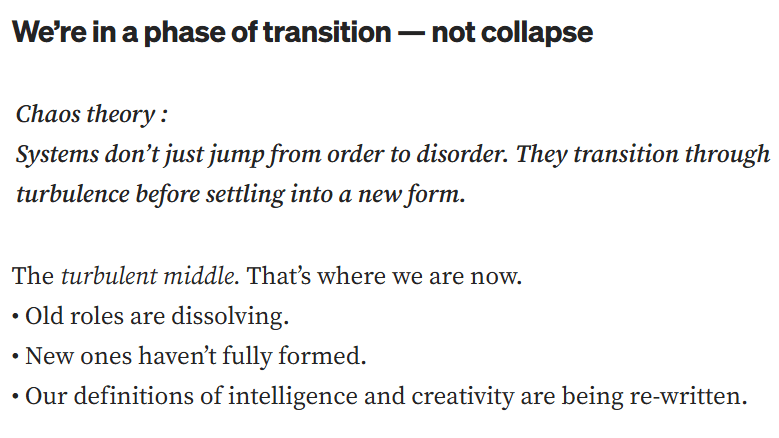
Umm no. The titles of the jobs might still stay the same, but the actual skills required to do them are changing just as much as any other field.
The protection provided by union rates in high-demand hubs
Around the DC Metro/Northern Virginia region, pipefitters and electricians are right now the luckiest simply cause those areas have the highest concentration of data centres in the world.
Electrician hourly rates around the DC metro zone average around $59.50/hour. If you count retirement and healthcare benefits, total packages mark around $80 to $90/hour. Considering a 2,000-hour work year, that's around $119,000, not even considering OT (overtime).
As for plumbers, they average out at about $32.50/hour across the state, but obviously ~$10 higher when it's Northern Virginia. So high earners can easily touch that sweet $1,00,000 annual mark.
Considering San Antonio, Austin, and Dallas, rates there for electricians also start around $49.64/hour, including two to three different pensions and funded healthcare. So the basic range around these regions, for example, at locations like Amarillo, easily ranges from about $36.50 to $49.64, or even $60/hour. Add to that $40 to $100/day, double-time rates. That's insane earning potential.
Now easy math. If there's a data centre, there'll be times when there are crashes. And in such locations, 10 hours per day for six days a week is very common. Counting OT after regular work, the base rates double if working hours per week are 20+. Added up, an electrician or plumber near these areas can easily clear that $150,000 mark...but obviously, by breaking a lot of sweat.
The replacement wave caused by AI
Dario Amodei, the CEO of Anthropic, coined the term white-collar bloodbath a few months ago. Basically, folks in law, finance, consulting, and tech are likely to see major industrial role wipeouts in the coming years.
And it's the ground reality. The thousands of layoffs happening in the IT sector prove this. Basically, junior-level employees who're handling entry-level stuff like ticket-based tasks, testing, documentation, etc. They're now irrelevant. AI now works as well as (or even better than) they do. A senior-level engineer with hands-on technical knowledge can easily execute team-scale tasks using one or two competent LLMs.
The case for junior accountants and middle managers is no different. Tasks that are rule-based are easier to automate and hence easier to repeat, which LLMs can do 24/7 without breaking a sweat.
However wise or smart a model might be, when it comes to the real world, there are still far, far nitty-gritty complexities that can slip through the digital memory cracks.
Also Read: The AI Solo Entrepreneur: Building with One Person and a Fleet of Digital Assistants
Say your heavenly abode hails from the 1920s. There is a dark basement below it where a high-voltage cooling system operates. If you ask Claude or ChatGPT how to navigate those systems or repair the faulty wires, it will basically blabber, which in tech terms is called hallucination.
A skilled technician, on the other hand, not only thinks from his brain but can feel from his touch, sniff from his nose, and recall exactly by seeing the messy wires or the machine in front how his skills can be put to use.
That's the chaos factor. A data-fed AI can't handle that. Neither can it predict safety hazards, equipment damage, or how fast the repair needs to be done to make something fully operational for the greater good.
Original intelligence plus artificial intelligence is the future
And rightfully so. You must've watched Inspector Gadget or Richie Rich when you were a kid. How Irona, the robo maid, used to help Ritchie. How Inspector Gadget used his gadgets to indulge in his everyday adventures.
2026 will be no different. AI automation for plumbers will be the next scope. Imagine a skilled plumber with his years of honed experience gets tech-augmented kits, AR vision goggles, and mechanisms to assist pipeworks. Forget plumbing/electricians…imagine tech-enabled farming, studying unexplored marine species, archaeology, and tour guiding.
In addition to helping learn the crafts, fresher “branch positions” for plumbing, fitter, electrician, training, and certification institutions are also being built up. These, combined with immigration service providers, are opening up really interesting avenues and worldwide opportunities for those who can grab’em.
Seems after all, it’s not gonna be that bad as they showed in The Terminator. You just have to adopt, adapt, and evolve.