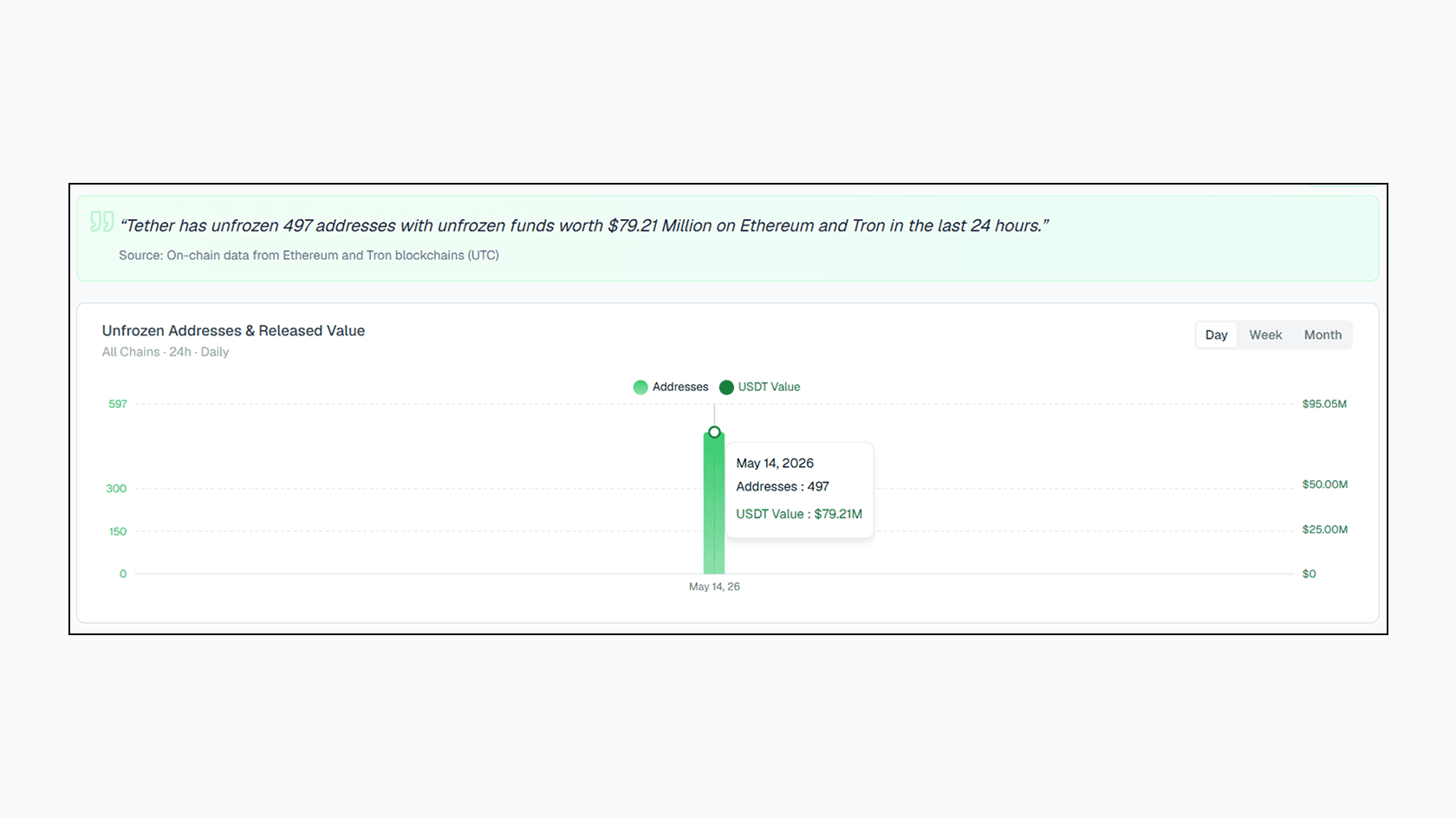
Tether has restored access to millions of dollars previously held under sanction. According to data from the analytical platform USDTBanList, the stablecoin issuer conducted a massive "amnesty" for blacklisted addresses, unfreezing a total of $79.2 million.
The operation, which took place without any prior announcement, initially triggered a wave of panic and speculation across the crypto community.
The Panic
On May 14, monitoring systems flagged a sudden shift in the status of nearly 500 wallets. The rapid change led many observers to fear a technical glitch or a compromise of Tether’s internal security.
Social media was quickly flooded with warnings, urging users to "withdraw immediately" before the system supposedly reverted to its frozen state.
However, security experts at BlockSec and USDTBanList now argue that the move was far from accidental.
"These waves of amnesty typically occur when law enforcement agencies close old cases, court orders are vacated, or internal audits of suspicious transactions are finalized. It appears the majority of these addresses belonged to a single, large-scale cluster," analysts explained.
Centralized Control
The primary takeaway for USDT holders remains the absolute control the issuer maintains over its assets. Balances can be locked or unlocked entirely at the company’s discretion, based on internal compliance protocols.
Furthermore, Tether does not issue notifications to the affected owners; the changes simply manifest as a fait accompli on the blockchain.
The Fight Against Financial Crime
The mass unfreezing coincided with a fresh report from Tether, TRON, and TRM Labs. The document highlighted the success of their joint task force, the T3 Financial Crime Unit (T3 FCU). Since its inception, the unit has successfully frozen a combined $450 million in illicit funds.
While the $79.2 million "amnesty" may seem like a reversal, experts see it as a necessary technical cleanup of legacy cases, ensuring the company’s blacklist remains accurate and legally defensible.
This post is for informational purposes only and does not constitute advertising or investment advice. Please do your own research before making any decisions.