As noted by KitchensAgency founder 'Twelve', the Hedera ecosystem is experiencing a massive renaissance. After flushing out the dead weight during the prolonged bear market, the network is now attracting real builders.
The primary catalyst for this growth, according to the expert, is low transaction costs paired with a laser focus on utility.
Dirt-cheap minting
Historically, gatekeeping gas fees have been the ultimate pain point for the NFT sector. At the peak of the bull run, minting a single JPEG on the Ethereum network cost users hundreds of dollars.
Traders were instantly underwater before even making their first sale. On Hedera, the same process costs a fraction of a cent. This drastically shifts the economic playbook and opens the floodgates for mainstream adoption.
The ecosystem's core liquidity is currently pooled on the SentX marketplace. The platform outpaces competitors in speed while scraping minimal fees. The analyst emphasized that collection creators on this venue finally get to pocket the lion's share of their profits.
"This is what OpenSea should have been from the start. Fewer fees, more money in the hands of the people building the product," Twelve concluded.
The institutional choice
The third quarter of 2025 went down as the most successful period in Hedera's NFT history. Trading volume pumped 16x, smashing the $4.9 million mark. Twelve is convinced that this explosive growth isn't the result of aggressive marketing, but rather users simply finding frictionless, working tech and continuing to actively trade on it.
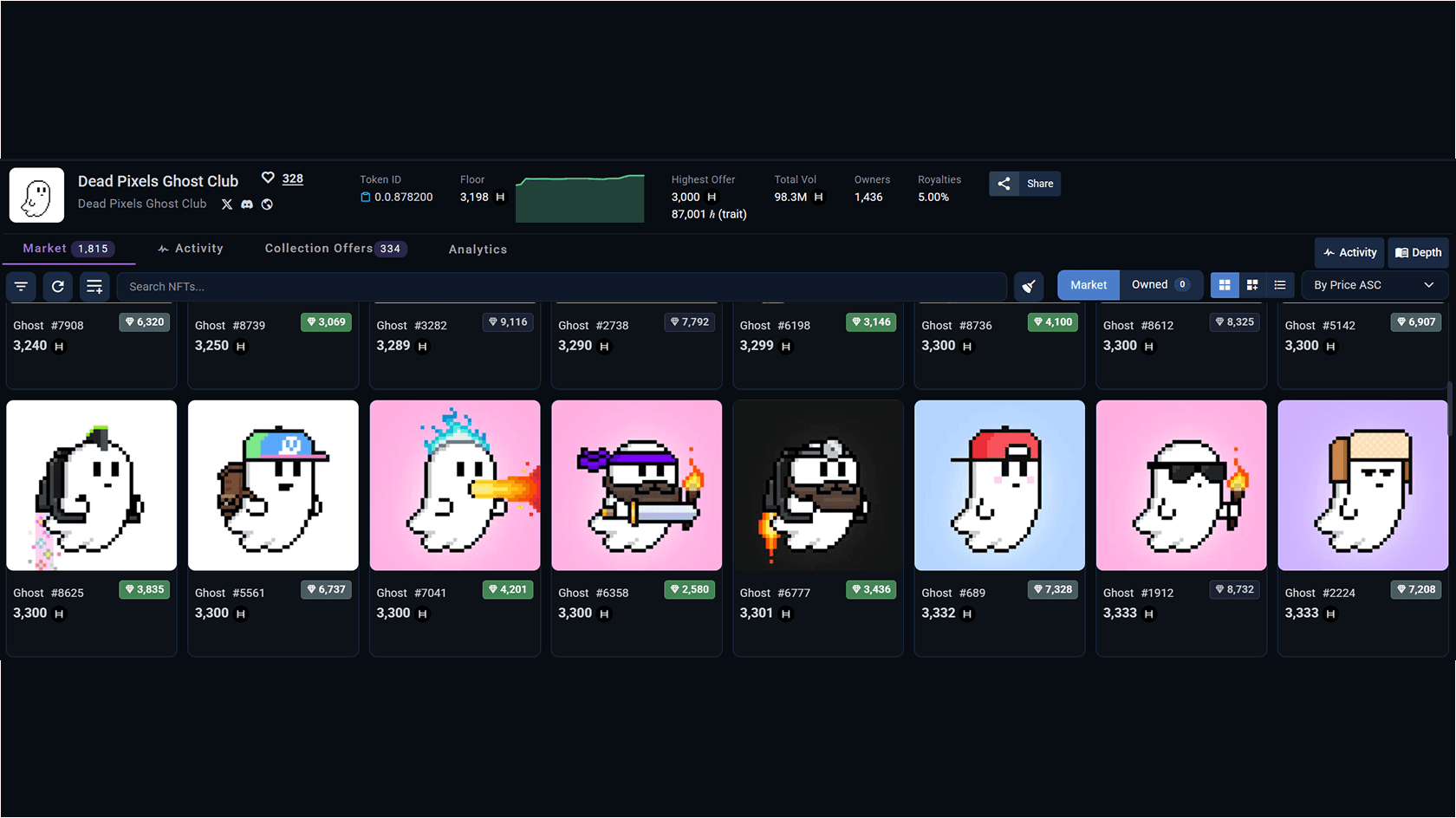
"Resilient local communities are forming around the network. A prime example is the Dead Pixels Ghost Club project. The collection has rallied thousands of holders. Members are actively growing the ecosystem and building a long-term brand," Twelve noted.
According to SentX, one of the most popular marketplaces on Hedera, the floor price for the Dead Pixels Ghost Club collection sits at 3,128 HBAR (roughly $275) at press time.