Tehran has deployed a digital framework to assert financial leverage over one of the world's most critical logistical chokepoints. According to reports from the state-run Fars News Agency, Iran’s Ministry of Economy has launched a specialized service called Hormuz Safe. The platform offers marine insurance coverage tailored for commercial cargo vessels operating within the Persian Gulf and the Strait of Hormuz.
Independent analysts from mainstream financial media have noted they cannot yet verify whether the portal is fully operational or if any commercial shipping operators have successfully utilized the service.
How the cryptographic policies work
Sources indicate that Iranian officials have been drafting the regulatory and technical foundations for this initiative since April. The Hormuz Safe architecture allegedly allows shipowners to rapidly secure digital policies covering operational risks, including vessel inspections, detentions, or potential confiscations by regional authorities.
The state media report emphasizes that all documentation is cryptographically secured, with settlements executed exclusively in Bitcoin.
Coverage is said to activate the moment a transaction receives blockchain confirmation. Iranian authorities estimate that issuing these low-risk insurance policies could channel upwards of $10 billion in non-dollar revenue into the state budget.
Bypassing the greenback
The launch fits directly into Iran's broader economic playbook of establishing alternative payment pipelines to neutralize aggressive international sanctions.
Earlier this spring, Hamid Hosseini, a spokesperson for Iran’s Oil, Gas, and Petrochemical Products Exporters’ Union, confirmed to the Financial Times that the Islamic Republic was actively evaluating alternative transit fees for oil tankers to bypass the US dollar.
At the time, officials were weighing an array of settlement options, including Bitcoin, stablecoins, and the Chinese yuan. According to agency estimates, individual transit-related fees could climb as high as $2 million per vessel, heavily contingent upon total cargo volume and displacement.
Market turbulence
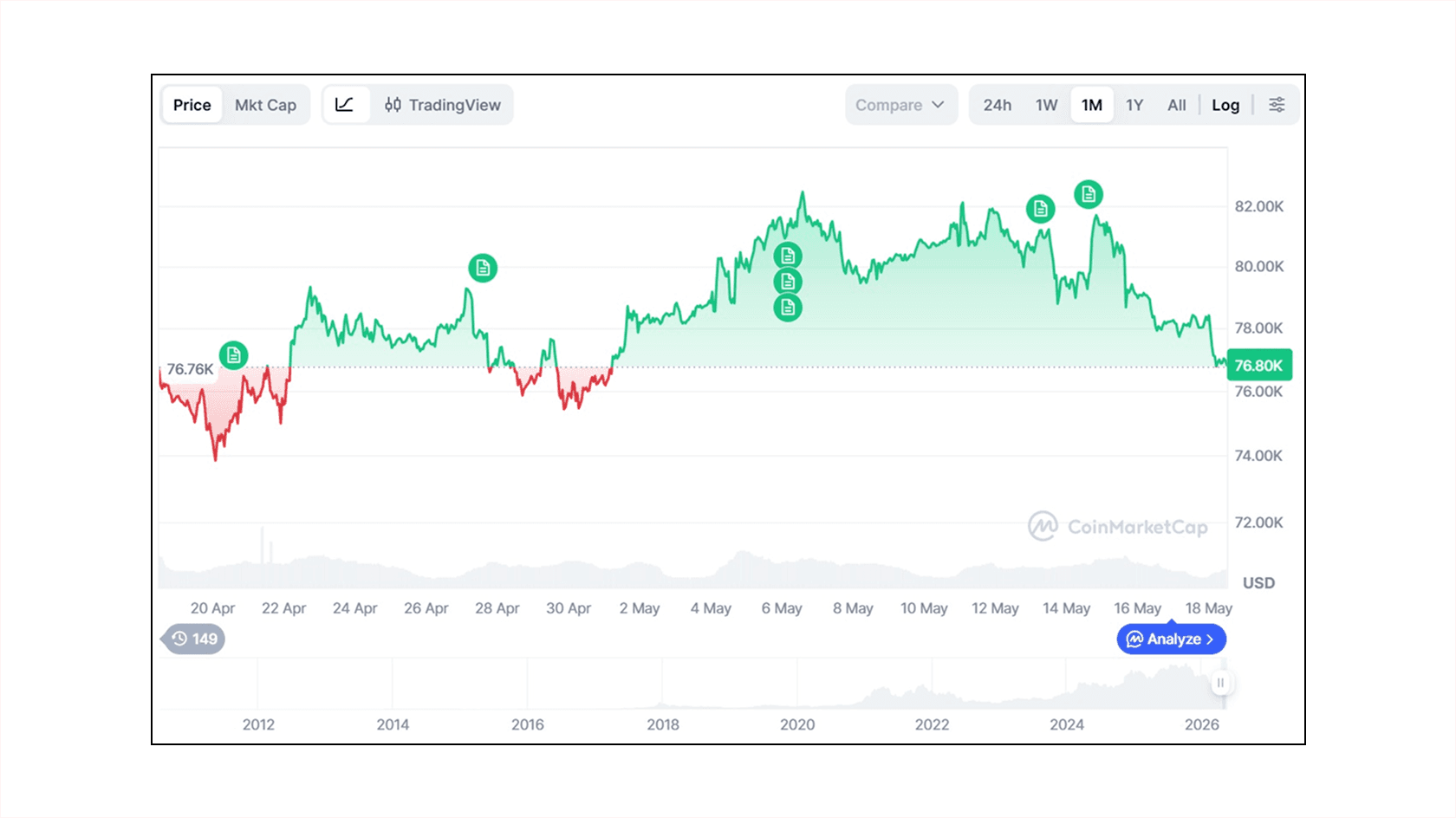
This geopolitical maneuvering in the Middle East coincides with heightened volatility across the digital asset sector. On Monday morning, May 18, the price of Bitcoin slipped below the $77,000 threshold following a mild correction, according to real-time market aggregators.