South Korean authorities approved blocking 27 foreign crypto trading websites, including KuCoin and MEXC, and confirmed that a digital asset tax will roll out in January 2027. On the exact same day, a massive sell off hit memory chip makers globally, heavily impacting industry giants.
Why Chip Makers Are Bleeding
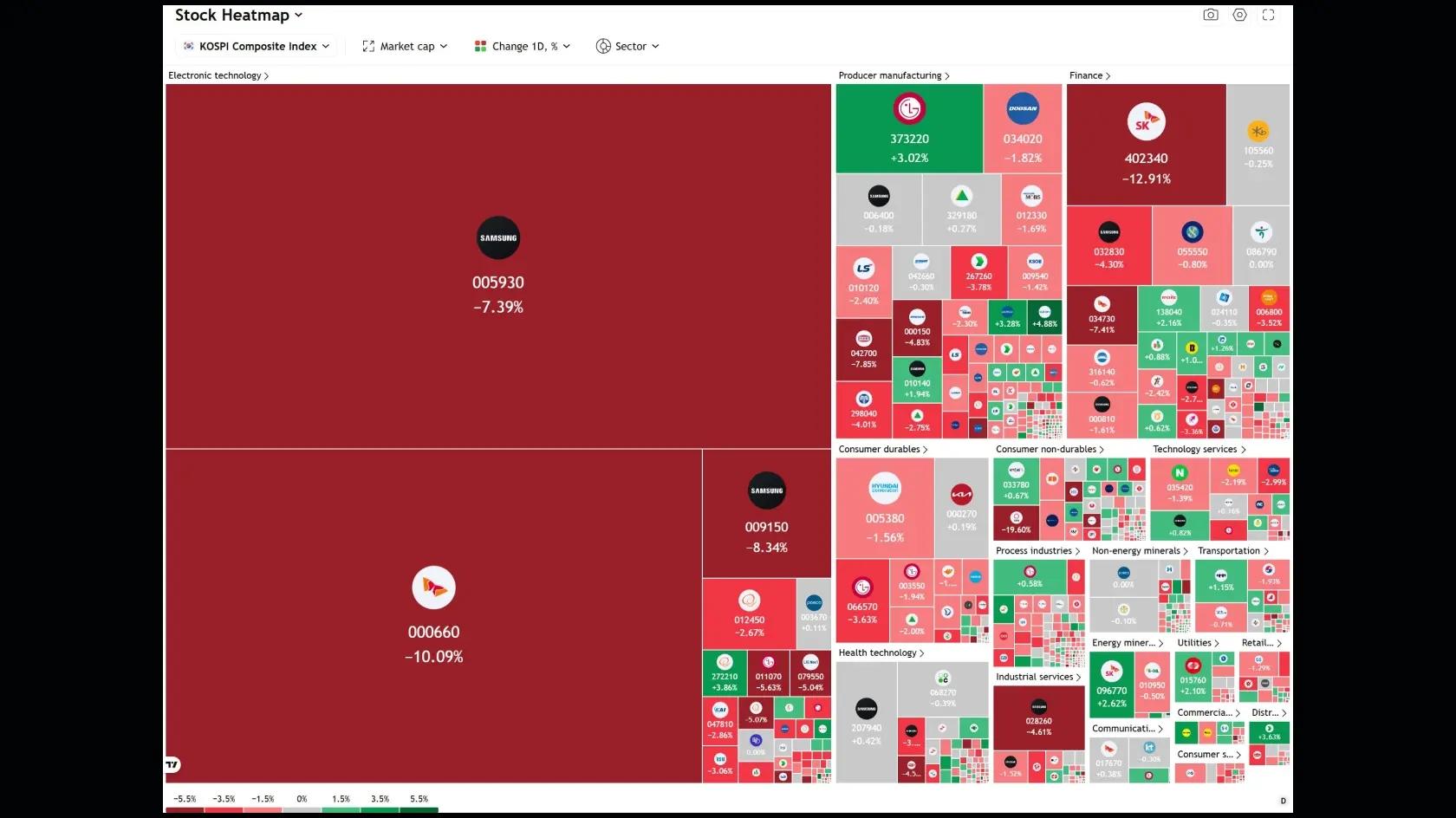
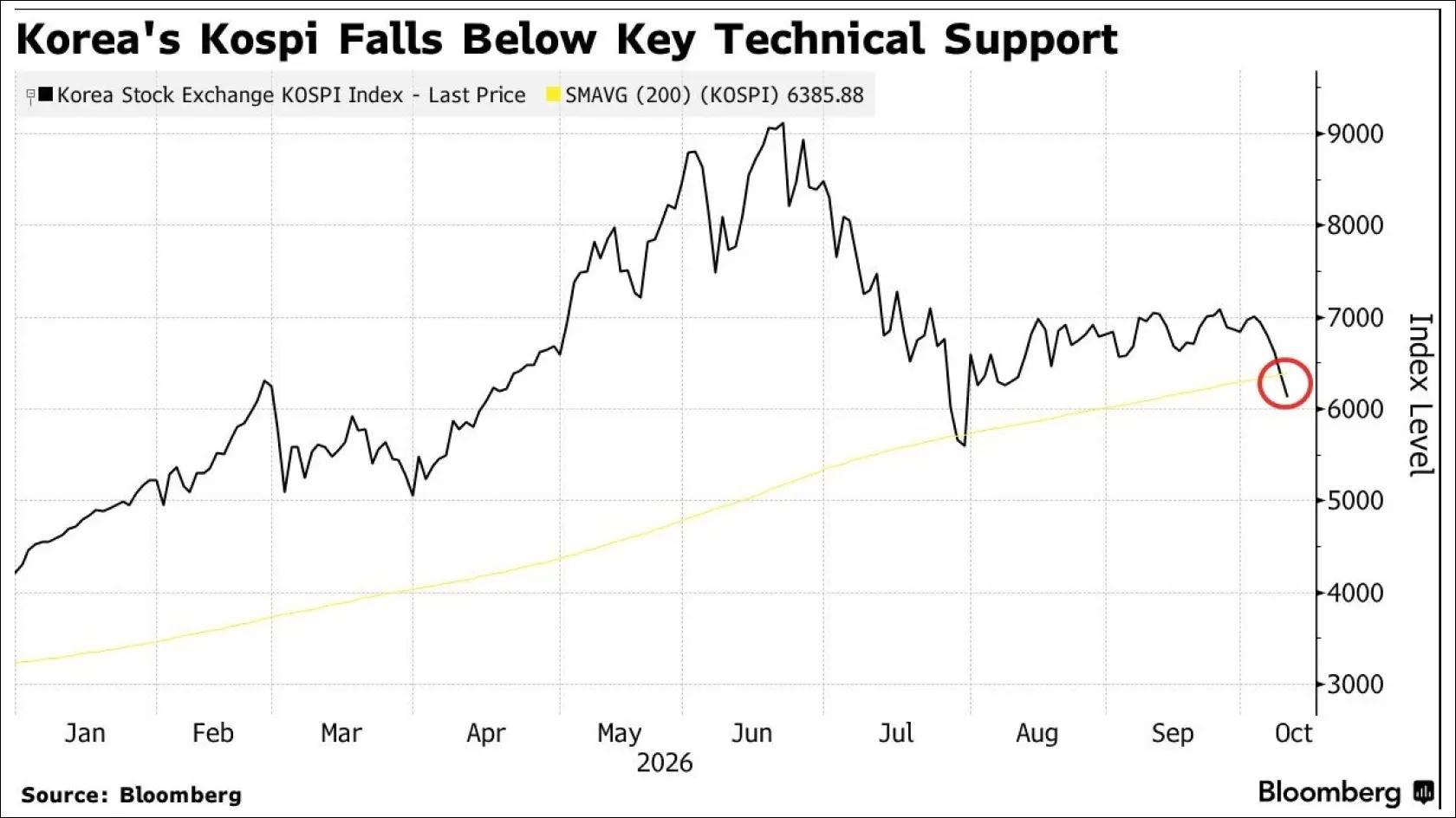
On Tuesday South Korea's benchmark KOSPI index plunged 5.46%, closing at 6,035.35 points. The drop was so sharp that the exchange temporarily halted automated stock selling for five minutes. Foreign investors dumped approximately $3.35 billion worth of local shares in a single session.
The blow targeted tech heavyweights Samsung Electronics and SK Hynix, whose futures are tied tightly to AI memory demand. Samsung closed at 232,000 won, while SK Hynix finished at 1.44 million won.
Experts were calling out potential trouble a day prior. The KOSPI was testing its 200 day moving average for the second time, coming right off a bear pennant breakdown. It eventually punched right through that support level, closing below it for the first time since April 2025.
The sell off kicked off when China's ChangXin Memory Technologies (CXMT) announced progress in developing higher density memory chips, targeting upcoming server products. If those specs hold up, CXMT poses a serious threat to South Korea's Samsung and SK Hynix, alongside America's Micron, which currently dominate the high performance memory market.
"If you're a memory investor worried about China's CXMT flooding the market and taking share from MU and SKHY, think about this for a sec," noted researcher Nicholas Mugalli. "The US govt blocked Chinese EVs over national security. You really think it's going to let China take over the memory inside American AI? Buy!!", says researcher Nicholas Mugalli.
The second catalyst came from Broadcom CEO Hock Tan, who warned that equipment and memory shortages could bottleneck future AI development. Tan also blasted retail investors for buying AI plays without actually understanding the underlying business.
Tighter Noose on Crypto
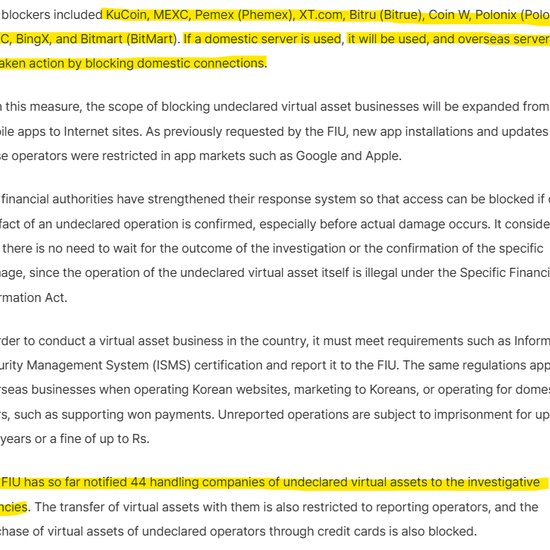
Also on October 13, South Korea's financial intelligence unit greenlit the blocking of 27 unlicensed crypto exchange websites. The blacklist includes KuCoin, MEXC, Phemex, Bitrue, XT.com, CoinW, BTCC, BitMart, BingX, and others.
Read Also: KuCoin, MEXC and 12 Other Exchanges Blocked in South Korea
The country continues to squeeze out unregistered platforms, following up on earlier moves to yank their apps from the Apple and Google app stores by pulling the plug on their domains.
Local laws require any crypto service operating in the country to register. Regulators actively track whether platforms target Korean users, run Korean language interfaces, or accept won payments.
Once a site goes down, users might face major hurdles pulling out funds or tweaking account settings. Regulators acknowledged the friction and plan to leverage the Digital Asset Exchange Alliance (DAXA) to coordinate with foreign platforms.
The Tax Man Cometh
Moreover, National Tax Service chief Im Gwang hyeon confirmed that the agency will begin taxing cryptocurrency starting January 2027, working in lockstep with the Ministry of Economy and Finance.
Tax audits on filings are slated to kick off in May 2028 once the service pulls together the necessary data.
To keep tabs on activity, tax officials are coordinating with five local exchanges including Upbit, Bithumb, Coinone, DigitalX, and Gopax. Seoul is also pushing for tighter cross border digital asset data sharing to catch offshore blind spots.
The country strictly enforces the Travel Rule, tracking and sharing user data on every transfer.
Our Take
While panic sellers scrambled to point fingers at local Korean headlines for the crypto market bleeding, the actual drivers run much deeper than a localized Seoul panic.
Let's be real, Korea didn't crash the entire crypto market. The real culprit is likely AI, or rather growing doubts surrounding the economics of the AI boom. The market is rethinking how long high demand for compute and memory can actually last.
On top of that, OpenAI's latest numbers missed expectations, and China's domestic progress threatens to squeeze the profit margins of Korean memory producers. Heavy foreign capital outflows from stocks simply overwhelmed local dip buyers.
Tying the crypto dump directly to Korea misses the mark because Bitcoin slipped under $82,000 late Monday evening before the panic selling even started in Seoul. The connection is a lot more basic: classic risk reduction amid tech sector jitters, ETF outflows moving inversely to market expectations, and the predictable domino effect of liquidations clearing out the order books. As traders, we should know how this game works.
Ultimately, this mirrored the September rally when cascading short squeezes drove prices straight up. This time, cascading long liquidations shoved prices down before a fast recovery kicked in.
This post is for informational purposes only and does not constitute advertising or investment advice. Please do your own research before making any decisions.