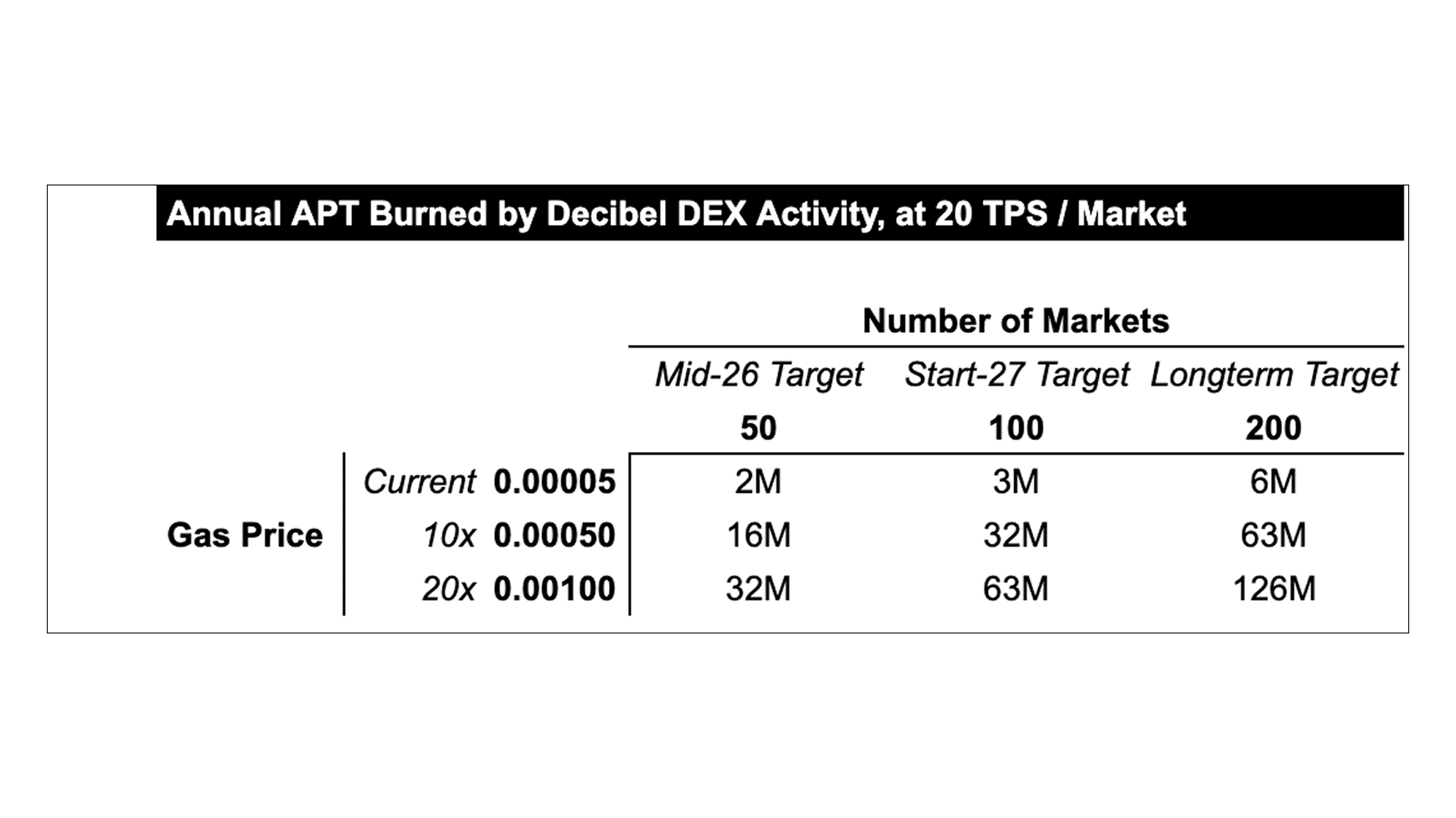
The Aptos blockchain is moving to a new economic model that prioritizes network efficiency. According to the Aptos Foundation, the project is moving past its initial subsidy phase to implement mechanisms tied directly to user activity. Now, the system will link new coin issuance to actual network performance.
Network Maturity
Project representatives say that over four years, Aptos evolved from a general L1 infrastructure into a platform for high-load enterprise applications.
"Block times currently sit under 50ms, and application revenue grew 1,552% to $33.3 million. Giants like BlackRock and Franklin Templeton already deploy assets on our chain. Our next major milestone is the launch of Decibel — the first fully decentralized exchange (DEX) where every single operation happens exclusively on-chain," Aptos noted.
From Subsidies to Deflation
As part of the new strategy, the foundation proposed a radical cut to annual staking yields, dropping the rate from 5.19% to 2.6%. To maintain stability, participants who commit to longer lock-up periods will receive higher payouts. Additionally, the Aptos Foundation is initiating a tenfold increase in gas prices.
"Even after this increase, a stablecoin transfer will cost roughly $0.00014. We remain one of the most affordable networks. Because the system burns all fees paid in APT, higher activity will directly reduce the total supply," project representatives emphasized.
Reserves Freeze
The protocol will also introduce a hard cap of 2.1 billion APT. The community must approve this limit through a vote; once passed, the network cannot mint new tokens beyond this ceiling. Currently, 1.196 billion APT are in circulation.
"The Aptos Foundation will permanently lock 210 million APT in staking. These coins will never hit the market or go up for sale. This serves as the functional equivalent of a burn, as it removes nearly 18% of the current supply from circulation," the statement reads.
The team will now fund its operating expenses solely through the staking rewards generated by these locked tokens.
Reward for Results
The grant distribution system is also changing. The foundation will now only issue tokens when developers reach specific network growth milestones. If they fail to hit these targets, the foundation withholds the funds.
The foundation also plans to launch an open-market token buyback program using its own revenue and cash reserves.
"Collectively, these measures — lower rewards, higher burn rates through the DEX, and buybacks — should lead us to a point where the network removes more coins than it creates. At that moment, the token becomes fully deflationary," Aptos promised.
This post is for informational purposes only and does not constitute advertising or investment advice. Please do your own research before making any decisions.