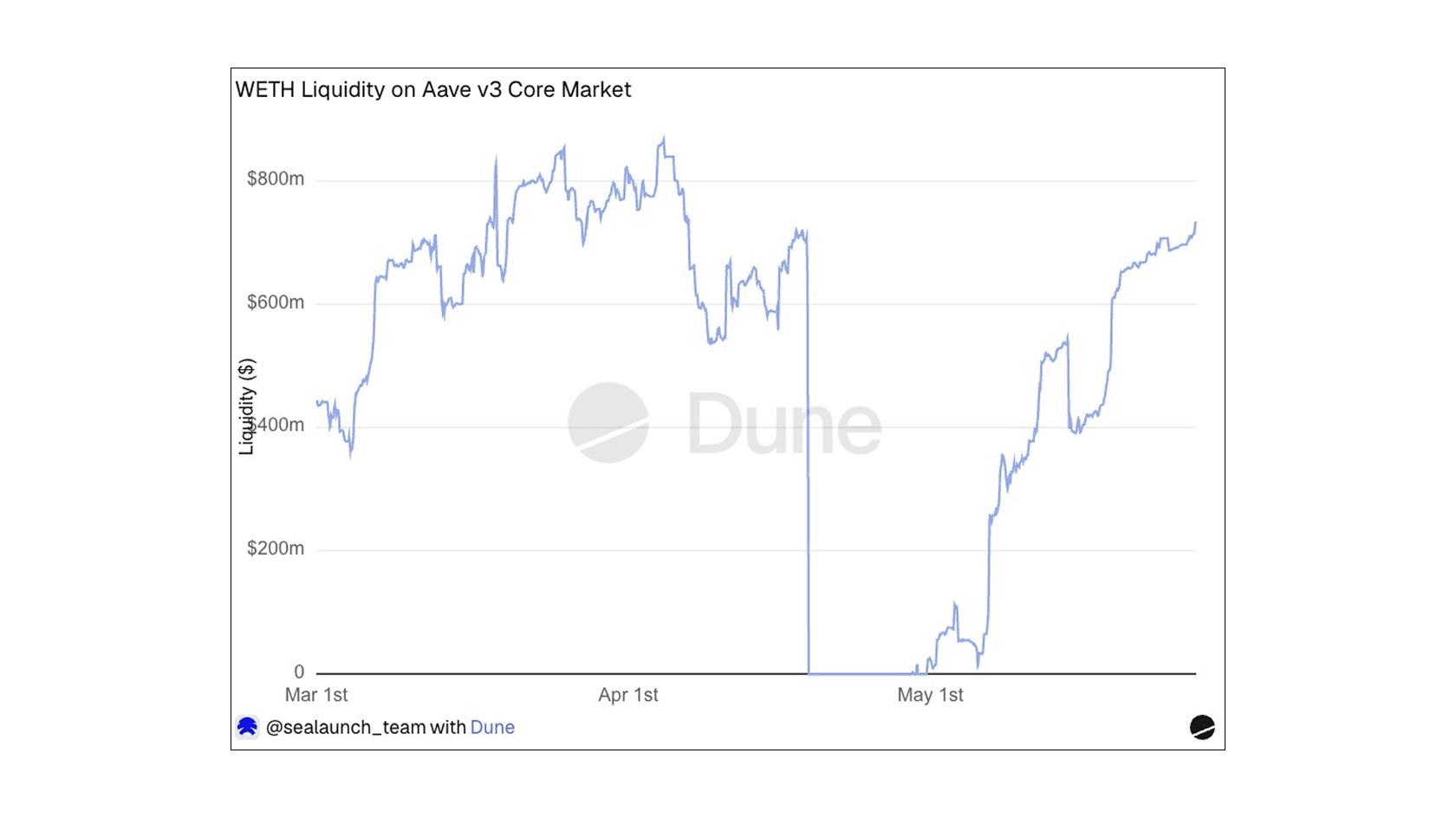
Analytics firm Sealaunch Intelligence reported that WETH liquidity on the main Aave v3 Core Market has fully recovered following the sharp downturn in mid-April. As of May 27, volumes have exceeded pre-crisis levels, while the pool has regained its position as the deepest WETH liquidity pool in DeFi.
Timeline
On April 18, Kelp DAO became the victim of a major exploit involving the LayerZero bridge. Attackers allegedly linked to the North Korean Lazarus Group used stolen rsETH as collateral on Aave and borrowed WETH against it. As a result, the protocol accumulated $190 M in bad debt.
The rsETH collateral shortfall exceeded 100,000 ETH, putting the positions of EarnETH DAO users and anyone using rsETH as collateral at risk of forced liquidation.
The chart above shows the scale of the incident: liquidity in the pool collapsed almost to zero immediately after the exploit. A gradual recovery began in early May, and by the end of the month, volumes had climbed beyond the previous highs recorded in March and April.
How the Protocols Managed the Crisis
Aave launched the DeFi United initiative, raising more than $300 M in ETH to stabilize the sector. At the same time, Kelp DAO and Aave agreed on a phased plan to return 117,132 stolen rsETH to the main network through the LayerZero OFT adapter. The reserves were provided by the Aave Recovery Guardian and Kelp Recovery Safe funds.
Kelp DAO also overhauled the security architecture of its bridges. Transactions now require four independent verifiers instead of one, the number of block confirmations has increased from 42 to 64, and direct routes between Layer 2 networks have been disabled. In the long term, the project plans to transition to Chainlink CCIP.
This post is for informational purposes only and does not constitute advertising or investment advice. Please do your own research before making any decisions.