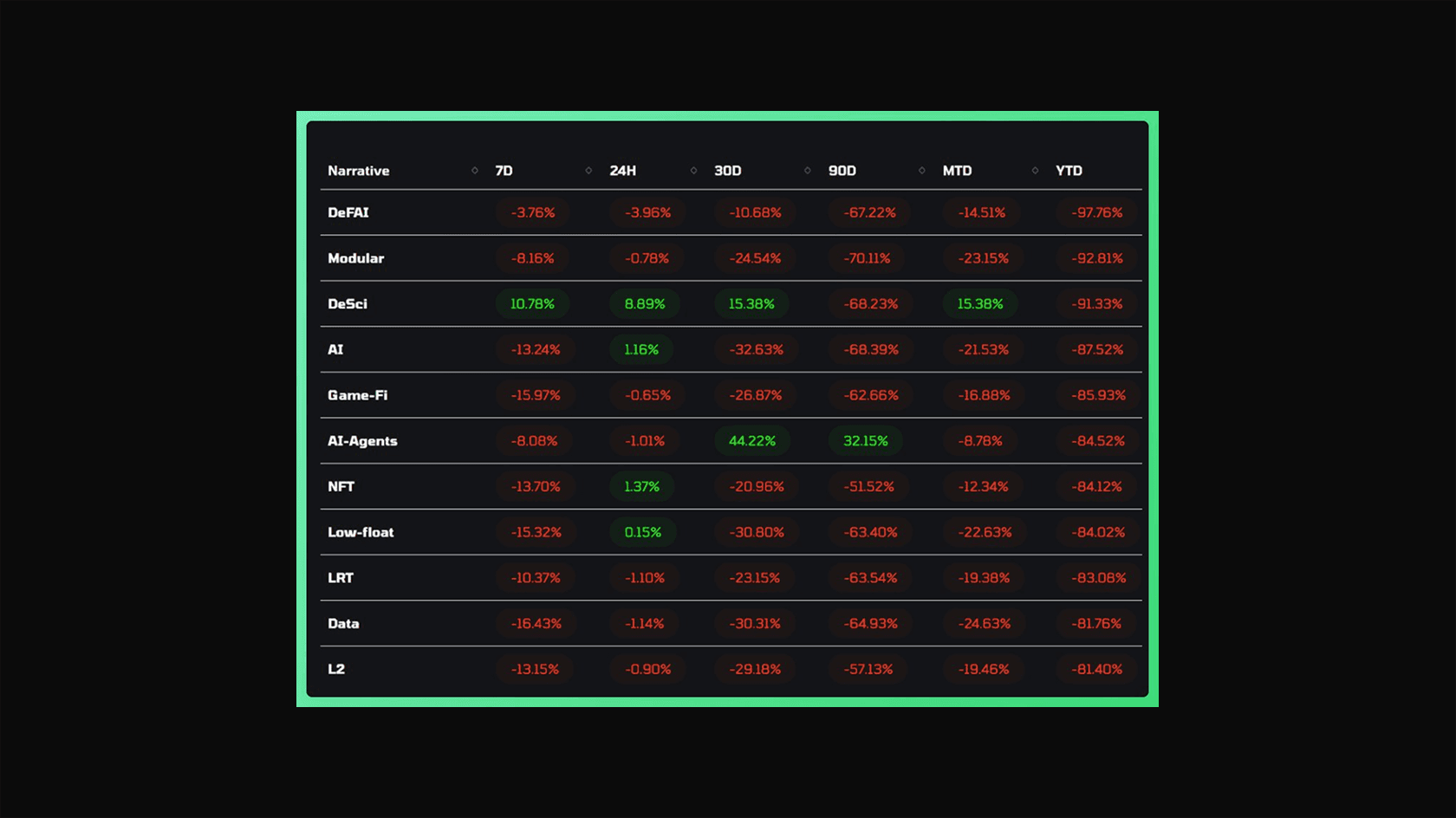
Blockchain researcher Emperor Osmo on X published summary statistics regarding the performance of key crypto market sectors for 2025, citing data from the analytics platform Dexu AI.
The report records a total liquidity outflow from infrastructure and experimental projects. The depth of the decline for leading narratives ranges from 80% to 97%, indicating the end of a revaluation cycle for complex technological layers.
Crash Of Hybrid Models
The DeFAI sector, combining decentralized finance and artificial intelligence, posted the year’s worst performance. Asset capitalization in this category dropped by 97% year-to-date. The market rejected attempts to artificially merge these two trends, collapsing token prices for assets like GRIFFAIN and LMT to near-zero values.
Modular blockchains took the second spot on the list of underperformers with a 92% decline. Investors exited positions in Celestia (TIA) and Dymension (DYM) en masse. The technological flexibility of modular architecture failed to generate sufficient cash flow for these projects to sustain the value of their native currencies.
Rejection Of Venture Tokenomics
The Low Float token sector lost 84%. Traders ignored assets with high FDV, which are typically backed by venture capital funds. Selling pressure crushed the prices of Worldcoin, Ena, and Wormhole.
Layer 2 solutions also failed to meet holder expectations, dropping by 81%. The list of casualties includes major protocols: Optimism, Starknet, ZKsync, and Blast. Liquidity fragmentation across dozens of new networks diluted the value of individual governance tokens.
Local Rotation Of Interest
Detailed statistics for the last 30 days reveal a shift in priorities within losing trends. AI Agents became the only segment with positive dynamics. Against the backdrop of an 87% general decline in the artificial intelligence sector, the autonomous agent subcategory grew by 44% over the month and 32% for the quarter.
Decentralized Science (DeSci) also showed signs of a short-term rebound. Despite a 91% annual drop, the sector gained 15% in the last 30 days. Traders are using current lows for speculative entries, reallocating capital from dead infrastructure projects into more volatile, narrow niches.
This post is for informational purposes only and does not constitute advertising or investment advice. Please do your own research before making any decisions.