Top 10 AI Trends in Healthcare, Education, and Manufacturing in 2026
If, in 2026, artificial intelligence still means a generic chatbot for you, you have been out of the loop for a really long time. Today, Agentic AI has seeped into the nooks and crannies of most sectors and industries, including healthcare, manufacturing, and education.
The top AI trends in 2026 summarise the watershed moment when artificial intelligence tools are transitioning from experimentation into actual infrastructure.
image
Organisations have stopped treating artificial intelligence as an additional layer on top of existing workflows. Artificial intelligence is now getting embedded deep into operational systems to automate, assist, and, sometimes, lead operations on its own. Let’s discuss which top AI trends in healthcare in 2026 are ringing the bell, followed by the top AI trends in education and manufacturing in 2026.
In 2026, AI agents have moved from monitoring tasks to autonomously executing operations in healthcare. Already, generative AI scribes are saving clinicians hundreds of thousands of hours of documentation annually. Healthcare providers also see AI scribes as one of the first practical, large-scale artificial intelligence deployments with immediate ROI.
Artificial intelligence Trends Reshaping the Healthcare Industry
84% of physicians report improved patient communication, and 82% report higher job satisfaction when using these tools. AI-powered ambient listening systems drastically reduce the time that doctors were earlier spending on administrative tasks. These artificial intelligence systems automatically capture doctor-patient conversations, generate structured clinical notes, and integrate them directly into EHR systems.
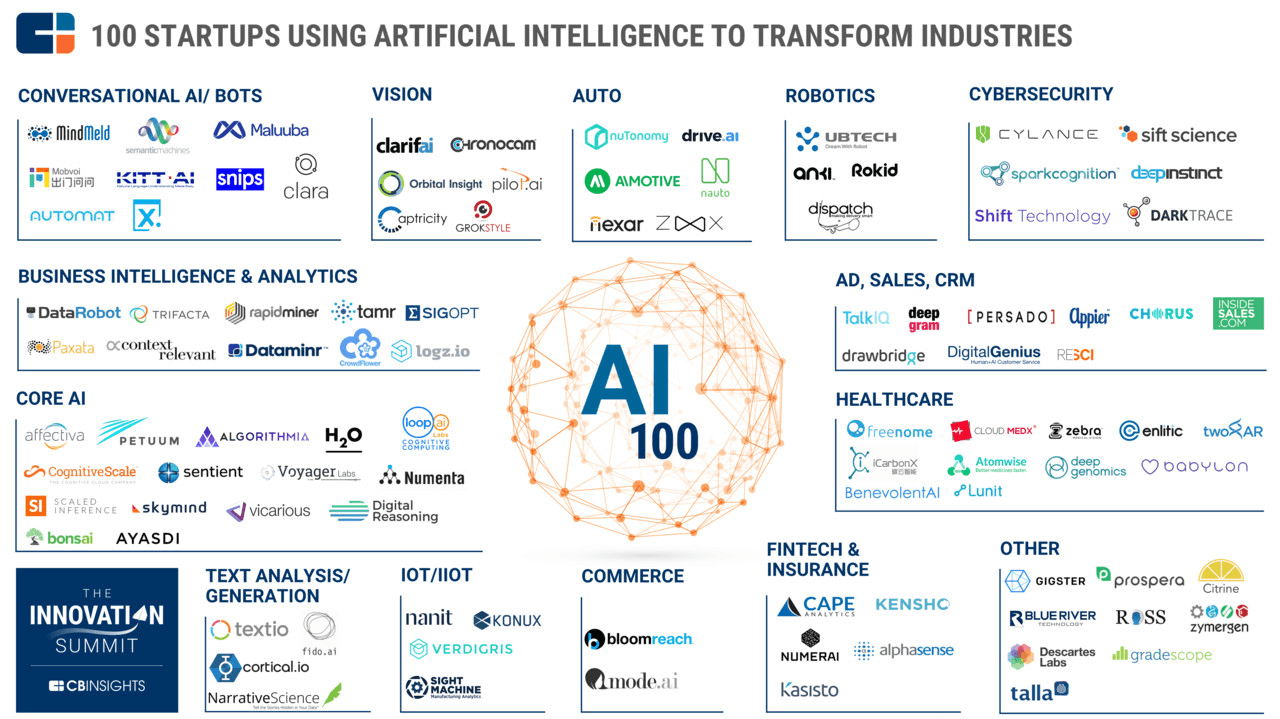
Source: LinkedIn | Top 100 AI Companies in Healthcare
Medical practitioners and doctors are increasingly using artificial intelligence to identify patterns and detect anomalies using
Genomic analysis
Medical imaging
Wearable device monitoring
Glucose tracking
Arrhythmia detection
Predictive analytics
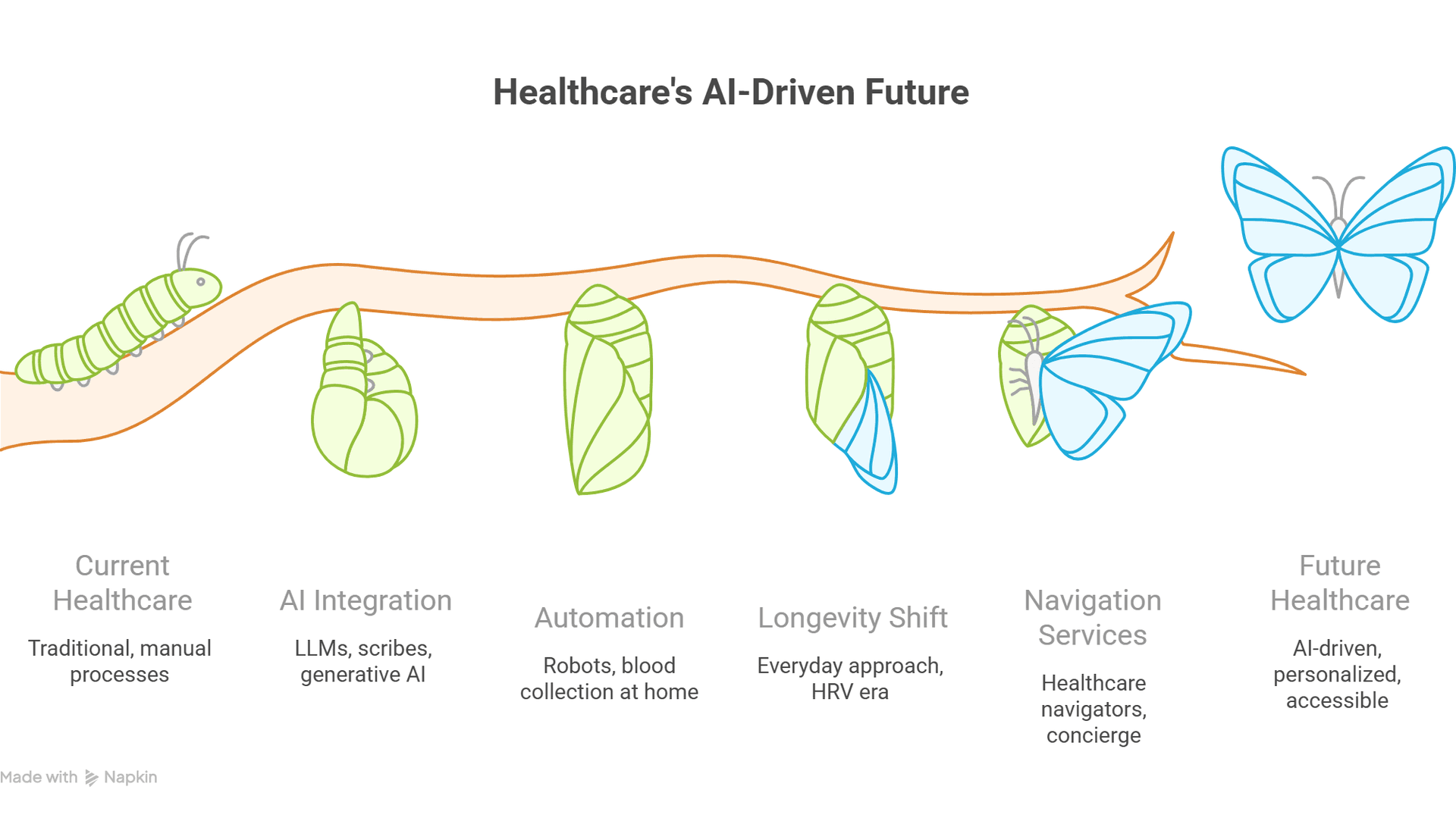
Healthcare robotics has also taken several strides. Robots, such as Vitestro’s device, can draw blood with high accuracy. The device is CE marked in the EU. Similarly, healthcare navigators and concierge services, the heart rate variability (HRV) wearables era is nearing.
As medicine moves from reactive treatment to predictive intervention, hospitals are also demanding systems that can handle real-world clinical workflows and align with the latest regulatory requirements.
Artificial Intelligence in Education Trends 2026: Education Using Pedagogy-Aware AI
Generic chatbots might be good for answering basic queries, but schools and universities recognise the biases and inconsistencies these chatbots exhibit. 63% of educational institutions use AI, while 62% plan to integrate it by 2027. An AI-led educational tool must understand the cognitive load students face and the curriculum design universities follow.
Traditional education methods encourage rote memorisation. Adaptive AI-led learning systems in modern classrooms adjust content difficulty, pacing, and teaching methods based on student performance and comprehension levels. Simulation-based learning methods are becoming popular for STEM subjects.
AI Trend
Future Potential
AI Tutoring Systems
Personalised learning at scale
Automated Grading Tools
Faster feedback, reduced teacher workload
AI-Powered Learning Analytics
Early risk detection and outcome optimisation
Generative AI for Educational Content
Dynamic curriculum and assignment creation
Adaptive Learning Platforms
Fully individualised learning pathways
AI Chatbots for Student Support
24/7 academic and administrative assistance
Speech and Language AI
Accessibility and multilingual learning support
AI-based education models now support multilingual inclusion, real-time assessment, personalised learning pathways, and cognitive load optimisation.
Students comfortably interact with AI tutors which adapt explanations to different learning styles. Multilingual explanation systems can benefit from artificial intelligence to personalise instructions across languages.
92% of students use AI tools (global), and 77% of teachers find artificial intelligence useful for lesson prep. However, over half of students express concerns about privacy and fairness in AI-based learning, while 56% worry about data privacy and the fairness of artificial intelligence assessments.
Manufacturing Enters the Autonomous Factories Era
The top AI trends in manufacturing for 2026 revolve around the autonomous optimisation of facilities and AI-native operations. Technologies that bring together this change include:
Digital twins
AIoT systems
Predictive analytics
Cobots
Physics-informed AI
Cloud-native MES platforms
Digital Twins have evolved static simulations to intelligent operational systems. They continuously synchronise with factory environments using real-time sensor data. These systems model production behaviour, predict equipment failures, and simulate optimisation scenarios before physical changes occur.
Jensen Huang, CEO of NVIDIA, says the company has begun building ‘the digital twin’ of every data centre, and they are central to the future of physical artificial intelligence and robotics.
AI-driven digital twins and physics-based simulation are cutting design and commissioning times by 20–50%.
Physics-informed artificial intelligence combines machine learning with physical engineering constraints, allowing AI models to produce more reliable simulations and operational predictions. It is a fast-growing tech in aerospace, electronics manufacturing, automotive systems, and semiconductor production.
Collaborative robots, or Cobots, are becoming more intelligent and adapting to production conditions requiring micro-adjustments, such as those in high-precision electronics manufacturing.
Data Integrity and Governance For Real Competitive Advantage
Artificial intelligence is turning most things it touches into gold. But we cannot ignore the risks that accompany AI systems. Risks such as data privacy, hallucinations, misinterpretations, bias, etc., prevent ungoverned artificial intelligence systems from becoming operationally ready.
Algorithms are important, but governance and data integrity together make AI-led workflwos and systems consistent and operationally ready. Organisations must follow the 10-20-70 rule. Give 10% importance to algorithms, 20% to technology, and 70% to people and processes for a successful artificial intelligence program.
Companies with strong data governance, clean infrastructure, cross-department coordination, and workforce readiness will be the forerunners in artificial intelligence adoption in the coming years. Poor data quality remains one of the biggest roadblocks to enterprise artificial intelligence deployment.
Ethical AI For Bias Mitigation and The Shift Towards Compliant Systems
As AI systems become more autonomous and ubiquitous, governance around AI is tightening. 2026 ethical artificial intelligence and governance trends include new transparency rules. For example, the US ONC’s 2023 mandate requires clinicians to see how any EHR-embedded AI works. The rule requires algorithmic transparency, i.e., clinicians must see baseline details of any certified EHR’s AI/machine-learning capabilities.
Governance is also needed to manage growing bias/privacy concerns. Public trust is a concern: Stanford data show 68% of people rate artificial intelligence bias as a moderate-to-severe risk, and 31% have personally experienced unfair treatment by AI. The FTC and regulators are also preparing new artificial intelligence disclosure guidelines by 2026.
2026 is the Year AI Has Stopped Feeling Experimental
Artificial intelligence is the operational reality today. Worldwide, organisations are reskilling and preparing the workforce for the transition. Most industries have already dipped their toes in the waters of AI, but in a generic sense. The next phase of the transition will be focused on specialisation.
Healthcare systems are deploying clinical-grade AI agents. Schools are adopting pedagogy-aware adaptive learning platforms. Manufacturers are building AI-native production environments. Digital twins and autonomous optimisation are a new reality in supply chain and manufacturing.
As the internet was in the 90s, AI applications will become non-negotiable in the 21st century. As adoption scales further, ethics and regulations need to become more defined. Sooner than we know, artificial intelligence will be running most of our systems.