Most who’ve been in the space of crypto know well how the crowd here digs wordplays. Doesn’t mean they make literal sense technically.
AI’s merely a monitoring tool. It can’t magically “find lost Bitcoins,” else James Howells (not the BTC pizza guy…that’s Laszlo Hanyecz) would’ve been the first one to make something out of it to locate his hard drive.
What AI CAN do is track Satoshi-era Bitcoin whale movements (accs from 2009-2012 moving BTCs), or UTXOs, via public ledger monitoring. And it matters cause these can be signals of sell-side pressure or potential risk sentiment. Secondly, it adds to the concern that AI and quantum computing will be capable enough to directly decode private keys in the future, making blockchains unsafe.
But that’s still not the whole truth. Let’s have a closer look!
Also Read: How ETH Devs are prepping for the quantum threat
Not the whole truth, though. Let’s have a closer look!
Have Satoshi-era miners suddenly woken up from their graves?
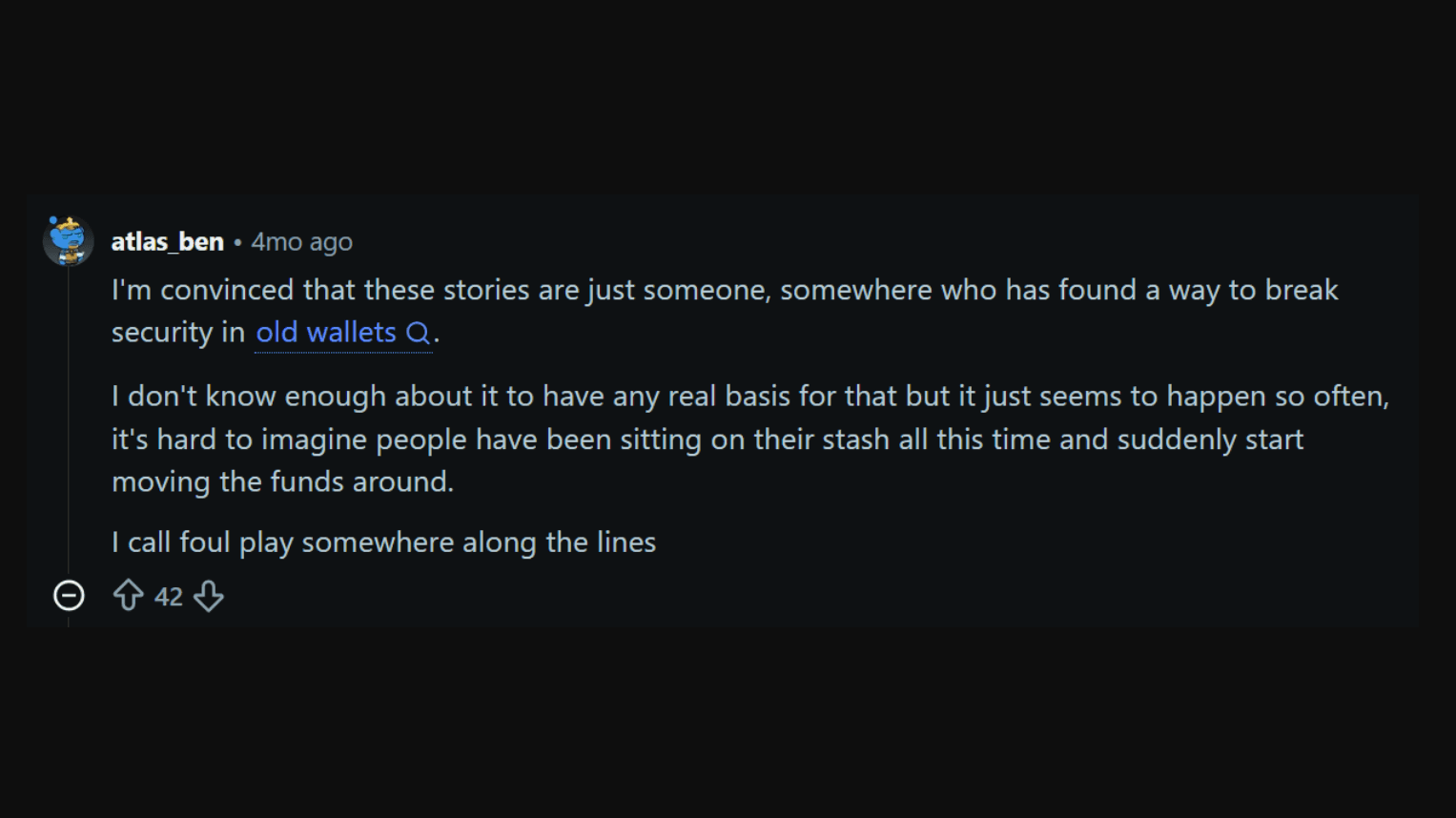
Seems like some voodoo shit…isn’t it. I mean…people are literally cooking up conspiracy theories on Reddit.
Specifically, two high-profile instances spiked this trend.
- The Satoshi-era clusters moving tens of thousands of BTCs after more than a decade-long silence
- “Sleeping beauty” wallets from 2011 to 2013 with holdings in the range of 1,000+ BTC have risen across 2024 and 2025, indicating a cyclic supply rather than some one-off event
If you ask me…I’m 90% sure this is just some ancient business grandpa moving coins, not an apocalypse. The rest 10% is instantaneous market timing.
Also Read: Digital Avatar of Satoshi Nakamoto Criticizes Bitcoin ETFs and Mining Centralisation
But that doesn’t take away from the fact that the future is moving towards a direction where a potential genius somebody at some corner of the world (like Lex Luthor) would come up with their beefy quantum computer and jailbreak BTC's private keys.
But why the sudden focus on Satoshi-era wallets?
In June last year, around 80k BTC was moved from 8 old Bitcoin wallets after 14 years. Each of them held around 10k BTC, and this entire scenario was the biggest whale movement of the Satoshi-era Bitcoin whales.
These coins were first moved to newer wallets. The market was quick to recognise this because dormant UTXOs don’t make such moves.
Analysts kept waiting to see if these would remain in cold storage or move to fresh trading desks for custody. But then Galaxy confirmed that they made this 80k BTC sale valued over $9 billion for a Satoshi-era investor for their estate strategy plans.
See the difference here?
It's not a huge market movement that tells about future uncertainty, but it could’ve been if many such wallets were transferring new UTXOs, which usually means people are selling and banking on their BTCs for an uncertain future.
Also Read: Crypto, Faith, and a Bit of Satoshis: Confessions of an Unrepentant Noob
What are UTXOs?
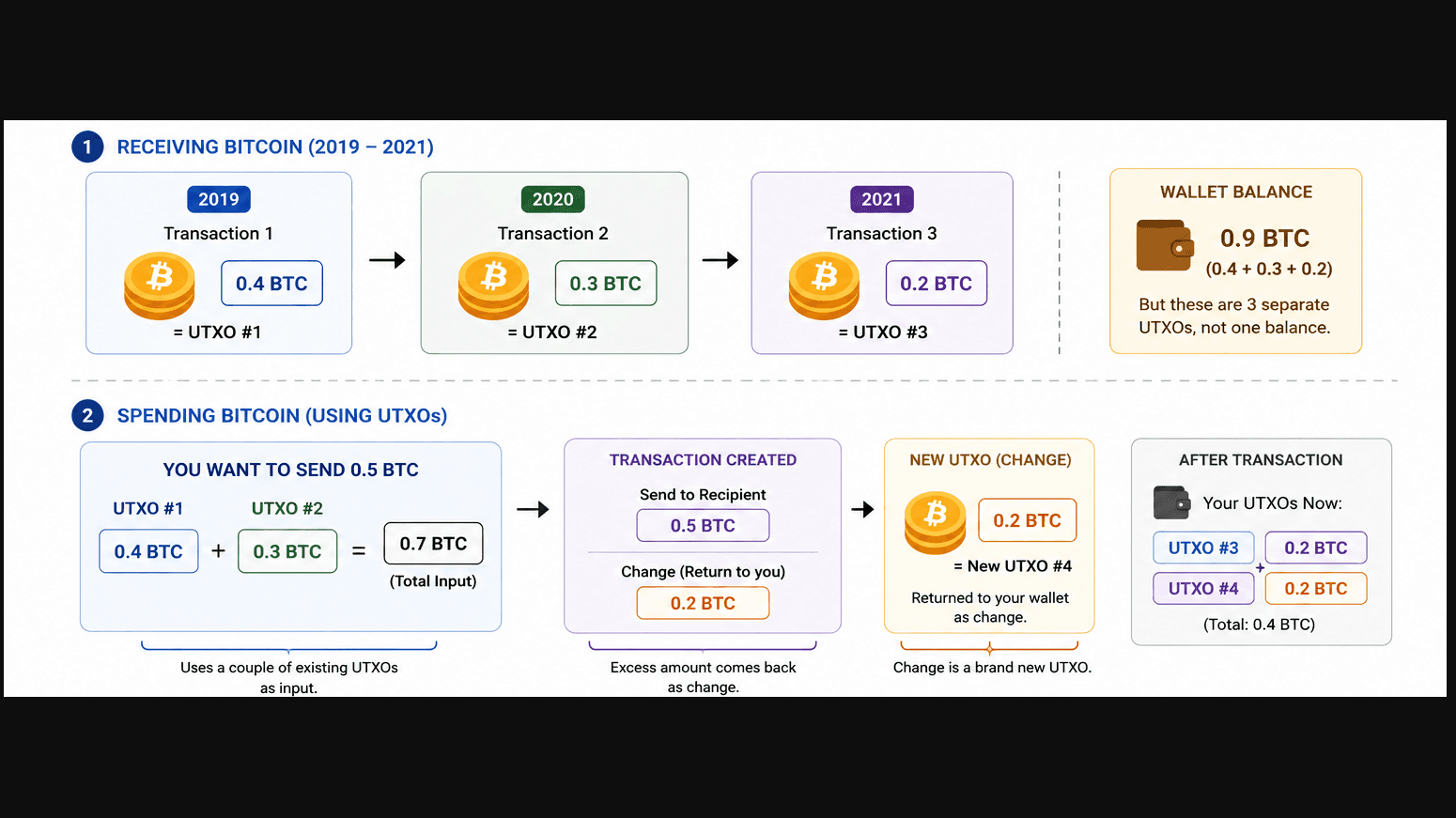
Unlike how normal bank wallets work, UTXOs (Unspent Transaction Outputs) function as coins.
Say you did three different transactions from 2019 to 2021, each being 0.4 BTC, 0.3 BTC, and 0.2 BTC, respectively. Although your wallet balance now shows 0.9 BTC, but each of them are separate UTXOs made of different unspent pieces.
Spending Bitcoin means using a couple of these pieces. Whatever's left comes back to your account like change. The movement of these old UTXOs becomes trackable via public ledger screening, checking the movement of related addresses, and identifying the destination wallet.
This is how AI monitoring tools signal towards dormant wallets becoming active.
The movement of these old UTXOs is what AI monitoring tools are able to track, signalling towards dormant wallets becoming active.
How AI is used to find the unfindable?
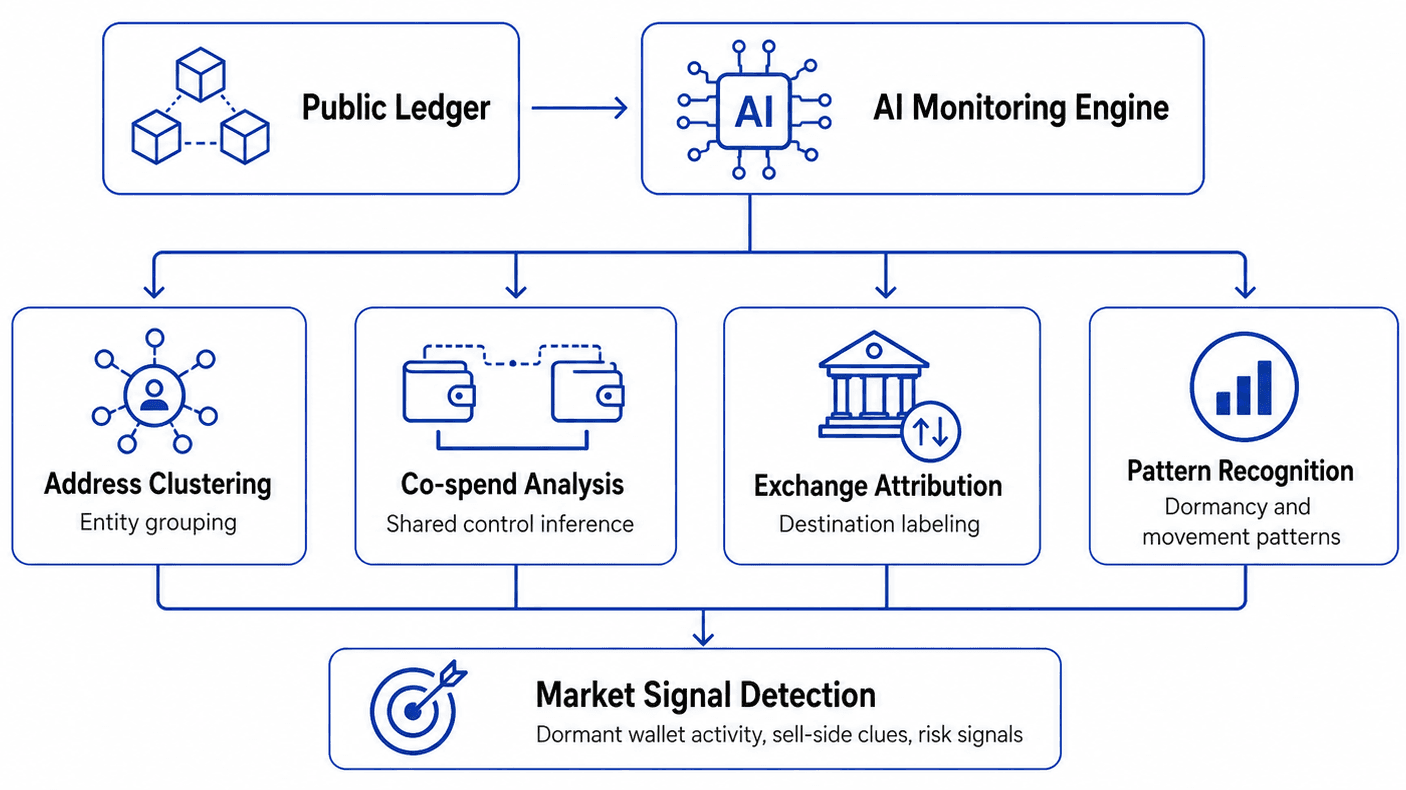
You can't use AI as an injector to see inside private keys or unlock coins from chains. AI can only read the public ledger. Any old transaction record visible in the ledger is tracked by AI systems, and a repetitive function of these ledgers indicates a signal.
There are mainly four techniques used to assess this:
- Address clustering: Explained simply, the AI vets different addresses to understand if they’re of the same person/wallet group or are distinct based on their behaviour.
- Co-spend analysis: As per analysts, if two or more addresses are linked to one transaction, nine out of ten times, there’s a single person behind those wallets.
- Exchange attribution: These AI tools can tell if the movement of coins is towards an exchange, a mixer, a custody wallet, or a fresh wallet, which helps them label the wallets on the basis of the transaction.
- Pattern recognition: The tools can also analyse the qualitative bits, such as the duration of inactivity of the coins, whether or not they were mined during the Satoshi era, whether all the coins move or only a tiny part, and how much of the total volume was the movement.
By performing all these exponentially faster than any human analyst possibly could, these AI tools study the overall activity on the blockchain and foretell future market signals.
But the process goes deeper than mere tracking. If movement patterns are revealing behaviour, cant data within blocks also reveal early mining pattern?
What the Patoshi Pattern tells us
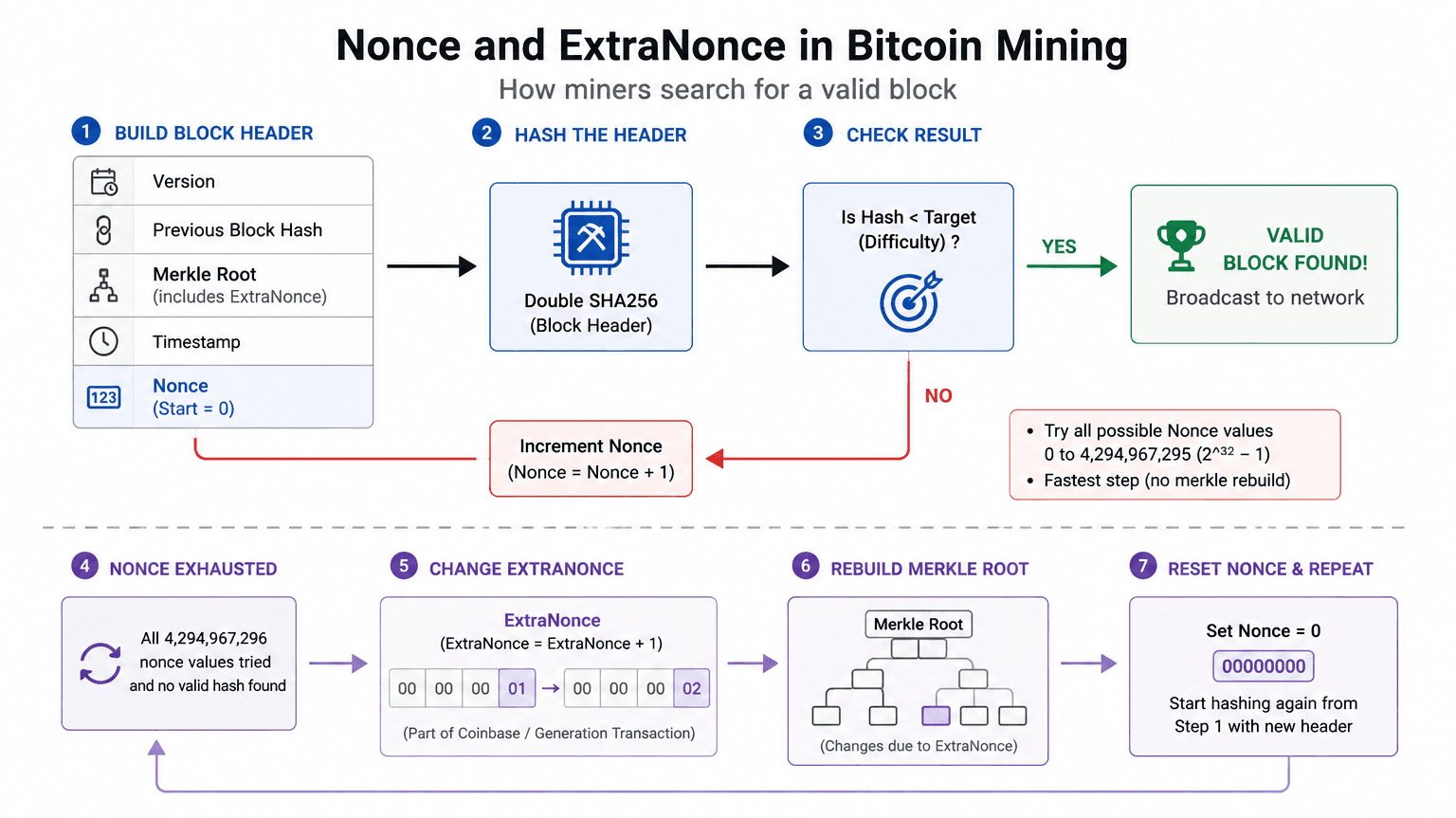
In the initial years of Bitcoin, blocks used to have a similar technical fingerprint. A researcher named Sergio Lerner studied these patterns, named Nonce and ExtraNonce values, as per mining behaviours.
Nonce simply means the total number of miners that keep changing while trying to create a Bitcoin block. When Nonce isn’t enough, the miners induce more data inside the first block transaction. This data change is called ExtraNonce, a part of coinbase which allows them to test more possible combinations.
But in this process, patterns are left behind within the block data. The analysis of Lerner concluded that there’d been one dominant miner (whom people believed to be Satoshi Nakamoto) and who had mined a very large number of the initial Bitcoin blocks. It's not proven though, cause the wallets weren’t confirmed.
AI just speeds up this discovery process through its computing power, which aids in faster and possibly more accurate predictive analysis.
What risks do quantum computing and AI bring to this ghost wallet debate?
secp256k1 is the maths behind Bitcoin being able to link a private key with a public key.
When a Bitcoin is spent, the private key becomes a digital signature. The public key is used by the network to check that signature. When it matches, Bitcoin lets the spender control the coin amount while keeping the original signature key private.
The concern here is what can happen in the future, not today. Older Bitcoin outputs usually expose their public keys, specifically the P2PK outputs.
Quantum computers, theoretically, are a million times better than a supercomputer today.
The hypothesis here is that someday they might be capable enough to work backward using any exposed public key and find the private key. And once it does that, it’d get the trick in an instant, and any public key that is exposed can be backtracked. This is what people worry about.
The upgrade routes to mitigate this are BIP-361 and BIP-360.
As per BIP-361, a long-term plan is needed for Bitcoin to move apart from its old signature types, because of the future fears of quantum computing. But there’s no live rule yet, only a draft proposal.
BIP-360 focuses on the P2MR Bitcoin output type, the agenda of which is to lessen the exposure of BTC-related transactions to quantum attacks. This upgrade is aimed at reducing the on-chain visibility of the public keys.
Know this, though, that the network hasn’t accepted either of the rules, and these are simply ideas to stand ready against future quantum threats.
Takeaway: Steer clear of the recovery vs. surveillance dilemma
Treat AI wallet trackers as signal trackers instead of recovery tools.
It's not a MI7 world yet, where some crazy tech or device can retrieve everything off the web, especially when brute force private keys are at their highest form of security.
Yeah, AI tools for sure can scan the old wallets, remember password patterns, check old device data, and organise seed phrases or clues. It's helpful for people who have personal wallet materials or proofs. Such can also be helpful for research, risk appetite management and portfolio management in the future. But cracking down wallets...AI’s still far from that.
The concern here is, what if AI, combined with quantum computing, helps people achieve even stronger surveillance?
That exact surveillance would act as a crackdown on the wallet clusters' movement patterns and UTXO backtracking. That’s reduced financial privacy, potential increase in future risks.
But that’s a debate for the future.