The old fundraising route has always been about pitching, negotiating, signing at least 50 documents, and then waiting weeks to finally get cash in the bank.
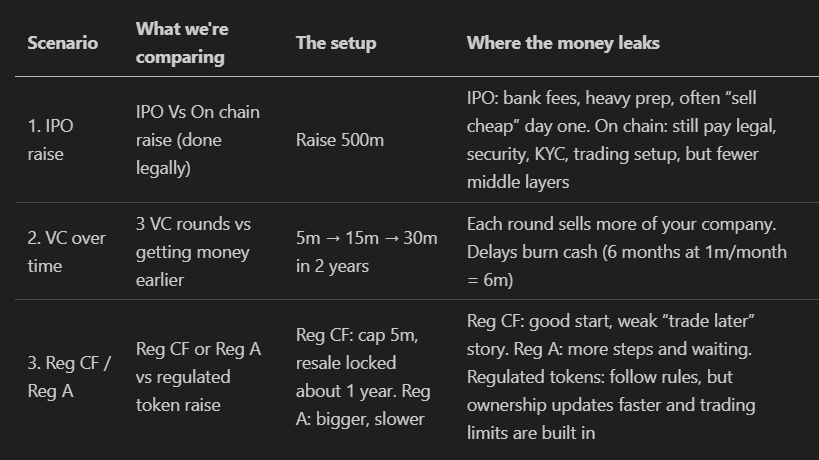
Even online options in the US, like Regulation Crowdfunding (Reg CF), cap $5M per year per company, and in 9 out of 10 cases, buyers cannot resell their equity for the first year.
When it comes to funding mechanisms, we are far behind in terms of innovation and tech upgrades. However, things are changing for the better.
ICM (Internet Capital Markets) performs the same function in a much simpler, faster, and less restrictive way, but on the blockchain. The process begins when the team creates on-chain assets. People then buy and sell them at the market price, and the team generates the required capital.
In ICM, on-chain updates and ownership are supported by fewer middle layers. Hence, ICM fundraising methods are more cost-efficient and less of an administrative burden.
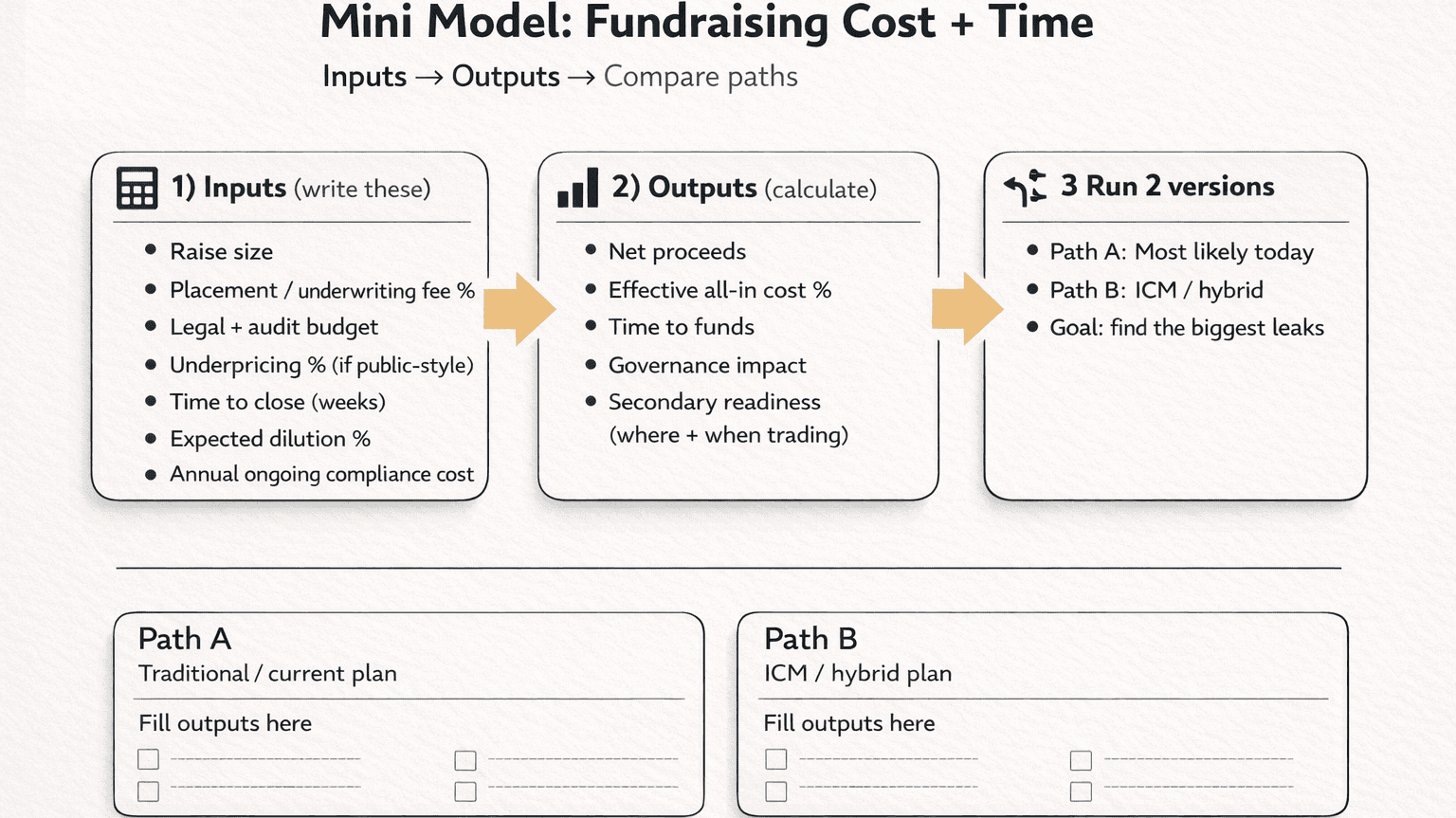
What works in ICM’s favour is that ICM shortens the time from when founders need capital to actually getting the funds, while allowing much faster settlement and extended reach. On a big raise, fees, underpricing, delays, and dilution can add up to a $50M+ gap.
The traditional “slower” routes of getting money
VC/Private Rounds
The main costs in VC rounds are the paperwork-related fees of lawyers. But the actual loss here is time. Founders spend weeks making phone calls, editing documents, and asking for ‘just one more’ until the business cannot move for lack of funds and red tape in traditional funding setups. How wide your network and reach are also impact your chances of getting funding.
Each round takes a little bit more of your company, and quietly, control terms start piling up. A SAFE or note will quickly mess up your cap table, making the value of your equity dependent on who you know, when you ask, and what type of investor is currently looking for their next investment.
Initial Public Offering (IPO)
Launching an IPO is a large-scale exercise. You require banks to underwrite your shares, and a team of lawyers and auditors to manage the legal and compliance needs.
Once you are done with the tedious paperwork and filing with the regulatory body, you must conduct roadshows and other marketing exercises, pay exchange fees to get your IPO listed, and engage in continuous reporting after you go public.
IPOs can give your organisation the credibility and deep liquidity it needs to grow and scale, but they can also be a double-edged sword. The first-day show can be a hit or miss. If the stock sees a significant surge inprices, it is probably because your stock is underpriced. The ‘hard pop’ may be a thing to cheer for the buyers, but not for the company that left money on the table.
Reg CF
Reg CF is raising capital online under certain regulations. You must have an intermediary registered with the SEC. You can raise only a certain amount of money, must provide the required disclosure, and have resale typically restricted for a period of time.
It is good for small fundraising efforts, but not optimal for larger fundraisers or easier secondary trading. On top of everything, it involves lots of paperwork.
The new ICM mechanics explained
ICMs simplified the process of turning ideas into digital assets on the blockchain. These digital assets let people take part in a project early on. A bot deploys the token, sets up a dynamic pricing model based on demand (see bonding curve), and distributes tokens to early backers.
But it isn't the same as owning stock in a company, cause one doesn't get legal ownership or equity.
Three parts matter most:
- Primary issuance: As soon as the token is created, its purpose is defined by code.
- Liquidity: The token becomes tradable on open markets via AMMs or bonding curves after creation. There’s no need to wait for a formal listing.
- Price discovery: On-chain markets play a big role in establishing the token's true value. On-chain markets have many participants from around the globe and are always "on" and open for trading. Therefore, price discovery can occur much faster than in traditional offline marketplaces.
Though some areas, such as speed and settlement, speed up, most of the slower processes remain the same if you want it “clean”. Legal setup, disclosures, KYC/AML requirements, and custodial or transfer processes still require time, particularly if the token appears to be a security under applicable law.
What are the differences between tweet to token and compliant issuance?
One of the early uses of ICM was to demonstrate the ability to launch a token directly from a social action.
For example, Launchcoin allows a user to respond to a tweet, and that response would automatically generate the token, establish a buy/sell market for the token, and allow the price of the token to fluctuate based upon demand.
This is a market signal. There’s demand for faster capital formation. However, it’s also a warning. Speed without rights, disclosures, and relevant bars is merely an improved version of the worst ICOs or IDOs.
ICM tokens can provide participation, voting, or access. However, these aren’t the same as owning shares and don’t provide automatic legal ownership rights.
Compliant issuance is a different world where the objective is to launch fast within enforceable rights and rules.
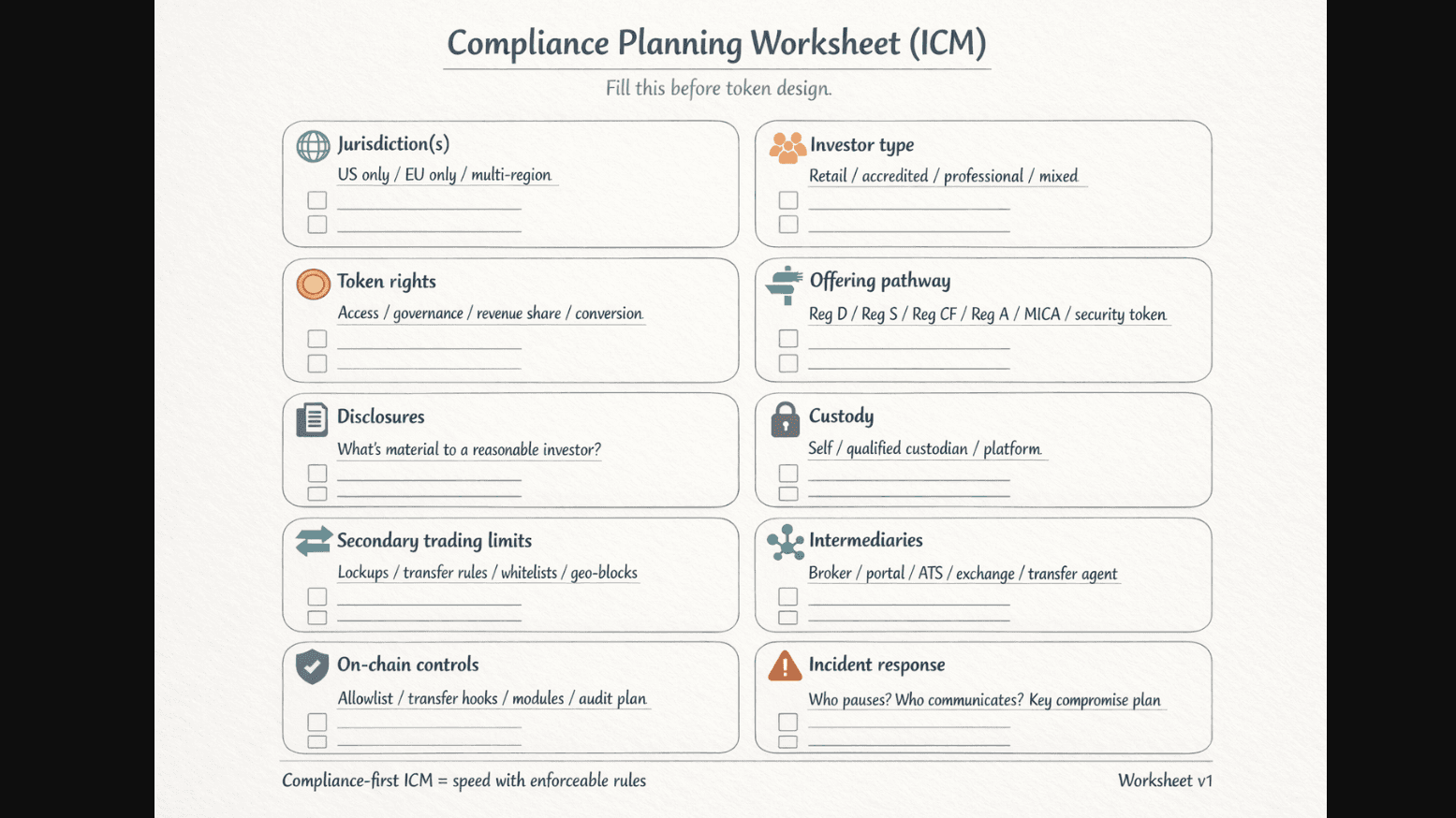
Understanding “compliance first ICM” frameworks
The goal of compliance-based ICM is to use the same on-chain tools and rules, but within a structure that can withstand review. The objective is to move quickly without rule-skipping while still operating under enforceable rights, clear disclosures, and real transfer controls.