You are living under a rock if you haven’t seen the Binance vs Hyperliquid beef doing rounds on crypto Twitter.
While both platforms’ CEOs have been quiet, it is the community and loyal users pumping their favoured platform and sledging the competitor. Binance users have been accusing Hyperliquid of stealing users and spreading false information.
Source: rasmr
Hyperliquid’s community has accused Binance of corruption in listings and perpetrating the October market crash, caused by massive liquidations after a localised Ethena USDe depeg on its platform.
Nonetheless, Binance remains the largest exchange, and Hyperliquid has been able to capture just 10-15% of its mindshare. However, Hyperliquid’s rise has been nothing short of a spectacle.
It processed over $1.57 trillion in total perpetual trading volume during the past year. Hyperliquid’s monthly perpetual volume has grown by 600% year-on-year, with volumes reaching $100 billion at peak times. July alone saw $330 billion traded on the layer 1 exchange.
Source: Binance on X
Hyperliquid is a decentralised perpetual futures exchange built on its native Layer 1 blockchain. It was established in 2022 and rapidly gained traction in 2025. Binance has been crypto’s favourite CEX since 2017, albeit with its own set of controversies.
This article discusses whether Hyperliquid’s speed and transparency can match the depth and scale of Binance, and why users are moving towards the DEX.
Cracks in Binance’s Model vs Hyperliquid’s Perfect Timing
Binance has been a leading player in crypto derivatives for years. Its low fees, deep liquidity, and institutional-grade market depth attract millions of investors each year. It ranks on leaderboards with daily volumes as high as $217 billion. After recovering from regulatory setbacks and the Binance vs SEC trial, the exchange is going strong.
However, with scale, centralised venues invite centralised failure modes. Binance is no anomaly:
CEX outages during volatility
Binance suffered several outages during high volatility periods. This prevented traders from updating positions or closing risk. Professional traders, who rely on split-second execution, were forced to liquidate.
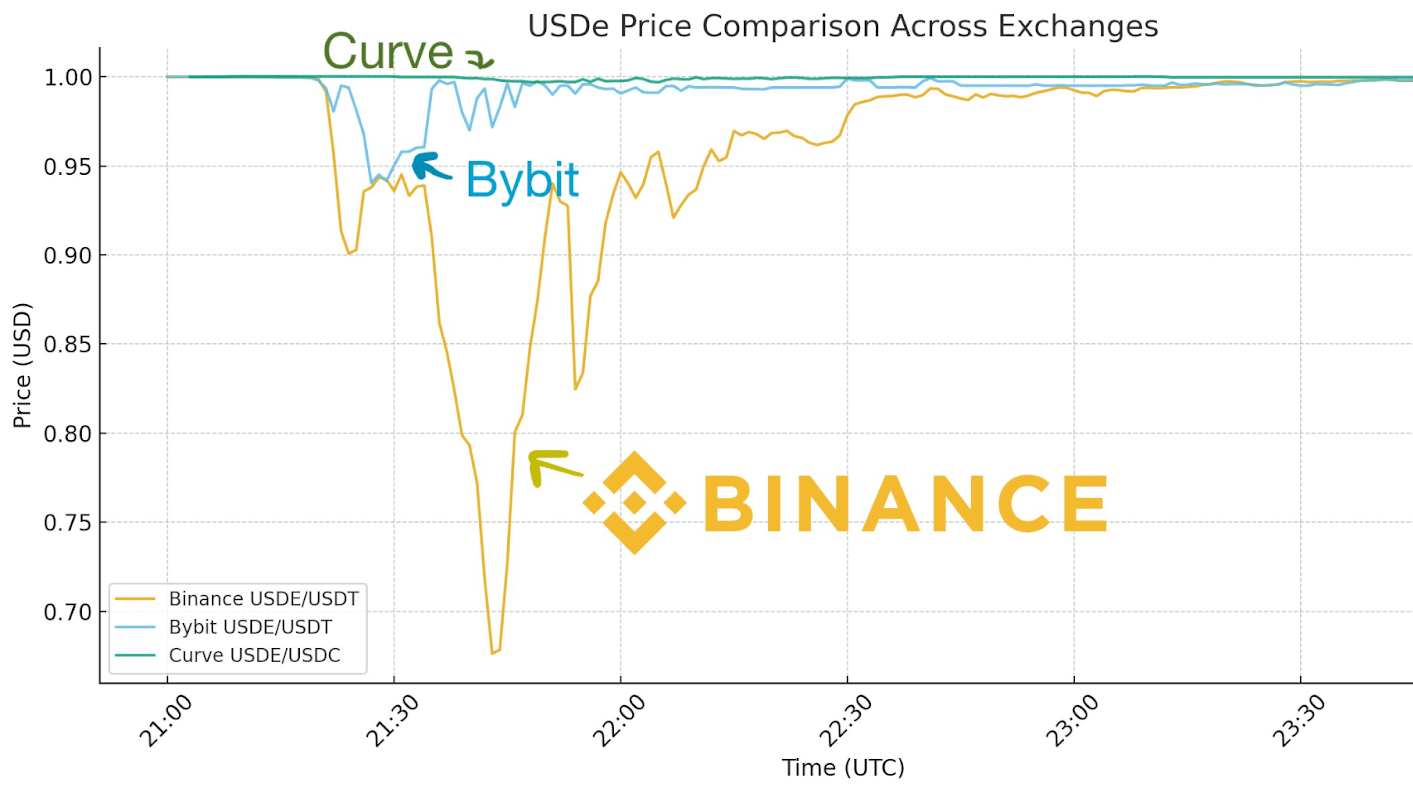
Source: X| USDe depegging was a largely localised event restricted to Binance
The USDe depeg was an example of how Binance’s own design flaw, timed with Trump’s tariff announcement, caused forced liquidations and huge losses to traders across tokens. Binance has seen many such controversial liquidation cascades.
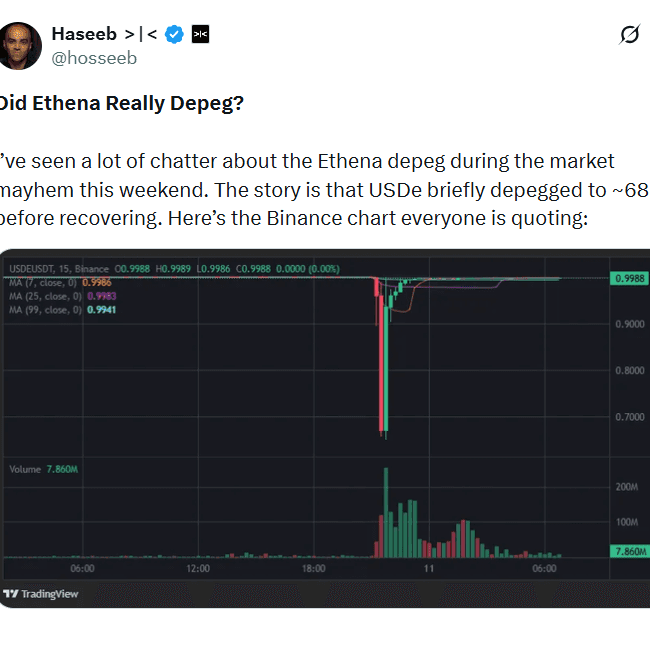
Dragonfly managing partner @hosseeb, wrote on X how the USDe depeg was a localised event, and hardly any other platform saw any major fluctuation in the stablecoin prices.
Source: X| @hosseeb explains whether Ethena actually depeg or was it Binance’s algorithm flaw
Fee/listing controversies
Oftentimes, Binance has been accused of charging excessively high listing fees in cash and token allocations from projects seeking to get listed on the exchange. The CEO of Limitless Labs claimed that Binance demanded 9% of his project’s tokens and $2.45 million in cash.
Binance dismissed the claims later. In 2024, Moonrock Capital's CEO made similar allegations against Binance. People have started calling Binance a ‘centralised casino imposing unfair listing taxes.’
Such kind of listings invite speculative or low-quality assets, which was seen when some newly listed assets dumped sharply after listing. Binance addressed the listing fees issue as an ‘optional donation’ that the exchange calls from not-so-good projects. According to them, a good project would be listed for free.
Trust erosion after large liquidations
Hyperliquid founder Jeff Yan accused Binance of underreporting liquidations. In an X post, Jeff said, “Even if there are thousands of liquidation orders in the same second, only one is reported.”
According to him, liquidations happen in bursts, and the chances of underreporting could be as high as 100x under some conditions. Not only Binance, but also other CEXs like OKX are downsizing their liquidations.
Binance’s documentation states that, “only the latest one liquidation order within 1000ms will be pushed as the snapshot.” CEXs are way more opaque than on-chain platforms like Hyperliquid, and have been facing user trust issues.
Binance vs on-chain uptime
Though Binance claims an uptime of 99.98%, there have been several instances when Binance failed in such crypto market stress tests:
During the October market crash, users claimed the platform’s services were unstable.
CEXs are vulnerable to infrastructure failures, node/provider outages, and flash-crash stress events, which is a huge downside for high-frequency traders.
Hyperliquid vs Binance: Why Hyperliquid Ships Faster Than Binance
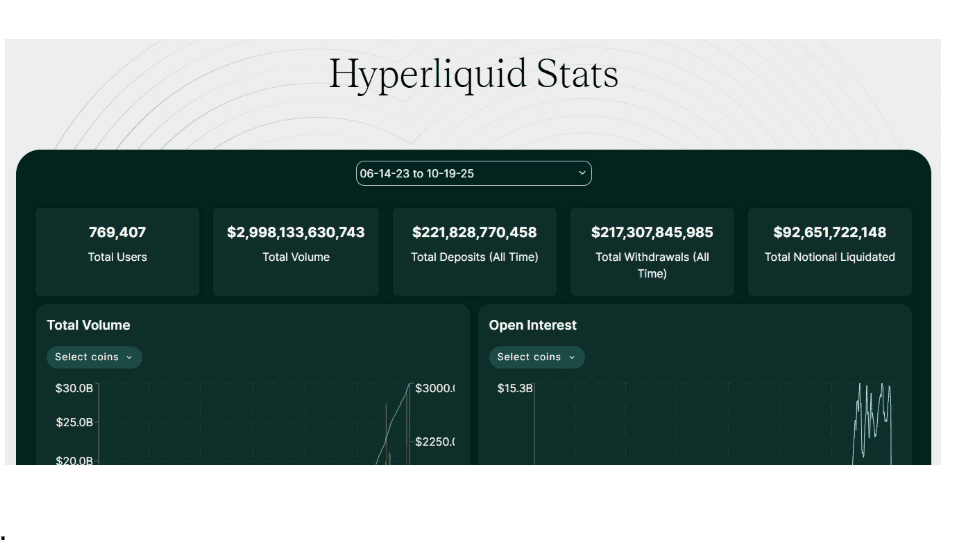
Hyperliquid Stats
Hyperliquid is known for its on-chain transparency, self-custody, and CEX-like speed. It has been aggressively positioning itself differently from CEXs like Binance over the last two years.
Here’s a quick look at the features:
HyperBFT protocol: It has its own custom layer-1, which uses HyperBFT as its consensus protocol. The blockchain supports sub-second finality, has a TPS of 200k, and is built by former high-frequency trading engineers (HFT). The blockchain has HyperCore as its trading engine and EVM-compatible smart-contract layer, HyperEVM, running in parallel.
Source: Omnia.hl
Fully on-chain CLOB: Hyperliquid also built an on-chain central limit order book (CLOB), a self-custodial flow, and gasless transaction execution to improve user experience.
Better UX: It arrived at exactly the time when users were fed up with the rampant friction in the CEX scene, including volatility-driven outages and liquidations. It began by building a cleaner and more transparent interface to execute perpetual trades faster.
Real-time updates: Traders can view the health of the ecosystem in real-time and check liquidity, collateral backing, funding rates, liquidation events, TVL metrics, and other market data. This level of information is impossible on a CEX.
HIP 1/2/3: Hyperliquid uses a governance framework called HIPs (Hyperliquid Improvement Proposals). HIP-1 introduced a native token standard for spot markets, HIP-2 brought Hyperliquidity, a protocol-native automated liquidation engine, and HIP-3 enabled builder-deployed perpetuals in 2025.
Liquidity and vault mechanism: These proposals together allow tokens to go live without waiting for approval from any central committee. It doesn’t require external market-making vaults. Its HLP Vaults are tied to HYPE/staking and offer a native liquidity engine, which is far more composable than that of a CEX.
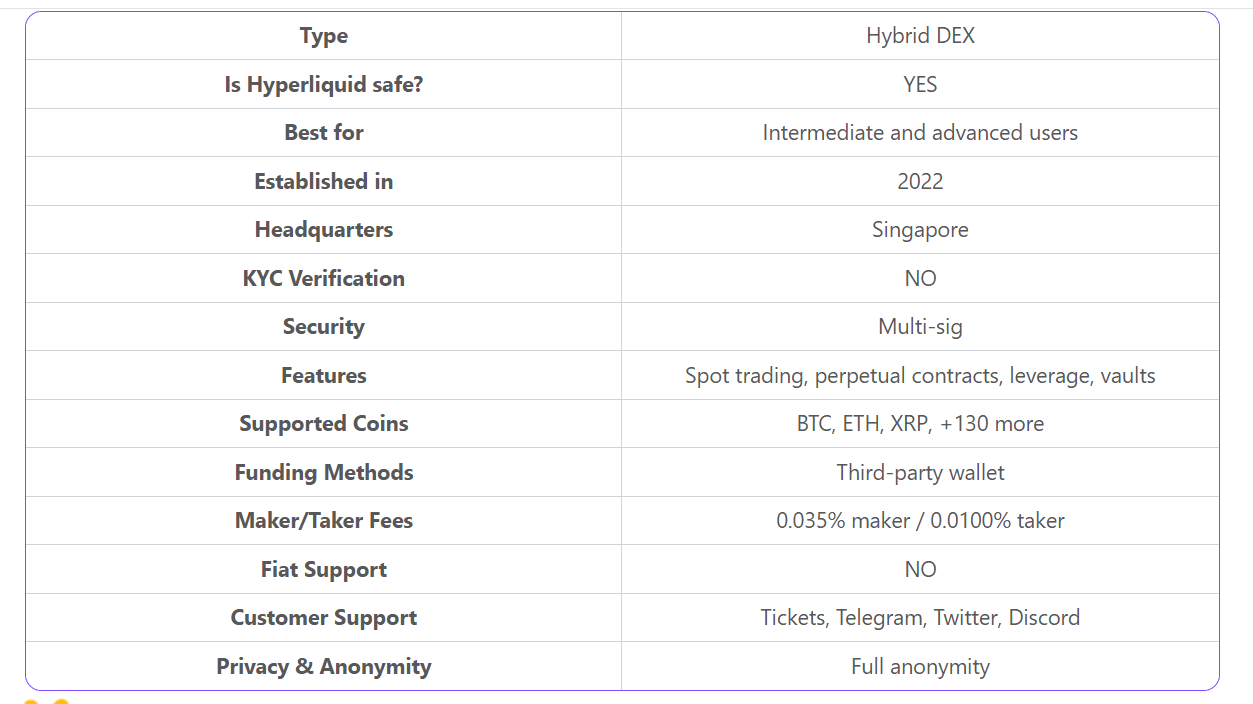
Source: BitDegree | Hyperliquid Review at a glance
Binance, on the other hand, has been juggling with regulatory obligations, regional restrictions, listings, fiat bank partnerships, etc.
The subsequent sections deal with features that give Hyperliquid an edge over Binance and other CEXs, and why the trader migration is happening.
Pro Trader UX: How Hyperliquid Feels Faster, Cleaner, and “Trader-Native”
Web3 has suffered most on the UX front, but Hyperliquid feels faster, lighter, and more aligned with the needs of modern traders. We did a structural breakdown of its app/website’s UX audit:
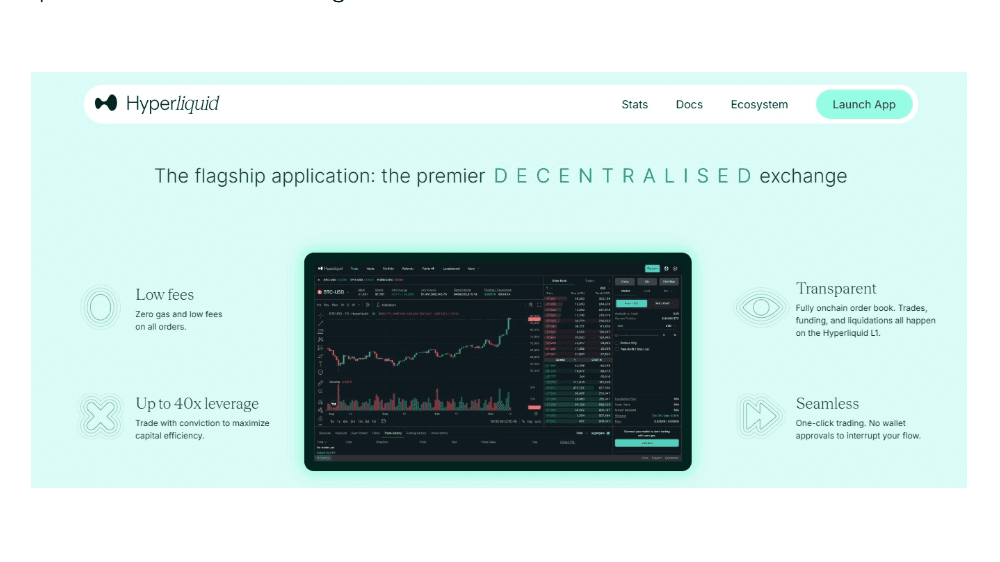
Hyperliquid’s Homepage loads in 0.4s
The interface loads in a single, smooth pass, with orderbook, chart, depth, and positions rendering almost instantly. Pro traders find this ultra advantageous. There’s limited cognitive friction due to fewer moving parts. Perceived trading latency has little effect on traders’ intent-first behaviour.
Binance is a multi-service platform, and loads in layers, which impacts the loading speed and how traders navigate.
Source: Hyperliquid
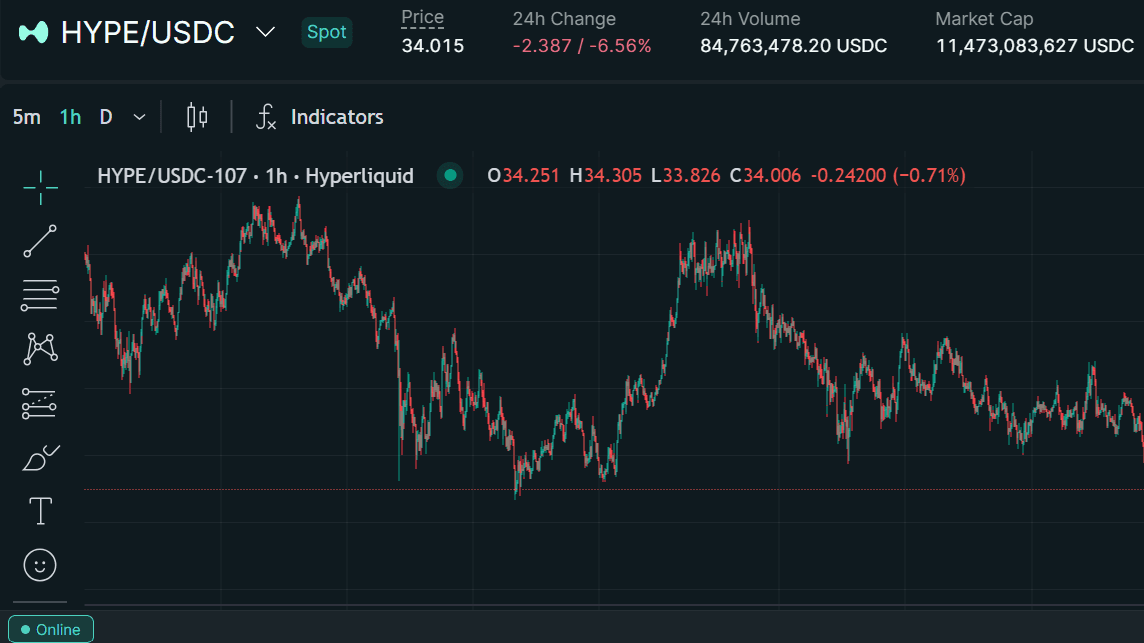
Simply Drag, Zoom, Replay Hyperliquid Chart
It uses a lightweight, custom chart renderer optimised for rapid updates and low system load. The charts feel the same as the desktop trading tools used by quant desks.
Binance charts are richer with TradingView integration, which can lead to micro stutters during zoom, slower scroll load, and delayed candle refresh. The delay to load can impact the traders’ ability to fulfil split-second trades and increase their chances of getting liquidated.
HYPE to USD chart. Source: TradingView
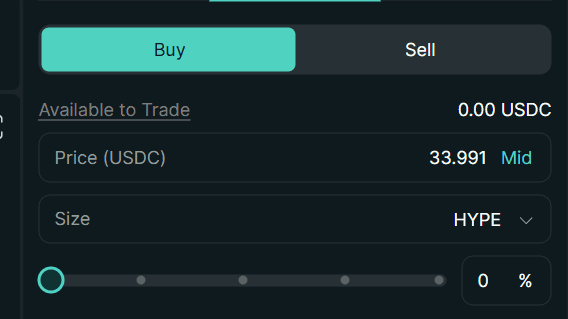
Simplified Limit and Market Box in Hyperliquid’s Order Panel
Hyperliquid has a single-column order panel with options to set quantity, leverage, limit/market selector, immediate visual cost estimate, and one-click place. Traders describe the panel as more muscle-memory-friendly.
Source: Hyperliquid
Binance offers a more configurable order panel. However, that means more dropdowns, more toggles, and more pop-ops. Non-essential settings demand time, attention, and clicks–where every click means greater time spent to move from intent to execution.
Hyperliquid Wallet Connect Onboards in 10s
Since Hyperliquid skips KYC, users can onboard in less than 10 seconds by connecting their wallet or email. There are no email loops, identity checks, or verification steps involved. Binance onboarding requires account creation, identity verification, deposit, and internal wallet transfers or futures before you can begin trading.
CEX-Grade Feel, But On-chain
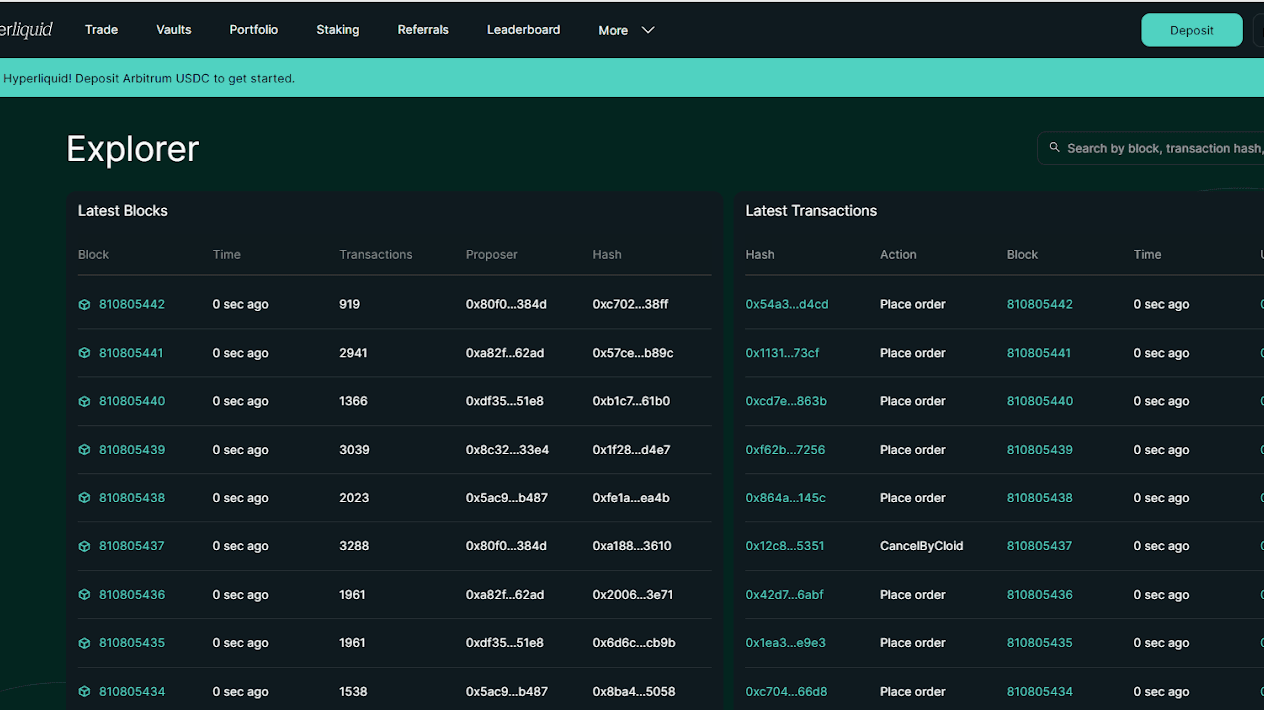
Hyperliquid charges no fees on trades. Despite being a decentralised perps platform, it allows instant order acknowledgement, real-time mark price and funding updates, and sub-second on-chain settlement finality.
Source: Hyperliquid
There is no custodial banker, withdrawal limits, or internal ledger exposure. The non-custodial trading change feels like an upgrade rather than a change on Hyperliquid.
Balances are Stored in Wallets
Any trader who has lived through the FTX scandal era remembers frozen funds, paused withdrawals, maintenance delays, and both paused and forced liquidations. Hyperliquid’s decentralised trading infrastructure guarantees funds remain on-chain and in your custody. Never will the funds remain in external custody under any maintenance mode or other unforeseen circumstances on Hyperliquid.
Hyperliquid vs Binance: Fee Structure & Incentives Comparison
Gen Z traders care less about brand and more about execution economics.
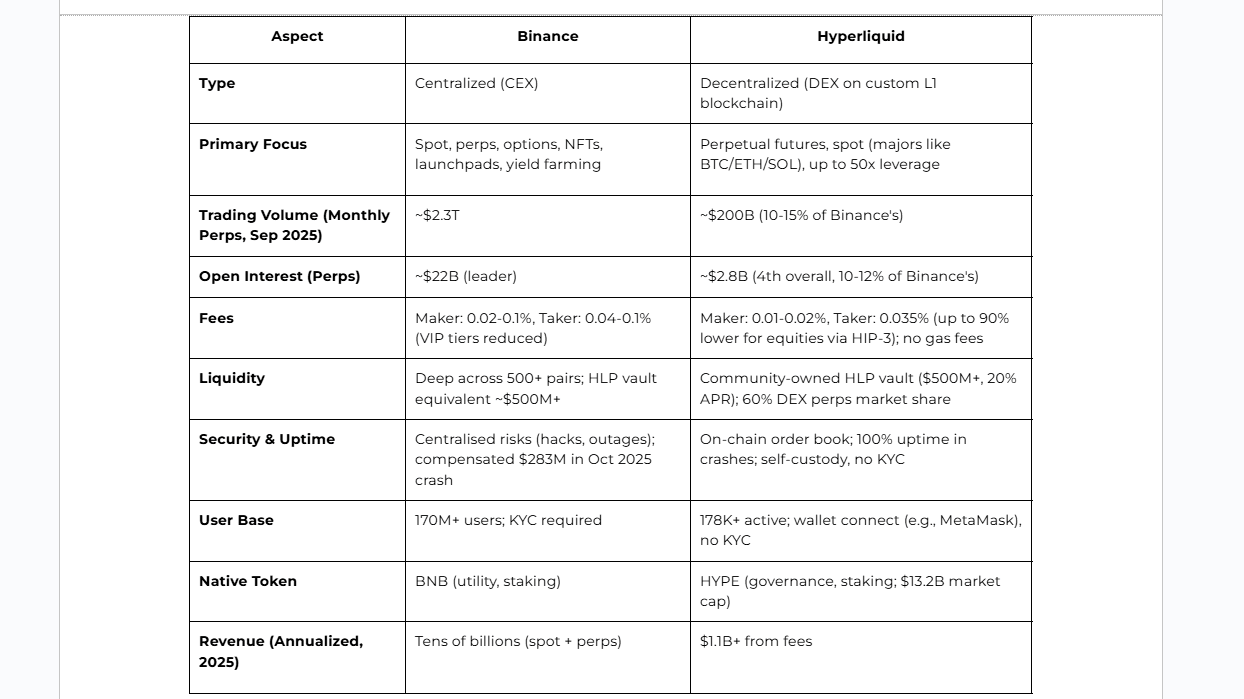
The Hyperliquid vs Binance comparison becomes decisive when we compare each funding rate, maker/taker fees, vault incentives, bridging cost, etc.
Perps funding differences
Hyperliquid uses a transparent on-chain funding model that updates in real-time. There’s no ‘internal engine opacity’ that traders often complain about on CEXs. Traders using high-frequency strategies in leverage trading prefer the predictability of Hyperliquid.
Maker/taker fees
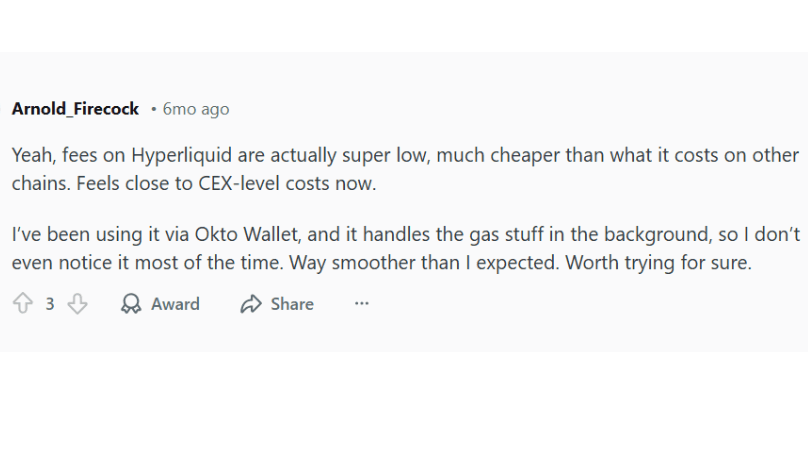
Hyperliquid has lower taker fees, stronger maker rebates, and zero gas fees on execution. In comparison, Binance offers competitive pricing but still has higher fees, charges extra costs from funding spikes, and occasionally, the spread widens during volatility.
Source: Arnold_FireCock/Reddit
Cost of bridging
Hyper Unit Bridge allows nearly frictionless cross-chain deposits on Hyperliquid. These transactions are fast, low, and gas-abstracted. On Binance, traders need to deposit funds into the main account, transfer them to the futures wallet, and then sometimes pay network fees even on internal transfers.
Passive-earning alternatives
Traders can earn passive yields from providing derivatives liquidity to HLP vaults and market-making vaults (MMVs). No such income-earning opportunity is available to retail traders on Binance.
Traders get facilities such as vault staking, lower spreads, predictable fees, and other staking incentives on Hyperliquid.
97% Fee buyback
Hyperliquid returns 97% of exchange fees to HYPE tokenholders through token buybacks and liquidity incentives. Binance never shares its revenue outside the company. Only a small portion is distributed through BNB utilities.
No listing fees
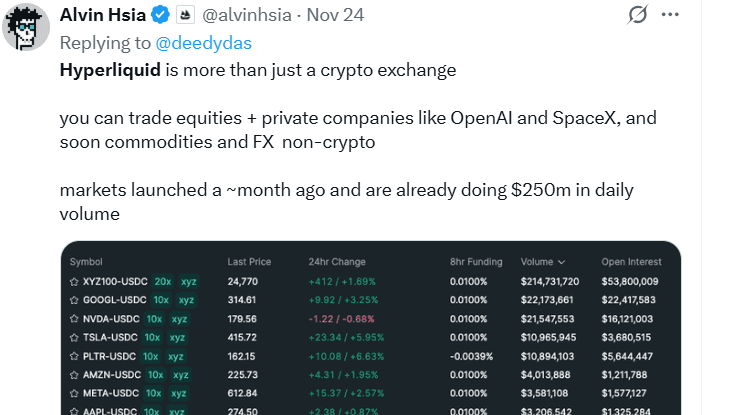
Hyperliquid has a permissionless listings model where the community votes on project listings. There are no backroom deals or token-for-listening swaps involved. Binance, on the other hand, charges high listing fees, has preferential listing routes for VC-based assets, and puts up token allocation demands.
Source: Alvin Hsia
How Hyperliquid Built Deeper Books On-Chain
DEXs often face liquidity issues as their AMMs are unable to replicate the speed, precision, and depth of an order book. Hyperliquid replicates the CEX model in its decentralised architecture.
On-chain CLOB: Traditional exchanges like Binance come with off-chain order books, and issues like wide spreads, slippage, impermanent loss, etc. Hyperliquid’s CLOB allows every order, cancellation, and fill to be visible on-chain to deliver CEX-grade precision and DEX-grade transparency at the same time.
Market-Making Vaults: Its MMVs and HLP vault provide liquidity instead of depending on external market makers, incentive mercenaries, or opaque internal bots. Hyperliquid’s on-chain vaults are carefully capable of accepting user deposits, tightening spreads, and managing order book liquidity. It also generates passive yields from market making. Binance has a handful of professional makers that operate off-chain and have preferential access.
Hyper BFT throughput: Its consensus model is built to deliver for high-frequency derivative trading. Hyperliquid’s consensus model prioritises ultra-fast block production, deterministic ordering, minimal MEV exposure, sub-second finality, and consistent confirmation under load.
Institutional-grade execution speed: Hyperliquid trading platform reviews always mention speed as its #No. 1 differentiator. It achieves Binance-level execution speed and trustless settlement such that there’s no internal queueing uncertainty, hidden delays, or risk of shadow matching.
Deep derivatives liquidity: Large traders or whales need five things:
Tight spreads
Deep books
High leverage capacity
Predictable liquidation engines
No execution surprises
Hyperliquid offers deep on-chain derivatives liquidity, transparent liquidation logic, no custodial freeze risk, no KYC barriers or regional constraints, and on-chain verifiability when trading billions.
Binance has deeper liquidity. But whale trading behaviour shows they prefer liquidity combined with a non-custodial guarantee, both of which Hyperliquid offers.
Rather, the question should be which platform removes more friction for real traders?
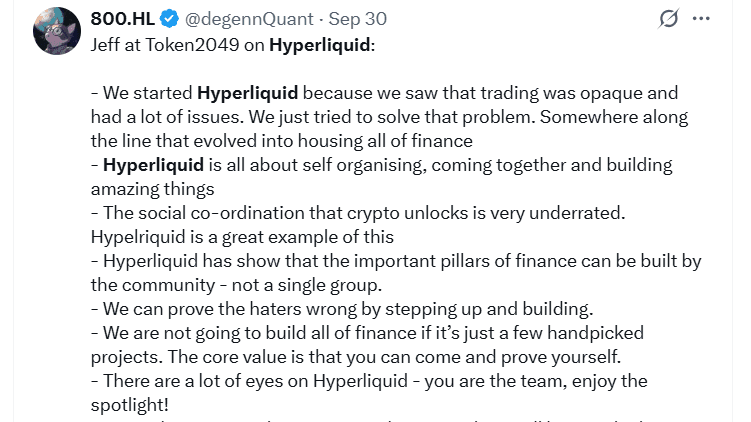
Source: @degennQuant on X
Hyperliquid is engineered around four levers, which give it an advantage over Binance.
It can ship products, upgrades, vault mechanisms, and even new perpetual markets in hours or days, given its DAO-led governance and HIP proposals. It functions like a startup, and has less of compliance, legal, and cross-product checks to pass.
Trader-first UX, low-latency execution, ultra-clean order flow, and real-time chart responsiveness improve the overall feel of the platform.
Liquidity incentives are many. Plus, transparent buybacks, MMVs, and funding rate curves keep the platform economics predictable.
Self-custody, full on-chain transparency, and verifiable orderbooks give Hyperliquid CEX-level speed without trust requirements. The onboarding is simple–connect your wallet, deposit via Hyper Unit, and start trading immediately.
Hyperliquid’s architecture respects trader autonomy and matches crypto-native behaviour. However, Hyperliquid isn’t without its demerits. Since it is a DEX, smart contract vulnerabilities remain. Beginners might find Hyperliquid overwhelming, as most traders enter crypto through fiat on-ramps and CEXs. Hyperliquid doesn’t allow fiat deposits, and there’s no multi-chain support available, except for the Arbitrum chain.
What Binance (and All CEXs) Can Learn
Hyperliquid’s growth isn’t an exception. It points to the structural inefficiencies rampant in the crypto trading infrastructure. Traders are migrating from Binance because the platform offered them the transparency, speed, and autonomy they have been asking for since 2020.
Binance can learn many lessons from Hyperliquid. Smaller modular updates work best rather than monolithic feature drops that only add to the UX burden. Composable incentive structures are the best to engage the new-age traders instead of continuous value extraction from users.
Opaque liquidation engines and maintenance-led outages are no longer acceptable. Rather, platforms with audit depth, risk assessments, and real-time execution are the way to go. Self-custody is the future. No one wants a TradFi 2.0 wrapped in crypto colours. On-chain market infrastructure isn’t just transparent, but also verifiable and a trust builder.
CEXs who learn their lessons fast will survive the next cycle and reduce user attrition and migration to better platforms.