Bitcoin Conference 2026, Las Vegas: 10 Key Insights That Will Shape the Market
The Bitcoin Conference Las Vegas 2026 felt quite different from previous years. The past conferences were retail-heavy, and reportedly, there was around 30% more floor traffic than this time around. Another big difference this year is that institutional participation skyrocketed, with mining companies, asset managers, policymakers, AI infrastructure firms, and sovereign representatives dominating discussions across the board.
Attendees were excited ever since the Bitcoin conference 2026 date and location were revealed. Many noticed that the atmosphere was not so focused on hype this time. Instead, the focus was on things like regulation and infrastructure, as well as long-term positioning and capital flows.
To many, this shift signals a maturing of the crypto industry. Bitcoin is not treated as a purely speculative asset anymore. Instead, the conference revealed that the market is becoming increasingly shaped by AI integration and institutional capital. Participants are focused on regulation and macroeconomic strategy, which is already a massive change from before.
With that said, several major themes emerged during the event, which could signal the direction the market is moving in.
1. The Great Migration: Miners Becoming “AI Powerhouses”
Source: Pixabay
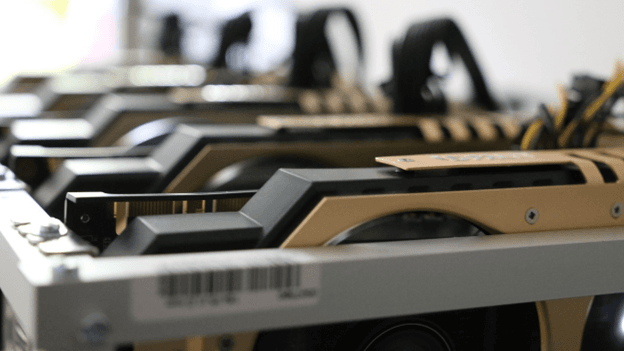
One of the biggest themes of this year’s conference was the shift of mining firms toward AI infrastructure. With growing competition and tighter mining margins, a lot of companies have decided to reposition themselves as energy and computing providers. They dropped BTC mining in favor of AI, and their reasoning is fairly simple - miners control large-scale power access, cooling systems, and plenty of industrial facilities.
These are the exact resources that AI data centers need. So, instead of relying on earning money from block rewards, mining firms are leasing their computing capacities to AI firms and cloud providers. In most cases, handling AI workloads has turned out to be more profitable and a more stable source of income than competing for the blocks.
Why did Bitcoin miners switch to AI data centers in 2026?
Bitcoin miners switched to AI data centers because they already have the hardware to provide what data centers need. Supplying data centers with computing power is also often more profitable than mining Bitcoin, and it provides steadier income.
2. The “Zero-Holding” Strategy: Analysis of the Bitdeer Pivot
Another popular topic this year was the so-called “zero-holding” strategy that many mining firms have adopted. Essentially, instead of keeping Bitcoin reserves, some of the companies decided to sell their assets. The money gained from selling their BTC was then used for expanding their infrastructure.
Bitdeer emerged as the biggest example of this after it sold off all of its Bitcoin to fund AI data centers. Its decision also marks the current trend among companies that are moving away from being pure miners.
This change shows that many are starting to view themselves as businesses focused on infrastructure, offering computing data services, rather than just being BTC extraction firms.
3. Modular Infrastructure: The rise of Fourier/Intelliflex
Another detail that the conference pointed out was the growing interest in modular AI infrastructure systems, such as Fourier and Intelliflex. Their design, built for speed and scalability, gives them an advantage over traditional data centers that need years to be properly grown.
This approach is more attractive to the AI sector, since AI computing is now in massive demand. The biggest reason is that traditional infrastructure is unable to keep up with the needs of the AI sector. Meanwhile, modular infrastructure is more than capable of meeting them.
Because of this, mining firms looking to branch out into other industries are jumping on the opportunity to become the main providers of computing power for AI. They are also in a perfect position to do so, given that they can reuse their existing power agreements and industrial sites. They can quickly shift between crypto mining and providing power for AI needs. As such, they can adapt to market needs and provide power for multiple industries at the same time.
4. The $10M Thesis: Michael Saylor’s digital credit theory
Michael Saylor, the co-founder and Chairman of Strategy Inc. (formerly MicroStrategy), presented another interesting idea involving crypto. He has long voiced his opinion that Bitcoin could eventually reach $10 million per coin, and he still believes that this could happen.
His argument is based on the concept of digital credit, in which Bitcoin would take on the role of collateral for global capital markets. Saylor believes that this model would see companies, institutions, and even governments treat BTC as a reserve asset that can be used to support lending and settlements, and on which the future financial infrastructure could be based.
5. Retail vs. Institutional: Why floor traffic dropped 30% while capital inflows hit record highs
Source: Pixabay
While the Bitcoin Conference 2026 was attended by over 40,000 people, exhibitors noted a 30% drop in floor traffic compared to last year.
The drop is believed to be driven by a combination of factors, including the industry shift toward AI, but also dissatisfaction with the event’s focus on institutional and regulatory factors. With the market maturing, retail traders, who once entered the market through hype and meme speculation, are now becoming more cautious. After all, the industry has gone through several volatile years, and retail investors’ confidence is low these days.
However, at the same time, institutional interest is on the rise. Institutions do not consider Bitcoin as just another speculative experiment anymore. To them, BTC is now more of a macroeconomic asset that could play a role in inflation hedging and treasury diversification. As a result, there is a 30% drop in floor traffic, while capital inflows are hitting record highs.
6. Project Crypto: The new SEC taxonomy for digital assets
Speaking of regulation becoming a major focus in the industry, it was also one of the main topics at the conference. The main driver was the US Securities and Exchange Commission’s (SEC) Chair Paul Atkins.
Atkins introduced the “Project Crypto” initiative, which aims to create a clearer taxonomy for digital assets. Essentially, the framework aims to separate cryptos, introducing a distinction between securities, utility tokens, stablecoins, and tokenized assets. This was one of the main concerns across the industry for years, since Atkins’ predecessors viewed all cryptos as securities, with the exception of Bitcoin and Ethereum.
In recent years, this started to change, and now, Project Crypto signals that the SEC is finally taking steps to reduce uncertainty and create a safer environment for crypto issuers, exchanges, and institutions willing to get involved with the sector.
7. The Warsh Transition: Federal Reserve shifts under Kevin Warsh
Another big topic at the conference was the possible shift in policy towards crypto at the Federal Reserve, now under Kevin Warsh. Many investors believe that Warsh could be a more crypto-friendly leader than those before him, which could also mean that the Fed could become more open to financial innovation.
If the monetary policy changes, the change could have a significant impact on Bitcoin adoption and other risk assets. As a result, institutional interest in alternative stores of value could grow, boosting demand for crypto.
8. The Quantum Deadline: Why BIP 361 is now a priority for developers
Source: Pixabay
Quantum computing and its potential impact on the crypto industry has been a major topic of interest among crypto investors and others involved with the sector for years. This has not changed. In fact, quantum computing is now among the most serious long-term risks that the industry might face.
For the time being, large quantum attacks are still not believed to be an imminent threat, but developers are warning that every breakthrough in the field threatens the cryptographic system that secures crypto wallets and transactions.
This is why BIP 361 - a proposal titled “Post Quantum Migration and Legacy Signature Sunset” - is becoming a priority to developers. The proposal essentially outlines a three-phase migration toward quantum-resistant transactions that could protect the network, arguing that it needs to be adopted before quantum hardware becomes powerful enough to exploit current cryptographic methods.
The first phase would focus on introducing optional quantum-resistant addresses. This would be followed by a broader adoption incentive, and eventually, a full migration from vulnerable legacy outputs would be achieved. The point is that it would be better to transition slowly now, before this becomes an issue, than to do it later when it becomes an emergency.
9. Sovereign Adoption: The White House’s Strategic Bitcoin Reserve timeline
Ever since the start of Trump’s second term, the White House has adopted a new, pro-crypto stance. Sovereign interest in Bitcoin has been a topic ever since, especially regarding the idea of formal national accumulation strategies. This all goes back to Trump’s desire to create a Strategic Bitcoin Reserve framework and what it could mean for the future of the US treasury planning.
Under such a framework, Bitcoin would become a strategic reserve asset, similar to gold or foreign currencies. The idea has plenty of supporters who argue that early accumulation could be advantageous on a geopolitical and financial level. However, those who participated in discussions still agree that a gradual policy adoption is better than an immediate, large-scale purchase.
Regulatory clarity must come first, followed by custody frameworks, and only then should the government start a slow and steady accumulation of crypto into national reserves.
10. The Wrapper Shift: The migration from self-custody to regulated ETF “wrappers”
Finally, the last big theme at the conference was the migration from self-custody to regulated ETF “wrappers” as the main method of storing and controlling Bitcoin. What this means is that, instead of holding assets directly in private wallets, investors are choosing more and more to have regulated financial products that would hold BTC.
This approach is also being led by institutions, which are used to things being done a certain way. These ETF wrappers can offer custody security, compliance, and easier integration into investors’ existing portfolios. As such, they would be more attractive to asset managers, corporate treasuries, and even pensions.
Of course, that would mean that asset holders would no longer have full control of private keys. However, for institutional investors, regulatory clarity and ease of use matter more than the lack of control that retail investors desired from the start.